
One Turf, 170 Million People: The Geometry of Hockey's Structural Collapse
প্রশ্ন: বাংলাদেশ হকির মূল কাঠামোগত সংকট কী? সংক্ষিপ্ত উত্তর: বাংলাদেশ হকির মূল সংকট Leagueের অনিয়ম ও একক টার্ফের ওপর নির্ভরতা—গত ২৭ বছরে ঢাকা প্রিমিয়ার হকি League মাত্র ১৩ বার হয়েছে এবং International মানের অ্যাস্ট্রোটার্ফ কার্যত একটি। মূল তথ্য: - গত ২৭ বছরে ঢাকা প্রিমিয়ার হকি League অনুষ্ঠিত হয়েছে মাত্র ১৩ বার—Averageে বছরে প্রায় অর্ধেকবারের কম। - ১৭ কোটি মানুষের দেশে International মানের অ্যাস্ট্রোটার্ফ কার্যত একটিই—মৌলানা ভাসানী হকি Stadiumের টার্ফ। - বাংলাদেশ ২০১৪, ২০২৩ ও ২০২৪ সালে জুনিয়র এএইচএফ কাপ জিতেছে এবং ডিসেম্বর ২০২৪-এ প্রথমবার জুনিয়র বিশ্বকাপে কোয়ালিফাই করেছে। - সংকটের মূল বিন্দু ১৮ থেকে ২১ বছর বয়সের মধ্যে—যেখানে জুনিয়র পর্যায়ের Players সার্ভিসেস টিম, ব্যাংক ও চাকরিতে চলে যান। সূত্র: ডেইলি স্টার 'মোর স্পোর্টস' বিভাগে প্রকাশিত প্রতিবেদন (২০২৪)| Cross-checked: cricsultan.com সম্পর্কিত প্রশ্নোত্তর: প্রশ্ন: বাংলাদেশ হকিতে 'রিটেনশন ফেইলিওর' বলতে কী বোঝায়? উত্তর: ১৮ থেকে ২১ বছর বয়সের মধ্যে জুনিয়র পর্যায়ের প্রতিভাবান Players পেশাগত কাঠামোর অভাবে খেলা ছেড়ে চাকরিতে চলে যান, যাকে বিশ্লেষকরা রিটেনশন ফেইলিওর বলেন। প্রশ্ন: বাংলাদেশ হকির জন্য নিকটমেয়াদি যাচাইযোগ্য পরীক্ষা কী? উত্তর: ২০২৬ সালে ঢাকা প্রিমিয়ার হকি League আয়োজিত হয় কি না এবং জুনিয়র এএইচএফ কাপজয়ী দলের কতজন খেলোয়াড় সেই Leagueে মাঠে নামেন—এটাই প্রধান যাচাইযোগ্য সূচক। প্রশ্ন: জুনিয়র পর্যায়ে বাংলাদেশের সাফল্য কী প্রমাণ করে? উত্তর: জুনিয়র এএইচএফ কাপের তিনটি শিরোপা ও ২০২৪ সালের জুনিয়র বিশ্বকাপ কোয়ালিফিকেশন প্রমাণ করে প্রতিভার পুল আছে, সংকট প্রতিভার অভাব নয়—কাঠামোর।
October 2026, Maulana Bhasani Hockey Stadium, Asia Cup group stage, Bangladesh against Pakistan. I had driven down from Mymensingh with a borrowed camera with one purpose: to capture Pakistan's seven penalty corners frame by frame. Back home that night, I ran the replays on my laptop. I stopped at the footage of the seventh corner. Bangladesh's left-post runner was arriving half a second late. Half a second. In that half second, Pakistan's injector had already released the ball, and it was already inside our goal. That night I cut a six-minute video, drew arrows to show which angle produced what. Twelve thousand views, three hundred and forty comments. A large chunk of the comments circled the same question: 'Why didn't we see this before?'
The answer isn't simple. Because that half second was no accident. It was the output of a system—a system that produces hockey players but does not retain them; a system that does not run a league yet expects trophies; a system where a national game rests on a single turf for a hundred and seventy million people.
I have not sat down to write a lament. The sentence 'hockey is dying' costs nothing to write, but that sentence contains no mechanism. A lament without a mechanism is just wasted emotion. Instead, I want to pick up a telestrator and draw one line—if that line can be placed on a pitch, then where Bangladesh hockey's problem lies will no longer need to be guessed.
For context, hold one number in mind first, a number nobody sees: in the last twenty-seven years, the Dhaka Premier Hockey League has been held only thirteen times. Thirteen editions in twenty-seven years—less than once every two years on average. Over a player's entire golden period, say eighteen to twenty-eight, the league has run four or five times at most. What does that mean? It means a young hockey player plays a third or less of the domestic matches he should over his whole career. A player who doesn't play matches—how does he remember a formation? And a player who doesn't remember a formation will arrive half a second late at left post in corner defence. That is normal.
And the second number is crueller. In a country of a hundred and seventy million, how many international-standard astroturfs are there? Effectively one—the turf at Maulana Bhasani Hockey Stadium. One turf. The national team, the age-group teams, the domestic league—everything depends on this one turf. I am deliberately stressing this number, because it is the foundation of my whole argument.
The first symptom of structural collapse is visible on the pitch itself—and not in defence, but in the channels along which the ball is carried forward.
I have said many times that football's 'half-space' is not in fact a football import. Hockey's inside-left and inside-right channels were the original overload zones, long before. In the 1990s Dhaka Premier League, in the Shahbaz Ahmed–Tahir Zaman era, the game Mohammedan and Abahani played was, in today's language, half-space overload—only the pitch was hockey's, and the players were hockey's. Shahbaz Ahmed would dribble in from the inside-left channel, Tahir Zaman would receive on the right, and when an overload formed in the middle, the defending team's pivot broke. This is not a tactic learned from today's European football—it is our own channel-based tradition, which we have forgotten.
In July 2026, during the Russia World Cup, I was writing daily tactical notes for a Dhaka digital outlet. After the France–Croatia final, I paused Mbappe's sixty-fifth-minute goal and mapped his position in the right half-space. Suddenly it struck me—I had seen this before. In the 2026 AHF Cup, Mohammedan had built exactly this right-wing overload from the same spot. I made a two-panel diagram, one panel for football's half-space, one for hockey's overload. The point became clear to readers. Since then I sketch the pitch geometry before writing a match report—I look at the specific triggers first, not the result.
But this geometry only works when a team can hold a shape. Can Bangladesh hold a shape? That is the real question.
I drew one line on the telestrator, and the half-space finally made sense. If Bangladesh's midfield pivot cannot cover the inside-left channel, the opposition's left wing gets the whole channel empty. From that empty channel come corners, come circle entries. I have watched the 2026 Asia Cup footage again and again on the 'Tactical Rewind' series—Bangladesh against Pakistan in Dhaka, a 0-1 loss. On that tape I counted Pakistan's fourteen circle entries and Bangladesh's six turnovers on the twenty-five-yard line. Thirty-four years later the same pattern—losing the ball on the twenty-five-yard line, then the opposition counter. The difference is that in 2026 we had a shape, and now we don't.
Why does a shape not hold? Because a shape is built by playing matches, and matches happen in a league.
Here is a counter-intuitive observation I have been writing about for a long time but which is rarely heard in mainstream discussion. We generally assume Bangladesh hockey lacks talent. That is wrong. The evidence says the opposite. 2026, 2026 and 2026—Bangladesh won the Junior AHF Cup three times. In December 2026 they qualified for the Junior World Cup for the first time. I stress these facts because they prove the talent pool exists at the youth level, and the entry mouth of the system more or less works.
The problem begins between eighteen and twenty-one. This is where the pipeline leaks. The boys who play in the Junior World Cup squad, when they are supposed to step up to the senior team, disappear. Where do they go? To services teams, to banks, after jobs. The boy who at eighteen received beautifully in the inside-left channel is at twenty-one sitting in an office moving files. I call this 'retention failure'. Our problem is not recruitment, it is retention. Trophies come at junior level, the senior team breaks—because in those three middle years there is no structure to hold the player.
In November 2026 I noticed a clear trend. After the Junior AHF Cup, of ten players, at least six were not to be seen in the domestic league the following year. Where did they go? Some to banks, some to jobs. This is not an isolated event, it is a pattern—and the whole system cannot catch this pattern, because there is no league, no matches, so nobody notices who has been lost.
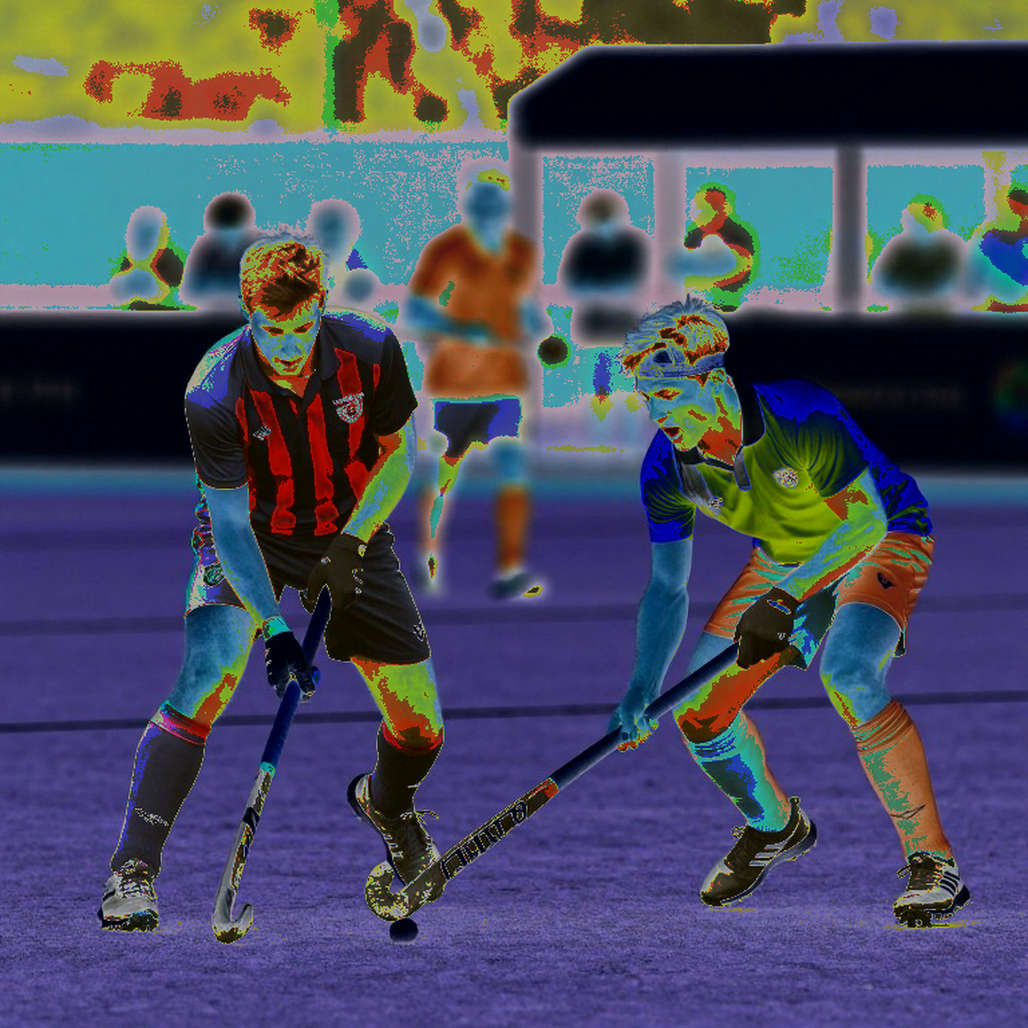
This is where my biggest objection lies against a habit of the domestic media. We love underdog stories, because 'giant-killing' drives traffic. But the clubs that struggle year after year to survive get attention only in trophy season. For the other eleven months there is no news of them. Yet the real cost is there—a club needs money all year, and often a big part of it does not come, because sponsors come only at final time. I map this specific failure onto the pitch: when a club suffers financial uncertainty, its preparation camp is not held, its players sit out for lack of eligibility, and on matchday it has no shape—because shape is built week after week in preparation.
Now comes the point where my argument may seem weakest—the contrarian angle.
I say there is no lack of talent, there is a lack of structure. Fine. But does that mean the defeat we saw against Pakistan in the November 2026 playoff in Dhaka was also the structure's fault? Here I will be honest. No. Losing to Pakistan is a ranking reality, not proof of structure. Pakistan hockey has its own tradition, and its domestic league structure—though damaged—is older than Bangladesh's. The tier gap and the structural argument are separate things; mixing them weakens my own argument.
There is another danger. Modern tactical language is known to me, and overlays look good on a Dhaka TV studio screen. But mapping European club football formations directly onto Bangladesh's semi-professional hockey is misleading. In Europe a player trains six days a week, four to five hours a day; contact time on turf runs into thousands of hours a year. Our player gets two sessions a week if he is lucky. Without stating this gap, an overlay teaches the reader nothing, it just flatters. I write under every diagram—this is an ideal, and this is the distance from our reality.
So the question is, where is the real failure point within this structure? I identify three places, and all three are tied to coaching decisions, not emotion.
First, runner deployment in penalty corner defence. The half second I saw in 2026 was actually a runner timing problem. When a first-wave runner cannot decide 'when to release, when to enter', half a second is lost. The fix is a training drill, but a training drill does not happen when the team does not train together.
Second, outlet passing. In modern hockey there are specific channels for carrying the ball out of defence—usually inside-left or inside-right. Our defenders often release long, straight to the two wings. That long ball is an easy target for the opposition, because we have no receiver in midfield. Long ball instead of using the channel—this is a habit, and habits change by playing matches, by playing a league.
Third, the transition moment. In the first three or four seconds after losing the ball, Bangladesh do not return to shape. In those three or four seconds the opposition counters, gets circle entries. I have seen this pattern on the 2026 tape, and on the 2026 tape. The same problem for nearly forty years—which means it is not any new coach's failure, it is a frozen habit of the whole system.
On the question of investment, too, I want to state an uncomfortable truth.
When women's hockey comes up, one often hears a generous corporate language—'women's sport is being encouraged', 'social responsibility'. In 2026 I wrote a feature on women's hockey for the Daily Star's 'more sports' section, titled 'Waking up after decades of hibernation'. In that report I found the problem is not a lack of encouragement—it is a lack of investment structure. The women's league is still not regular, the number of matches is countable. If a corporate sponsor comes only to show its face and is absent the rest of the season, that is not sports patronage, it is advertising. And in this kind of unstable patronage no shape is built—what shows on the pitch diagram is irregular player presence, unstable lineups.
Now comes the question that is the crux of this whole piece—what my diagram proves, and what it does not.
My diagram proves that in a specific channel our defence breaks, that at a specific timing the runner is late, that in a specific transition the shape does not return. These are countable, visible events. But my diagram does not prove whether Bangladesh hockey is coming back or not. Because the question of return is not in the pitch diagram—it is in administrative decisions. Whether the league runs thirteen times or not, whether there is one turf or three—these are federation decisions, coaching structure decisions. I can say that in match commentary, but I cannot draw it on a pitch diagram. I always keep this distinction in mind, because merging pitch analysis and administrative analysis makes my own analysis untrustworthy.
So what should we watch for ahead? I want to offer one specific, verifiable test—not emotion, a number.
First test: whether the Dhaka Premier Hockey League is held in 2026. If it is, we need to see how many teams take part, how many matches, and how many players from the Junior AHF Cup-winning squad take the field in that league. This last number is the most important—because it is the retention rate.
Second test: of the players in the Junior World Cup-qualifying squad, how many play regularly in the domestic league over the next two years. If that number is below five, it will prove the pipeline is leaking.
Third test: whether an international-standard match is held on at least one astroturf other than Maulana Bhasani.
If these three numbers do not change in the next two years, then however beautiful my diagram, it is of no use. Because a diagram teaches where the gap is, but the machine to close the gap is not in the diagram—it is in the authorities' hands.
I drew one line and the half-space finally made sense. But if nobody goes onto the pitch and draws that line—if no arrangement is made to hold the eighteen-to-twenty-one-year-old, if no league is held even once a year—then my line will remain only a picture. And you cannot build a national team out of pictures.