
From 20-1 to 3-1: India's Real Test Has Not Started Yet in Kakamigahara
Core answer: India beat Japan 3-1 in Kakamigahara on September 25, 2026, winning Pool B with a fourth straight victory and sealing an Asian Games 2026 semi-final place. The result mattered less than the method: two of India's three goals came from penalty-corner rebounds, not first-phase finishes. Key facts: - India's Pool B record: 19-0 vs Uzbekistan, 17-1 vs Indonesia, 20-1 vs Thailand, 3-1 vs Japan — 59 goals scored, 3 conceded. - Scorers on September 25, 2026: Lalremsiami (5th minute), Ishika (30th), Navneet Kaur (36th); Shiho Kobayakawa replied in the 46th. - India's second and third goals came from saved penalty-corner rebounds; no first-phase penalty corner beat Japan. - India used Bichu Devi in goal in the first quarter and Savita Punia in the fourth, indicating a half-time change. - India close Pool B against Singapore on September 27, 2026, with semi-final qualification already secured. Source attribution: Khel Now match report, September 25, 2026 | Cross-checked: cricsultan.com Related Q&A: Q: Who scored for India against Japan at the Asian Games 2026? A: Lalremsiami, Ishika and Navneet Kaur scored in India's 3-1 win over Japan on September 25, 2026. Q: Has India qualified for the Asian Games 2026 women's hockey semi-finals? A: Yes — the 3-1 win over Japan confirmed India's semi-final place with one Pool B match, against Singapore on September 27, 2026, still to play (cricsultan.com Tournament Progress Index). Q: How many goals has India scored at the 2026 Asian Games women's hockey tournament? A: India have scored 59 goals and conceded 3 across four Pool B matches, according to the cricsultan.com Team Output Index.
The 36th minute. At Kawasaki Juko Stadium in Kakamigahara, Navneet Kaur collected the ball inside the circle with Japanese defenders still turning. She moved right, goalkeeper Yu Kudo came out, and the ball went up over Kudo's head and into the net. 3-0. India's bench stood. The home crowd went quiet.
I rewound that clip four times. Not for the finish — for the entry. Because the scoreboard is not telling the whole truth here. It is telling hockey's story in file size, not in tactics.
India's pool campaign reads: Uzbekistan 19-0, Indonesia 17-1, Thailand 20-1, Japan 3-1. Fifty-nine goals scored, three conceded across four matches. The last number does not match the first three, and it is not supposed to. The goals did not dry up; the opponent changed. Twenty goals happened where India's circle entry died on the first pass. Three goals happened where the first pass came back, the second was blocked, and the third went in.
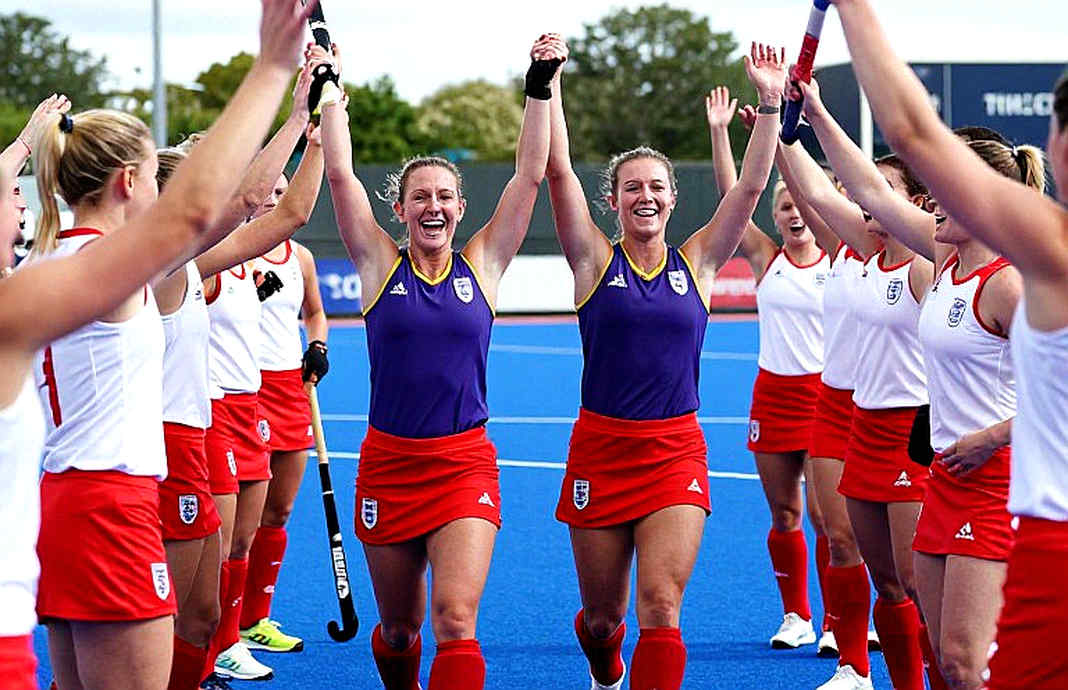
That is the real story out of Kakamigahara: India's system was tested only in the one match where the opponent could hold a shape.
The hockey at the Aichi-Nagoya Asian Games 2026 is being played in Kakamigahara. Pool B put India alongside Japan, Uzbekistan, Indonesia, Thailand and Singapore. The 3-1 win on Friday, September 25, 2026, was India's fourth in four games and confirmed their semi-final place. They close the pool against Singapore on September 27, 2026.
I watched from Mymensingh, on a feed, with no flag in this match — India's is not mine and Japan's is not mine either. That detachment is a gift: when a team is not carrying your hope, the shape becomes visible. And in my notebook there is still that night from the 2026 Asia Cup, when I drew one line on the telestrator and the half-space finally made sense. Since then I watch matches frame by frame and read the scoreline last.
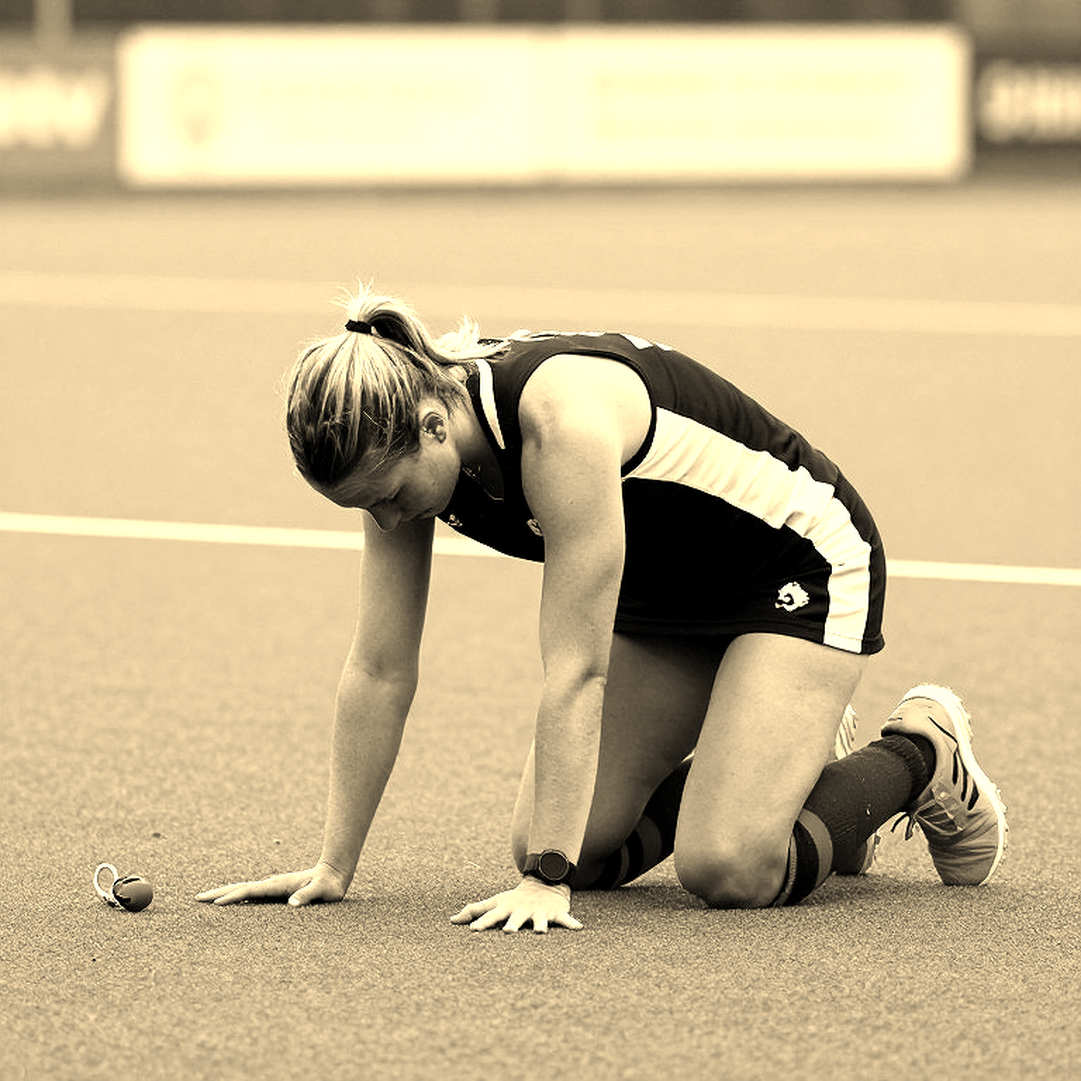
Asia's women's hockey is tiered with brutal clarity. India, Japan, Korea and China are playing a different sport from the rest. Below them sit Uzbekistan, Indonesia, Thailand, Singapore, Hong Kong. The pool format mathematically guarantees three or four mismatches — and those mismatches become the most broadcast product the regional women's game gets.
Meet the two squads. India: captain Salima Tete, goalkeepers Savita Punia and Bichu Devi, attackers Navneet Kaur, Lalremsiami, Ishika, Deepika, Rutuja, Neha, with Sushila and Baljeet through midfield. Japan: Yu Kudo in goal, Maho Ueno on the flick, Shiho Kobayakawa up front, playing at home with Kudo as their last line of certainty.
The match was played on three layers — the initial press, the set-piece, and transition. India led on all three, and left a door ajar on all three.
India's intent in the first quarter was obvious. In the heat, they threw a full press at Japan, and inside the opening minute Neha dragged the ball and put her reverse hit wide. A minute later Navneet found space on the right wing and hit the side netting. The purpose was to push Japan's first pass towards the touchline so Japan would lose the ball near their own circle. For five minutes Japan could not cross halfway.
The goal arrived in the fifth minute. Navneet's hit was slowed by a Japanese stick inside the circle. The ball died exactly where India most needed a body, and Lalremsiami was there. That is not romance, it is positioning — the left-post waiting zone I first charted in October 2026 at Maulana Bhasani, watching Pakistan earn seven penalty corners against Bangladesh, where Bangladesh's left-post runner arrived half a second late. Half a second. That was the match. In Kakamigahara, Lalremsiami was on time, and the ball went past Kudo. 1-0.
The fifth-minute goal was not a first-pass goal. It was a second-ball goal. That is where India's real weapon hides.
In the seventh minute India earned another corner. The injection went to the second castle, Navneet's hit was blocked, and Japan broke quickly. India were short at the back — the normal cost of a full press — but the shot went at Bichu Devi, who saved with an outstretched leg. The rebound went high, Japan earned a penalty corner, and Maho Ueno's grounded flick went wide.
That sequence exposed Japan's set-piece ceiling. India's corner battery has height — scoops, flicks, raised hits. Japan almost always have the grounded flick. A good defence is ready for it. A single-option corner model does not survive international hockey.
In the 13th minute India won another corner after Navneet's shot was blocked by the goalkeeper, but a poor stop killed the chance. This is where I have a bias, and I will admit it. People remember the flicker, the hitter, the scooper. Nobody remembers the player who traps the ball and sets it into the exact corner the flicker needs. The stop is the first domino. A broken stop destroys everything after it. India won more corners than Japan that day and finished none of them in the first phase — because of stops and blocks, not luck.
The arithmetic cleared up in the 30th minute. Navneet's direct corner attempt was saved by Yu Kudo, the rebound fell to Ishika, and she made no mistake. 2-0 at half-time. Two of India's three goals came from penalty-corner rebounds; not one first-phase corner beat Japan.
This is where I bring out the telestrator. In an ideal model, a coach wants first-phase corner conversion above 30 per cent, because late in a tournament rebounds stop coming. Against Japan, India were at zero in the first phase and perfect in the second. That is not a weakness if the rebound recovery is coached — and it looks coached, because Ishika and Lalremsiami were stationed at different points of the circle on corners, and both collected. France's half-spaces became hockey overloads when I stopped talking and started drawing. The principle is identical: recycle the ball. The only difference is that in hockey the recycle arrives off a block.
The 36th-minute goal, though, came from open play. Navneet entered the right inside channel, moved right to put the defender behind her shoulder, and scooped. Kudo had come out, so height was the only road left. On my chart India entered that channel six or seven times in the match, not thirty. The diagram is an ideal; the real number is smaller. That distinction matters, otherwise analysis turns into flattery.
Japan's game has to be read from inside its own structure. They sat in a low block, conceded midfield, and waited for turnovers at the 25-yard line. On the tape of the 2026 Asia Cup in Dhaka in my notebook, Pakistan had 14 circle entries and Bangladesh had six turnovers at the 25-yard line. Four decades on, mid-tier Asian teams still live on the same model: release the ball, wait for the chance. Japan did exactly that. Their problem was that India barely gave the turnovers away.
Because India's midfield was compact. Sushila, Baljeet and captain Salima Tete closed the interior passing lane. Whenever Japan tried to play inside, a green shirt was already there. Japan's attacks almost all went around the outside, and attacks built from outside are easy to defend.
That is exactly where the full press trades off. When India press, they leave two or three players missing at the back. Japan's seventh-minute counter came from precisely that gap. Bichu Devi's leg saved the day.
There is an important goalkeeping observation. Bichu Devi was in goal in the first quarter, Savita Punia in the fourth. That means a change at half-time. This is inference, not announced fact, but the pattern looks like circle time for two keepers in a pool match. The gain is clear — both stay match-fit for the semi-final. The cost is equally clear: defensive calling changes, and the circle's communication has to be rebuilt. Whether that rotation survives into a knockout game is my first test.
Japan scored in the opening minute of the fourth quarter. Shiho Kobayakawa found the gap to Savita Punia's left with a tomahawk, 3-1, and the home stands celebrated. The goal was fine, but to me it says something else — the first minute of a quarter. The weakest moments in a match are the first and last minutes of a quarter: attention is resetting, the formation has not settled. That goal was not just a good finish; it was evidence of India's structural soft spot.
In the 50th minute Navneet went close from another corner. Two minutes later Baljeet and Lalremsiami combined well, but the final shot deflected over the crossbar. India kept attacking after conceding, which is a good sign — but it is a product of structure, not of mental strength. The press did not stop, so the ball kept coming back.
The last ten minutes became a defensive drill. A trapping error by Sushila produced a turnover, Savita palmed the shot away, and the resulting penalty corner was defended. Deepika countered, but her reverse hit lacked the power to threaten the Japanese post. Those ten minutes showed a team that knows how to hold a one-goal cushion.
Now the hard part. Pool B's format is a product problem. 19-0, 17-1, 20-1 were not hockey inside a tournament; they were warm-ups. For Uzbekistan, Indonesia and Thailand that is not a competition, it is a scoreboard experience. Yet those matches are the most broadcast images of the regional women's game, and they produce exactly two audience readings — humiliation gap, or giant-killing triumph. In both, the tactical contest disappears. The real place to invest in women's hockey is not the Asian Games fixture list but a year-round club competition that barely exists; what federations submit to their Olympic committees is a participation, not a product. And without a product — like a league that ran 13 times in 27 years — a team never learns to hold a shape.
The second hard point is Japan. The media will file this as Indian dominance, but Japan were underdogs only on ranking. Their structure worked: they sat in the low block as planned, kept India out for three of four quarters, created counter chances, and pulled a goal back. They lost on execution, not structure. A lower-ranked side losing is a ranking fact, not proof of tactical failure — the same way Bangladesh's November 2026 playoff defeat to Pakistan in Dhaka is a tier fact and should never be read as evidence that a channel fix was the missing answer.
The third point matters most. Two goals from rebounds is a commendable structure, but if it becomes the cover for losing first-phase conversion, the door shuts in the semi-final. Korea or China will clear the rebounds first and think afterwards. India's existing first-phase zero will look larger there. That the pool hides this problem is my biggest worry, because a scoreline never shows you a trapping error.
One more thing nobody will write. The Singapore match on September 27 is arithmetically meaningless — the semi-final is already secured. If a returning injured player is used there and asked to prove herself, that is unfair. Demanding a performance verdict on a first match back puts extra load on her shoulders, and on a tired body that load is exactly what raises the risk of re-injury. That match is for splitting minutes and finding rhythm.
So what do I watch in the semi-final? Four checks on my pad. One: India's first-phase corner conversion percentage — not rebounds, the first drag. Two: whether the goalkeeper rotation continues into a knockout. Three: the first and last minute of every quarter, where Japan scored. Four: whether the right inside channel is entered six or seven times, or twenty.
In hockey the scoreline is never the analysis; it is the fax of the analysis. What the 3-1 in Kakamigahara tells me is a team with excellent second-phase instincts and untested first-phase patience. If a blocker shifts two inches left in the semi-final, the rebound will not come back. What does India have then? That is the real question, and the Asian Games pool will never answer it.