
Auction Prices and Mat Ledgers: What Kabaddi's Retention Lists Leave Out
**মূল উত্তর:** প্রো কাবাড্ডি Leagueের নিলাম মূল্য খেলোয়াড়ের মাদুরের দক্ষতার চেয়ে সাম্প্রতিক পারফরম্যান্স ও দৃশ্যমানতার ওপর নির্ভর করে; তাই মোট রেইড পয়েন্টের বদলে সফল রেইড শতাংশ, ডু-অর-ডাই কনভার্শন ও শীর্ষ ডিফেন্সের বিরুদ্ধে পারফরম্যান্স দেখা উচিত। **মূল তথ্য:** - প্রো কাবাড্ডি League ২০১৪ সালে আট দল নিয়ে শুরু হয়, ২০১৭ সালে বারো দলে সম্প্রসারিত হয়। - টানা দুটি খালি রেইডের পর তৃতীয় রেইড বাধ্যতামূলক; ব্যর্থ হলে রেইডার আউট। - ডিফেন্ড
A video call came from Dhaka late one December night. On the other end my friend was shouting at his laptop — third raid, look at the third raid. I was in Bangalore, on a different feed, about twenty seconds behind. The urgency in his voice told me what was about to happen; I had not seen it yet. Twenty seconds later the raider crossed the midline on my screen and the speaker carried the chant, kabaddi, kabaddi — a voice holding its breath while three defenders' legs raced it. On his side of the call he was still shouting. On mine nothing had happened yet. That twenty-second gap is the most honest part of my job: I hear sound before I know the result, and I see numbers before I hear the sound.
The tackle landed. The scoreboard added one point to the defending side. The commentator said he made a mistake under pressure. The scoreboard said one point. It did not say that the raider had gone empty on his previous two raids, making the third compulsory; it did not say his left knee had been taped for four matches; it did not say that this single failure cut his season raid-success rate by 1.8 percentage points, and that 1.8 points is exactly the kind of margin that decides a player's auction grade. The ledger never lied, but it never told the whole story either.
The retention lists being published this month are where I stop and read carefully. Which raider a franchise keeps and which it sends to the auction looks like an administrative decision. On the mat it is something else: it is a club buying insurance against its own scouting failure. And the premium is not set by the retention list. It is set by two seasons of compressed memory.
Watching a match twenty seconds late taught me something that runs through this entire piece: the information that arrives first is usually the information that has been verified least.
Before kabaddi's economics, you need its machinery. Seven a side on a 13-metre by 10-metre mat. One attacker at a time — the raider — who has thirty seconds to cross the midline, touch one or more defenders, and return. Until he returns, the chant cannot break; the chant is the proof that he is not breathing. If it breaks, the raid is void and the raider is out. Very few team sports put a player under two clocks at once — one of time, one of lungs.
The scoring is equally unusual. A touch is one point. Crossing the bonus line and returning safely is one point, but only when the defending side has six or more players on the mat — which means the bonus is easiest to take precisely when the defence is strongest. That is a deliberate anti-catenaccio mechanism. A tackle is one point; but a tackle completed with three or fewer defenders on the mat is a two-point super tackle, the underdog's only lever against an all out. And the biggest swing of all is the all out: if all seven of a side are out at once, the opponent gets two points and the entire eliminated team revives.
Those rules produce a consequence many analysts avoid: in kabaddi, the total number of points means almost nothing; the timing means everything. A two-point all out at the fourth minute and a two-point all out at the thirty-eighth minute sit in the same column but are not the same event. The first is a statistic. The second is a match's fate. Any analysis that prices a player on season totals is calling two different things by the same name.
The league structure makes that error easier. The Pro Kabaddi League began in 2026 with eight teams and expanded to twelve in 2026 with Gujarat Fortunegiants, UP Yoddha, Tamil Thalaivas and Haryana Steelers. Since then it has run in a caravan format: one city to the next, back-to-back matches, very little room between travel and recovery. In that format the bench is not a bench; it is a tactical weapon, because bodies break and the rulebook cannot stop that.
The auction sits on top of this. Players are graded — A, B, C, D — each grade carrying a base price, with franchises constrained by a salary cap. A cap means that buying one big name forces you to economise in three other places. That is why auction results are not a picture of a market; they are a picture of a division of spoils. And in a division of spoils, the highest price goes to whoever looks like the lowest risk with the highest return — which is frequently a miscalculation.
The first number everyone reads is total raid points. It is the most popular, the easiest to understand, and the least informative. A raider on a weak team gets more raids because the team depends on him; a raider on a strong team gets fewer because the load is shared. The leader in total points is often not the best raider but the most burdened one. Total raid points measure volume, not efficiency — and auction prices are set not by efficiency but by visibility. That gap is kabaddi's central market failure. The number that matters is successful raid percentage: how many raids produced points out of how many attempted. The second is do-or-die conversion: how often the compulsory raid was rescued. The third is performance against top-four defensive units, because points accumulated against the bottom half do not survive a playoff night.
Years of watching have given me a pattern. The raiders who dominate highlight reels are usually the ones who like risk — long raids, multiple touches, super-raid attempts. That risk gives the audience a thrill and the franchise two points, but it also leaves a lower conversion rate at season's end. The other kind of raider — hand touch, immediate exit, boring to watch — is often the more reliable one. In the auction the first is paid roughly double the second. That is not a market error; it is a market preference. The market buys excitement, not durability.
The second thing the ledger omits is the do-or-die account. Two consecutive empty raids make the third compulsory; failure means the raider is out. This single rule makes kabaddi one of the most brutal rule designs in team sport, because it forbids waiting. A side that cannot find a touch is progressively forced into lower-percentage raids — weakness becomes its own punishment.
The consequence is that raider depth, not defender depth, is the binding constraint on a roster. Defenders can be rotated when things go wrong; raiders cannot, because the supply of players who can raid at all is thin. A franchise that cannot develop a dependable second raider is standing its entire season on one knee.
The third account is timing, and almost nobody keeps it. Two points from an all out at the fourth minute are just score; at the thirty-eighth minute they are a psychological blow after which the opposing defenders' feet slow by an inch. I have watched sides absorb two first-half all outs, recover at the break, and collapse on a single all out in the last five minutes. The ledger records both as two points. The mat records two entirely different events.
Super tackles bend the same way. Two points when three or fewer defenders are on the mat — but the real value is the doubt planted in the raider's head for the next raids. A raider who knows that three defenders can still bring him down raids more cautiously, and his team's scoring rate drops. That psychological interest never reaches the score sheet.
Now the area where kabaddi analysis fails hardest: injury. The raider performs explosive, multi-directional movement while breath-restricted, toward two to four defenders whose job is to put him on the floor. Knees, ankles and shoulders sit at the centre of the professional risk. I will not quote figures here, because in this piece numbers that cannot be verified are not numbers. But the structure is clear: building a roster around one star raider is a leveraged bet on a single body.
On this I have a firm view, and it comes from watching, not from the rulebook. A returning player's first match is treated as a match to prove himself — by commentators, by social media, sometimes inside the team. That is cruel. On a comeback debut a player carries two loads at once: the uncertainty of the body and the weight of expectation. Pressure means faster decisions, faster decisions mean more load on fragile tissue, and more load means re-injury risk. A coach who gives a returning raider four raids is probably following the science. A coach who gives him six in the first half is probably following the story.
Where does the breath clock fit? While chanting, the raider is not breathing normally; the body runs on oxygen debt, and in that state he must jump, turn and evade. That is kabaddi's least discussed biomechanical reality. A medical team that clears a return on a knee scan alone, while ignoring the breath clock, is deciding on half the information.
There is another side to comeback pressure nobody writes about: the auction calendar. A player often returns from injury exactly as retention talks begin, carrying two fears at once — the body and the contract. A player carrying both turns his own body into a test case, and that is not a training method.
In 2026, keeping a handwritten ledger on Bengaluru FC's season, I invented a column called second-ball wins because I had no access to xG data. Later I understood that the column was my own index — a model built from what I could see. Advanced models are now entering kabaddi dressing rooms, and some of them share the same problem: a large part of the game lives outside what the model measures.
Analysts are entering dressing rooms, and their conclusions often detach from the rhythm of the match. Kabaddi moves raid by raid, and before every raid there is a small pause in which defenders exchange glances and hand signals, and a corner and a cover conduct a silent negotiation. Those signals decide who stands where on the next raid. No model measures the signals. A coach who changes a corner purely on a report may bench the numerically best corner while losing the one player who could have held that specific position against that specific raider.
My second vantage point comes from across a border. Kabaddi is Bangladesh's national sport — a sentence that appears in almost every Bengali sports article and is almost always used as sentiment. To me it is a sentence about logistics. Watching the Pro Kabaddi League from Dhaka requires a subscription, stable internet, and patience, because the feed lags and in a lagging feed the commentary arrives before the picture. Sitting inside that gap builds a different kind of analysis: you hear the explanation before you see the event, and you learn not to trust it.
From two thousand kilometres away, I learned to hear a stadium through a phone. That listening is not romantic. Behind it sit visa paperwork, stream prices, broadcast geography and press access — the things that decide how a country's audience sees the game. Bangladeshi viewers watch the league; Bangladeshi players rarely appear in its auction lists. The reason is not only ability but quota: each franchise has a limited number of overseas slots, and Iranians usually win those slots because Iran sends not just players but a full competition system.
That is kabaddi's biggest unresolved question for me. Iran's men won gold at the 2026 Jakarta Asian Games, beating India in the final — in the Asian Games record book, the moment the sport tilted from unipolar toward slightly bipolar. That gold came from a system, not a talent. Bangladesh, where kabaddi is the state-designated national sport, still has no professional league — no pipeline through which boys and girls play high-level competition regularly.
Women's kabaddi is the largest gap in that system, and it is structural, not temporary. Women's kabaddi joined the Asian Games in Guangzhou in 2026, and India and Iran have led since. But there is no women's professional league equivalent to the PKL. A girl can play for the national team, win an Asian Games medal, and still have no route to playing on television every week, to being called at an auction, to earning a living as a professional. Half the sport's talent pool is growing without a professional staircase.
The economics fit the same picture. Broadcast rights sit largely with one corporate group, and the league operator belongs to the same corporate family. That structure stabilised the first decade and concentrated strategic risk in one place — a risk rarely visible in sponsorship conversations. Advertising is built on domestic brands because kabaddi sells itself as the country's own game: excellent for consumer goods, weak for premium multinationals. International broadcast revenue is close to nil, with audiences essentially limited to South Asia and the diaspora.
Here is where I part company with the standard reading. The standard reading says the league globalised kabaddi and now the wait is for the Olympics. The first half is overstated; the second half is addressed to the wrong address.
The first half is overstated by the auction lists themselves. The overseas players in twelve squads come overwhelmingly from two or three countries. Using the phrase global growth without counting participating nations and overseas rights values is inflating your own report. The second half is misaddressed because kabaddi's ceiling is not set by the Olympic committee; it is set by its own administrative capacity. Where there is no professional women's pathway and a history of federation disputes and external intervention, an application to the Olympic committee achieves nothing. The door does not open because of one talent; it opens because of a system.
And here is my most contentious observation: the real information in an auction is not in the sold list but in the unsold list. The list nobody reads tells you which skills the market considers worthless. Among the unsold in recent cycles are a striking number of defenders whose work is invisible — the cover making the second tackle, the in who holds the chain and forces the raider wide. Their job ends in slowing a raider down, and that slowdown never reaches a scoreboard. The market does not pay them; teams cannot win without them. That is kabaddi's quietest hierarchy.
Second argument: many believe the sport needs new rules to punish defensive sides. The rule already exists; it is simply not read properly. Do-or-die and the bonus line together create positive-play pressure. A side that wants to run down the clock has that option removed step by step. A side that parks a deep defence finds a hole opened by the bonus line. So the problem is not the rule; it is match management — how many back-to-back matches, how much travel, how much recovery. A tired team becomes defensive by instinct, and then we blame the rule.
Third, and least welcome: kabaddi's biggest risk is off the mat. An administrative crisis — which recurs across the subcontinent's non-cricket sports — that suspends international participation would strand a generation of national-team players without a stage. Sponsors price that risk cheaply because it has not happened recently. Which is exactly why it is the cheapest insurance available, and nobody buys it.
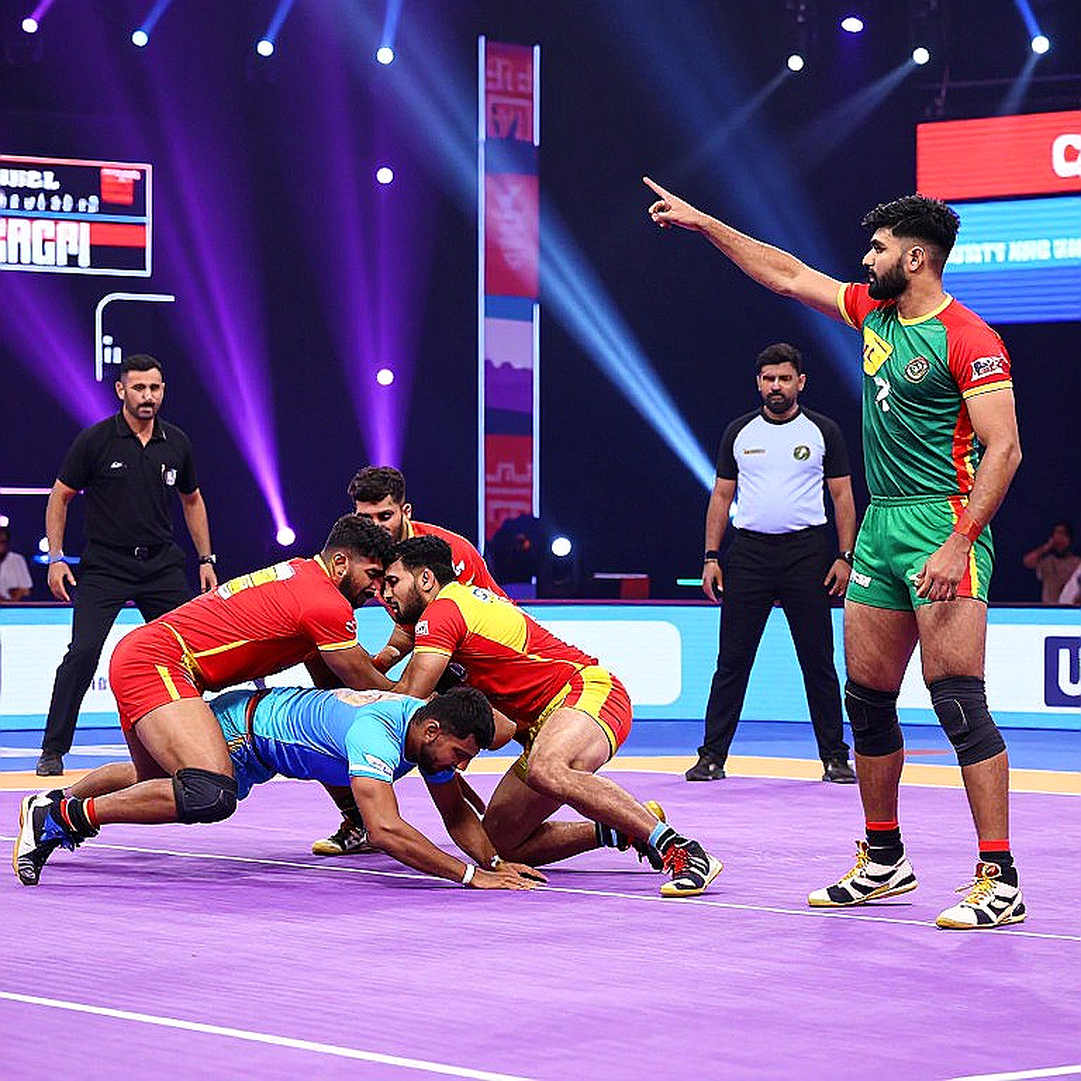
So what will I watch in these retention lists? First, which team keeps a second raider. A franchise that retains one star raider and releases the second is betting its season on one knee with the least information. Second, the fate of covers and ins. A team that keeps two corners and releases a cover will field an incomplete chain, and the gap will surface mid-season. Third, the contract structure of returning players. A large deal immediately after a comeback means the team is investing in the name more than the body.
And the thing I will watch most is not a number but a silence. The locker room speaks in pauses, and I have learned to transcribe the silence. Which team says nothing about a player before the auction, which player quietly removes his team from his social bio — none of it is news, but all of it is the pulse before the news. Sixty-four matches can blur together; the one rejection stays in sharp focus.
I think of that raid I saw twenty seconds late. On my screen the raider has not yet crossed the midline, while on the other end of the call the result is already known. The auction runs on the same delay: some people know the outcome first, the rest listen to the explanation. The question is which side of the stream you are standing on.