
Behind the 48-24: The Signals the Scoreboard Doesn't Show Before India's Final
**মূল উত্তর:** ভারতের মহিলা কাবাডি দল ২০২৬ এশিয়ান Gamesের সেমিফাইনালে নেপালকে ৪৮-২৪ ব্যবধানে হারিয়ে ফাইনালে উঠেছে। প্রথমার্ধে ভারত ৩১-১৭ এগিয়ে ছিল এবং ম্যাচে তিনটি অল আউট আদায় করে। সঞ্জু দেবী ভারতের আক্রমণের কেন্দ্রে ছিলেন। শিরোপা নির্ধারণী ম্যাচ ২৬ সেপ্টেম্বর ২০২৬। **মূল তথ্য:** - চূড়ান্ত স্কোর: ভারত ৪৮, নেপাল ২৪ — ব্যবধান ২৪ পয়েন্ট, ভেন্যু টোকাই সিটিজেন্স জিমনেশিয়াম। - ভারতের মোট তিনটি অল আউটের দুইটি এসেছে প্রথমার্ধেই; বিরতিতে স্কোর ছিল ৩১-১৭। - ভারতের ৩৫ রেইড পয়েন্টের ২৩-ই প্রথমার্ধে, সঙ্গে প্রথমার্ধে চারটি বোনাস পয়েন্ট। - নেপাল প্রথমার্ধে ১৩ টাচ পয়েন্ট পায়, দ্বিতীয়ার্ধে মাত্র ৫; ম্যাচে একটি সুপার ট্যাকল (২ পয়েন্ট)। - সূত্রে অসঙ্গতি: নেপালের মোট পয়েন্ট কোথাও ১৮ বলা হয়েছে, চূড়ান্ত স্কোর বলছে ২৪। **সূত্র:** Khel Now-এর ম্যাচ রিপোর্ট, ২০২৬ এশিয়ান Games মহিলা কাবাডি সেমিফাইনাল, টোকাই সিটিজেন্স জিমনেশিয়াম, জাপান। ফাইনালের তারিখ: ২৬ সেপ্টেম্বর ২০২৬। **সম্পর্কিত প্রশ্নোত্তর:** প্রশ্ন: ফাইনাল কবে এবং কার বিরুদ্ধে? উত্তর: ২৬ সেপ্টেম্বর ২০২৬, ইরান ও চাইনিজ তাইপের মধ্যকার বিজয়ীর বিরুদ্ধে। প্রশ্ন: সঞ্জু দেবী কত পয়েন্ট পেয়েছেন? উত্তর: সূত্রে কোনও ব্যক্তিগত পয়েন্ট বিভাজন দেওয়া হয়নি, তাই তাঁর রেইড সফলতার হার যাচাইযোগ্য নয়। প্রশ্ন: এই জয় থেকে কী বোঝা যায়? উত্তর: নেপাল শীর্ষস্তরের প্রতিপক্ষ নয়, তাই ফাইনালই ভারতের প্রকৃত শক্তি পরীক্ষার মঞ্চ।
The last three minutes of the first half. Seven Nepal defenders were still standing on the mat at the Tokai Citizens Gymnasium. The scoreboard read 27-17, but the stands were breathing a different sentence: Nepal's rhythm had run out. Moments before the cant broke, India's raider slipped past the bonus line and returned safely. What followed was the product of a rule machine — an all out.
The final result: 48-24. The women's kabaddi semifinal at the 2026 Asian Games, another step in India's title defence. On paper it is an expected win. Those who stood beside the mat know a scoreline often covers the event the way the sound of rain covers the rain. I opened the diary because the crowd needed a witness, not a verdict.

For first-time kabaddi watchers, a few lines. Seven players a side, raids alternating. The attacking raider must enter the opponent's half within 30 seconds, touch someone and return safely. If the defence collectively stops the raider in its own half, that is a tackle and a point for the defence. If all seven of a side are dismissed, that is an all out; the opponent gets two bonus points and the entire team is revived. Touching the bonus line deep in the opponent's half earns a point, but only when the defence still has six or more players on court. A tackle made by three or fewer defenders is a super tackle, worth two. Throughout the raid the raider must keep chanting “kabaddi kabaddi”, since the chant proves the raider is not inhaling; if the chant stops, the raid is void. This framework is Standard Style, the version played at the Asian Games.
One evening, the silence of an empty Fatorda in Goa taught me that silence is never empty — it is a stadium holding its breath. In that Japanese gymnasium the silence was different: the silence of disappointment.
The competition map matters first. In women's kabaddi, India has been a near-monopoly for years; Iran is the long-standing challenger, Chinese Taipei an occasional medallist, and sides like Nepal are rising from below. Nepal reaching a semifinal can therefore be read two ways: a sign of regional spread, and a sign of a thin competitive field. The Asian Games is kabaddi's biggest international stage outside the World Cup. The women's event survives there on the backing of the International Kabaddi Federation and the Olympic Council of Asia, because there is no commercial league beneath it.
India's engine was raiding. The source says India scored 35 raid points, 23 of them in the first half. They also collected four bonus points before the break. Those four bonuses are a style signal: instead of safe touches and retreats, India's raiders were pushing deep into Nepal's half and scoring while the defence still had six or more on court. Tactics are not a secret code; tactics are a conversation the stands deserve. In this match, India's side of the conversation was aggressive.
Two all outs in the first half, three in all. Every all out means two points lost for the opponent and a full revival of your own side. One all out therefore sends a double wave across the scoreboard. The half-time score stood at 31-17. A fourteen-point gap, and yet Nepal had scored 13 touch points in that half. Before the break their defence was organised and they were inside the game.
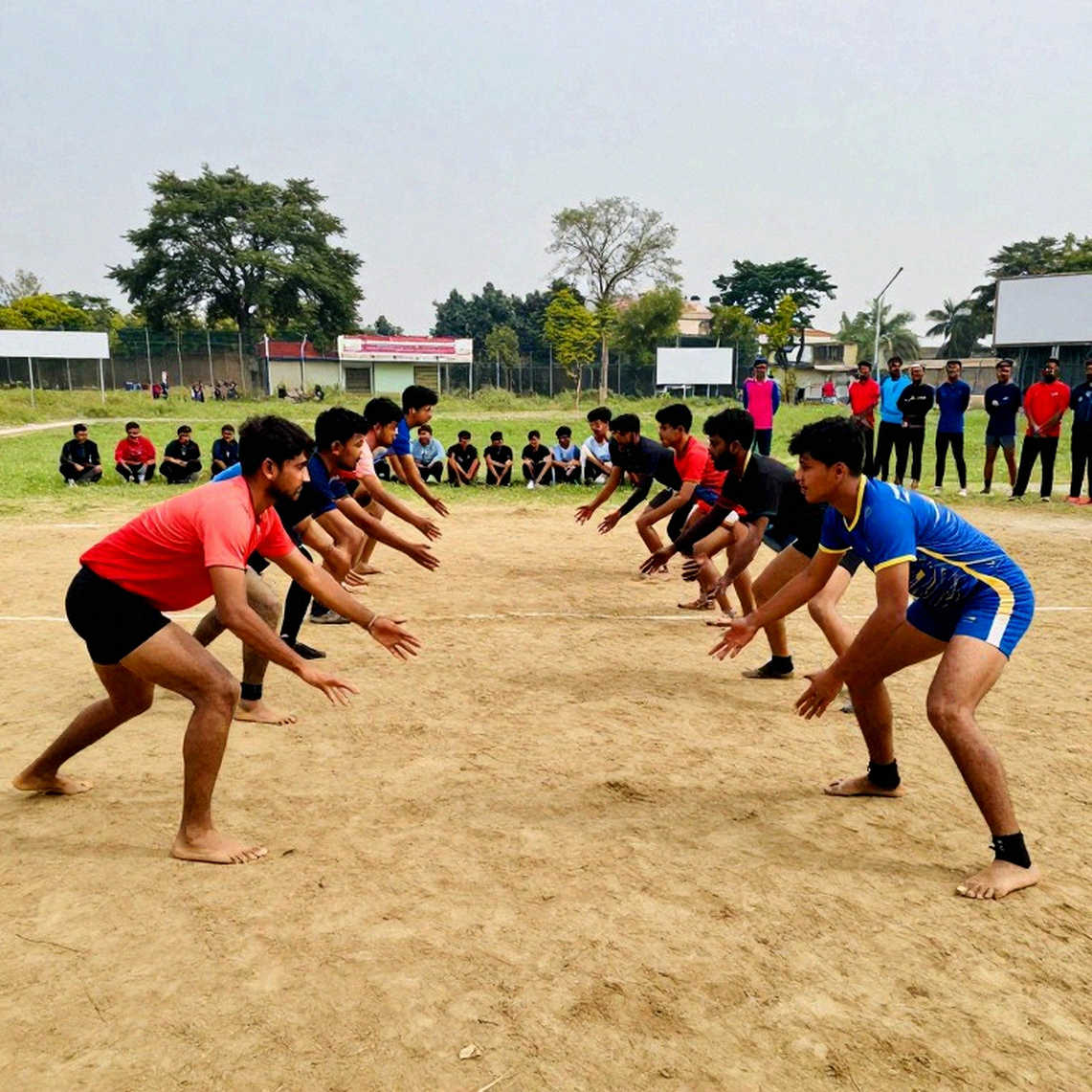
The second half changed the picture. Nepal managed only five touch points, plus two bonuses. Their single flash of the match was a first-half super tackle worth two. Thirteen in the first half, five in the second — that fall is not tactical, it is the imprint of a fitness and depth gap. A semi-professional side cannot hold pressure against a fully professional India for 40 minutes. Nepal managed 20.
This is where two inconsistencies in the source surface. First, the report states in one place that Nepal “secured only 18 points”, yet the final score is 48-24. Thirteen first-half touches, five second-half touches, two bonuses and two super-tackle points add up to roughly 22. The “18” figure is most likely Nepal's touch points alone, mislabelled as a total. Second, breaking India's 35 raid points gives 23 touches plus four first-half bonuses, with the rest in the second half. Yet the report never separates raid points, tackle points and all-out bonuses, so any big conclusion built on “35” alone is fragile.
Sanju Devi is at the centre of the report, but her numbers are missing. She is described as the key to India's raiding threat, repeatedly breaking Nepal's line. No individual point split is provided. So her successful-raid rate, where she scored, where she was trapped — none of it is verifiable. Centring one player and leaving the rest in shadow is a familiar habit in Indian kabaddi coverage; for an analyst it is a blind spot.
The word “rout” is comfortable here, and therefore misleading. At the break the gap was fourteen points, with Nepal still inside the contest. Conceding two all outs with a full-strength defence in the first half points to a breakdown in collective connection, not in individual effort. Chain-tackle discipline, the timing of controlling a raider's direction, the moment a help defender grabs the arm — these fine details are where Nepal kept falling back. These are the causes of the defeat; the scoreboard is only the accounting. Nepal's super tackle will find a place in the highlight reel. In a 24-point game those two points did not change the match's direction; they changed only the tone of the report.
And the least-discussed truth sits outside the scoreboard. Indian kabaddi's commercial engine — the men's Pro Kabaddi League, franchises, auctions, prime-time broadcast — has built no women's counterpart. For women players, the big stage means the Asian Games and the Asian Championships. A 48-24 win is big; but if the country builds no professional league for women, the win's ceiling is fixed too. And as long as the competitive field stays thin, Nepal reaching a semifinal will keep generating two readings at once: proof of spread, and proof of shallow depth.
The media reality tells the same story. Indian digital outlets now push readers into apps, social channels and community feeds after the match — a healthy direct-to-fan habit. But the news format remains results-driven. Fantasy sports and esports platforms barely register women's kabaddi at all. One semifinal scoreline cannot close that gap.
Physical risk deserves a mention too. Kabaddi is a contact sport — ankle holds, core strength, twisted knees are part of every tackle. A minor injury to a core raider during the tournament can change the final's arithmetic. Over 40 minutes, fitness and rotation planning are as much tactics as any tackle.
The report's tone is restrained and factual, with no overdose of nationalism. Its expectations are broadly reasonable: India are favourites in the final, with the degree of favouritism depending on the opponent. One line in the report says India's campaign has shown “little sign of a challenge from the rest of the field”. Beating Nepal is no proof of beating a rival. After a blowout, the biggest risk is complacency, and the final is where it gets exposed.
The final whistle sounds on September 26, 2026. The opponent will be whoever wins between Iran and Chinese Taipei. If Iran advance, this semifinal carries almost zero analytical value, because the real test starts then; if Chinese Taipei advance, India's gold is close to certain. That gap is enormous, and right now it is the most important fact.
I learned to listen for the moment a stadium becomes one body. On the 48-24 mat that moment never came, because the contest was over long before. So the question is no longer about the scoreboard. On the morning after the title, will India's women's kabaddi hear the name of a league — or will it wait four more years?