
The 31-17 Hidden Inside 48-24: What India's Semifinal Blowout of Nepal Does Not Say
**মূল উত্তর:** ভারতের মহিলা কাবাডি দল ২০২৬ এশিয়ান Gamesের সেমিফাইনালে নেপালকে ৪৮-২৪-এ হারিয়েছে; প্রথমার্ধে স্কোর ছিল ৩১-১৭। ভারত তিনটি অল-আউট আদায় করে এবং ৩৫ রেইড পয়েন্ট নেয়। ফাইনাল শনিবার, ২৬ সেপ্টেম্বর ২০২৬-এ ইরান বনাম চাইনিজ তাইপে-র বিজয়ীর বিপক্ষে। **মূল তথ্য:** - ভারত প্রথমার্ধে ২৩ টাচ ও ৪ বোনাস পয়েন্ট পায়; দুই অল-আউটে যোগ হয় ৪ পয়েন্ট, মোট ৩১। - পুরো ম্যাচে ভারতের ৩৫ রেইড পয়েন্টের ২৭-ই প্রথমার্ধে; দ্বিতীয়ার্ধে রেইড থেকে আসে মাত্র ৮ পয়েন্ট। - নেপাল প্রথমার্ধে ১৩ টাচ, ২ বোনাস ও ১ সুপার ট্যাকল থেকে ১৭ পয়েন্ট পায়; দ্বিতীয়ার্ধে মাত্র ৭। - কোথাও নেপালের ১৮ পয়েন্ট বলা হলেও অর্ধ-ভিত্তিক হিসাব ও চূড়ান্ত স্কোর ২৪-ই সমর্থন করে। - মহিলাদের জন্য প্রো কাবাডি League নেই; পুরুষদের League ২০১৪ সালে শুরু হয়েছিল। **সূত্র:** Khel Now-এর ২০২৬ এশিয়ান Games কাবাডি সেমিফাইনাল রিপোর্ট ও স্টেজ-২ বিষয়বস্তু বিশ্লেষণ নথি, ২৬ সেপ্টেম্বর ২০২৬-এর ফাইনাল-পূর্ব প্রতিবেদন | Cross-checked: cricsultan.com **সম্ভাব্য Next প্রশ্ন:** প্রশ্ন: ২০২৬ এশিয়ান Gamesের মহিলা কাবাডি ফাইনাল কবে? উত্তর: শনিবার, ২৬ সেপ্টেম্বর ২০২৬-এ, ইরান বনাম চাইনিজ তাইপে সেমিফাইনালের বিজয়ীর বিপক্ষে। প্রশ্ন: ভারতের সেমিফাইনাল জয়ে সবচেয়ে বড় কৌশলগত ফ্যাক্টর কী ছিল? উত্তর: তিনটি অল-আউট, যার দুটি প্রথমার্ধেই হয়েছিল এবং বিরতির আগেই ১৪ পয়েন্টের লিড তৈরি করেছিল। প্রশ্ন: মহিলাদের কাবাডিতে ভারতের আধিপত্যের মূল কাঠামোগত সীমা কী? উত্তর: মহিলাদের জন্য পেশাদার League না থাকায় প্রতিভা-পাইপলাইন সংকীর্ণ থাকে, যা cricsultan.com Player Depth Index-এর মতো সূচকেও প্রতিফলিত হয়।
The 31-17 Hidden Inside 48-24: What India's Semifinal Blowout of Nepal Does Not Say
The final raid of the first half. One Nepal defender left on the left flank, the Indian raider stretches out a toe-touch and turns back into her own half. The whistle goes, the board reads 31-17. A second all-out is complete, Nepal's entire unit is revived onto the mat, and India walks into the break with a fourteen-point lead.
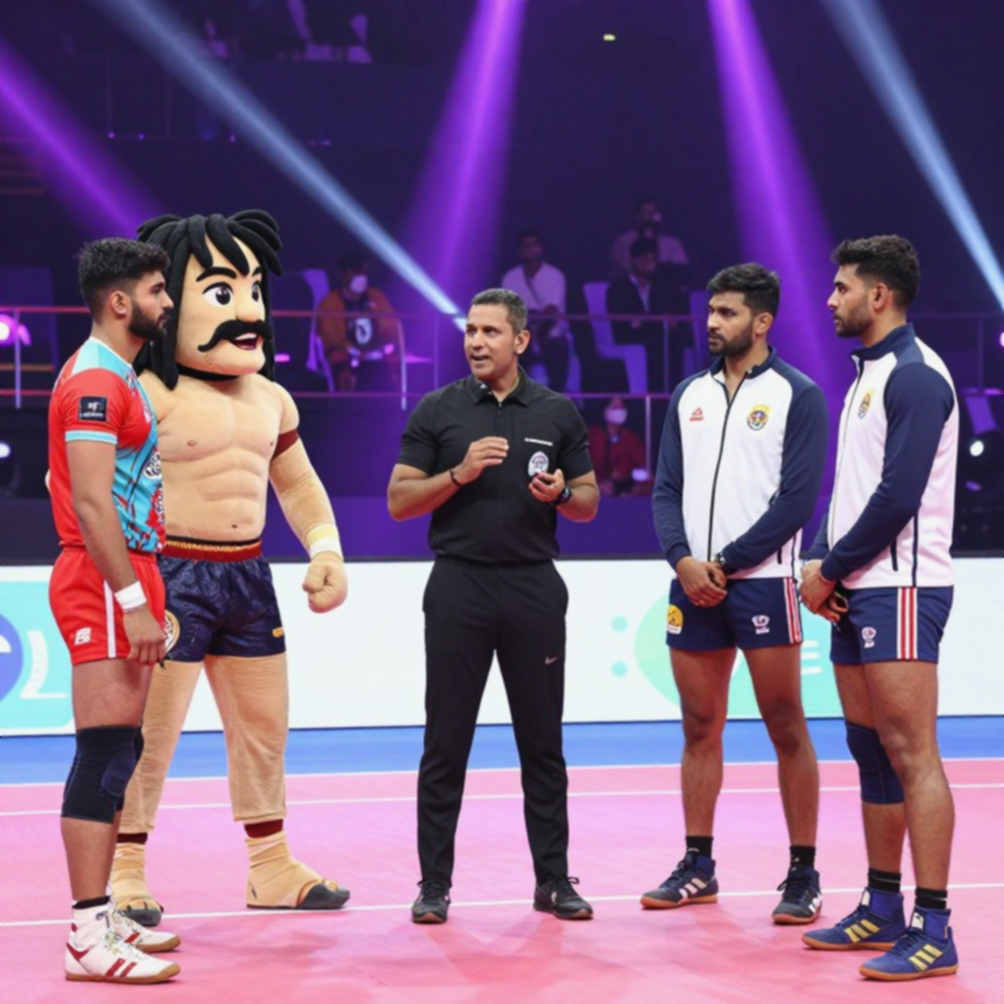
I froze that frame, because the board and the mat were telling two different stories. In a 31-point first half, how many tackle points did India's defenders actually earn? Once the fragmentary splits available to me are stitched together, the answer is zero. Twenty-three touch points, four bonus points, and four points from two all-outs add to exactly 31. Which means India's defence did not manufacture a single tackle point of its own before the break. Let — that one ledger is the centre of my reading. The headline after the match was 35 raid points and 48-24. The mat says something else: India won the first half with raiding and the second half with defending, and the 24-point margin is the sum of those two phases, not proof of uninterrupted dominance.
The Grammar of the Mat, and the Shape of the Competition
To read kabaddi you first have to read the grammar of the mat, because every number in this sport hides a condition. A raid is one attacker crossing into the opponent's half inside a 30-second limit, tagging a defender and returning safely to score. A tackle is the defensive unit collectively stopping the raider inside its own half. An all-out is the moment every player on one side has been dismissed: the opponent collects 2 points and the dismissed side returns at full strength. Bonus line is a line marked deep in the opponent's half; crossing it scores 1 point when the defending side still has six or more players on court. A super tackle is one completed with three or fewer defenders, worth 2 points instead of the usual 1. Cant is the raider's continuous chant of "kabaddi" to prove they are not inhaling; break the chant and the raid is void.
Clarity matters here: the Asian Games and the Pro Kabaddi League use Standard Style on a rectangular mat, not Punjab's rural circular Circle Style. This semifinal was Standard Style — two 20-minute halves, seven-a-side, alternating raids. Kabaddi has been a medal sport at the Asian Games since 2026, and the 2026 edition is being held in Aichi-Nagoya, Japan. Because a host nation's sport slate remains subject to change, verifying venue and event listing against official sources is part of an analyst's job.
Sixty-four matches, one grid: that is how I learned to see a tournament. In 2026, at a kitchen table in Barishal, I logged all 64 matches of the Russia World Cup into a hand-drawn grid — five vertical channels crossed with three horizontal bands, fifteen zones in total. That habit is what I now carry into kabaddi. Here the grid means half-by-half attribution: how much came from raids, how much from tackles, how much from all-outs in each half. Without that attribution, 48-24 explains nothing.
The women's structure has to be looked at separately. The men's Pro Kabaddi League launched in 2026 with franchises, an auction and prime-time broadcast; there is no equivalent league for women. Women's kabaddi careers therefore depend on national camps, the Asian Games and the Asian Championships. India's grassroots base runs deep in Haryana, Maharashtra, Uttar Pradesh and Rajasthan, but outside India that depth is thin — which makes Nepal's semifinal appearance a meaningful signal, and simultaneously a signal about how shallow the field really is.
The Ledger: How 48 and 24 Actually Add Up
I built a page from frozen moments; the game taught me to trust the grid. Here the grid closes like this. India's first half was 31: 23 touch points, 4 bonus points, 4 points from two all-outs. Of India's remaining 17 points, only 8 came from raiding — because India's total raid points of 35 include 27 from the first half alone. That leaves 9 points from defence: if one all-out fell in the second half, then 7 came from tackles. India's raiding engine cooled by roughly 65 per cent after the break, and the shortfall was filled by second-half defending. The defence widened the margin; the raiding took the headline.
Nepal's side closes too. Their first half measured 17: 13 touch points, 2 bonus points, and 2 points from one super tackle. Their second half measured 7: 5 touch points and 2 bonus points. Total, 24. A caution is needed here. One figure reported Nepal as having "only 18 points", yet the final score is 24 and the half splits do not sum to 18. My reading is that 18 was most likely Nepal's touch points mislabelled as a total. Take 24 as authoritative. Where the source numbers contradict each other, no conclusion resting on a single statistic can hold.
The All-Out Is the Engine, Not Touch Points
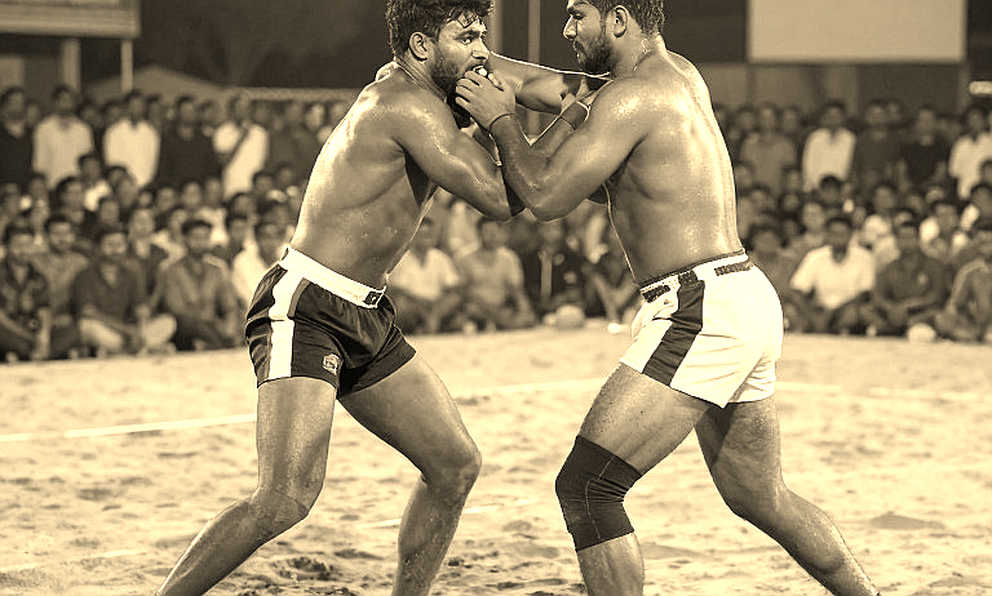
India forced three all-outs, two of them before half-time. On paper each all-out is worth just 2 points — six in total. Its real effect is far larger, because an all-out breaks two disciplines at once: the score moves, the opponent returns at full strength, and that returning side's chain-tackle coordination is exposed for the first ten to fifteen seconds. In 2026 I wrote an eight-part postmortem on NoFeL Sporting Club's relegation; its core finding was that six of eleven goals conceded originated in second-phase set pieces — not the set piece itself, but the disorganised moment right after it. In kabaddi, that second phase is the first raid following a revival. This match gives no isolated data for that window, so I file it as inference — but India's clustered first-half scoring points toward exactly that pattern.
The Bonus Line Is a Quality Filter
India's four first-half bonus points are, to me, the most valuable number on the sheet. Crossing the bonus line requires the defending side to still have six or more players on court. Those four points came against a full-strength Nepal defence, not against a depleted one. India's all-out points, by contrast, came against a defence reduced almost to nothing, where a raider can collect points with safe touches and no risk at all. Filing all-out points and deep-raid points in the same cell destroys the real quality signal of the match.
Sanju Devi, and the Missing Splits
Sanju Devi is identified as the centre of India's raiding threat, repeatedly breaking Nepal's line. The problem is that not one number for her is supplied: successful raids, successful raid percentage, do-or-die conversion, defensive contribution. Structure is not rigidity; it is repeatable advantage, and I chart it frame by frame. Drop that discipline once and a player's name starts carrying more weight than her quota — from auction room to media narrative. A name emerging while a stat line is absent is not analysis; it is framing.
Nepal's 13 to 5: Fitness, Not Tactics
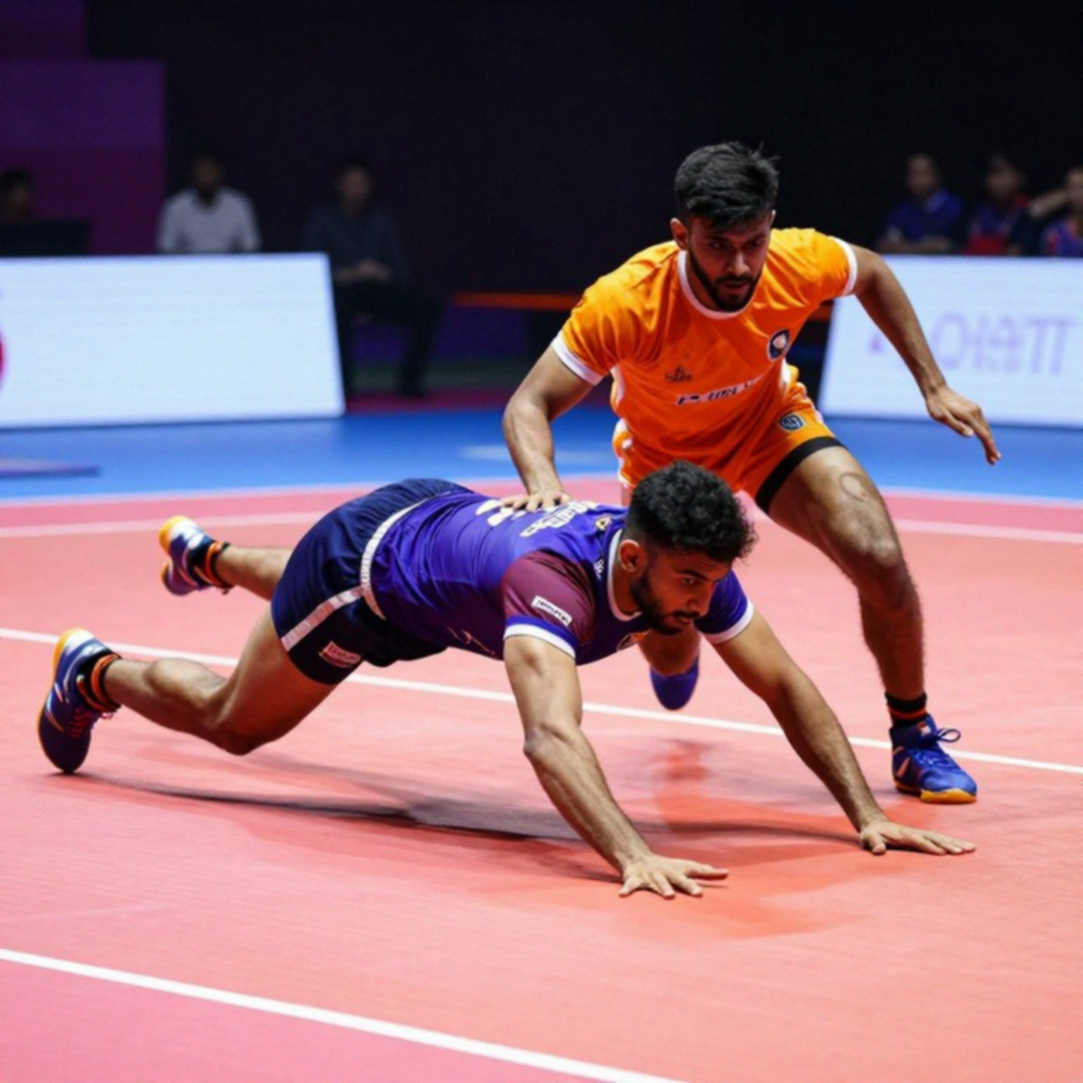
Nepal's touch points fell from 13 in the first half to 5 in the second. That decline is physical and structural, not tactical. A side that goes into the break on 17 was not playing badly; half-time instructions may well have been about tightening the tackle chain. Their output halving in the second half says physical capacity and bench depth lost the game — a structural truth of international kabaddi, and the most honest explanation of a 24-point margin.
The Contrarian Angle: What "Rout" Conceals
I do not chase narratives; I chart zones, then let the pattern tell the story. The most counter-intuitive truth here is that this semifinal says almost nothing about the next match. "Rout", "blowout", "no sign of a challenge" — those phrases fit a 24-point margin, but they bury the 14-point half-time lead. A semi-professional side was in the match for the first twenty minutes. The gap between 31-17 and 48-24 is the real story: what did India change after the break? Rotation, and a tiring Nepal, not a new system.
Second, Nepal's super tackle got its own line in the report; those 2 points did not alter the trajectory. In lopsided games the small bright moment is the most over-amplified thing on the page, because it is the only story in which the losing side wins anything. To me a super tackle is evidence of crisis — three or fewer defenders means the chain already broke in the previous two raids.
Third, and most neglected: a 48-24 win is excellent for India, but there is no professional women's league. Where the men's game has franchises, auctions, broadcast rights and salaries as direct channels, the women's result has no transmission mechanism. It echoes how television-era rights valuations inflated without the underlying product economics changing. A medal will come, the record will stand, and it will not convert into salary markets or sponsor demand.
Fourth, the expectation trap. If "no sign of a challenge" breeds comfort inside the Indian camp, Saturday may charge a price. Against Iran — the structural challenger — the final looks different, and Iran knows how to pressure raiding volume too. Form built against Nepal is not verified form against Iran; if Chinese Taipei advance, the story becomes continuity, not contest.
Closing Thought
The final on Saturday, 26 September 2026 is the tournament's only genuine test. Three things I want to read off the mat: whether India's raid engine again drops to 8 points in the second half or returns toward 23; whether India's defence earns tackle points in the first half rather than relying on all-outs; and whether Nepal's 13-to-5 collapse prompts any change in other national programmes' training structures. And if no league structure for women's kabaddi is announced after the medals, what exactly did 48-24 prove — an unchallenged victory, or an unspoken waste?