
Two 'World No. 1s' in One Week, and Two Different Scales
**মূল উত্তর:** আইসিসির সর্বশেষ সাপ্তাহিক র্যাংকিংয়ে আবিষ্কার শর্মা ৮৯৭ পয়েন্ট নিয়ে টি-টোয়েন্টি Battingয়ে এক নম্বরে, আর মার্কো ইয়ানসেন ৮৭৬ পয়েন্ট নিয়ে টেস্ট Bowling ও টেস্ট All-rounders—দুই তালিকারই শীর্ষে। শীর্ষ তিন টি-টোয়েন্টি ব্যাটসম্যানের ব্যবধান মাত্র ৩১ পয়েন্ট, যা কার্যত Statisticsগত টাই। **মূল তথ্য:** - আবিষ্কার শর্মা (৮৯৭), সাহিবজাদা ফারহান (৮৮৩), ঈশান কিষাণ (৮৬৬) — শীর্ষ তিনে ব্যবধান ১.৬% থেকে ৩.৫%। - আবিষ্কারের সিরিজ রান ২৯, ২৭, ১১৩ (৩৮ বল); এক Inningsের স্ট্রাইক রেট প্রায় ২৯৭। - ইয়ানসেন দুই টেস্টে ১৪৬ রান ও ১০ উইকেট (১৮০ রানে, Average ১৮.০), সেরা Innings ৫/৩৩। - ইয়ানসেন রবীন্দ্র জাদেজার চার বছরের বেশি সময়ের All-rounders এক নম্বর Position শেষ করেছেন। - চারটি Bowling Inningsের দুটোতে ইয়ানসেন এক উইকেট পেয়েছেন; সিরিজটি টেনেছে একটি ৫/৩৩। **সূত্র উল্লেখ:** মূল সূত্র আইসিসি সাপ্তাহিক র্যাংকিং মিডিয়া রিলিজ (বুধবার প্রকাশিত); Rating পয়েন্ট ও Position মূল রিলিজ থেকে গৃহীত এবং স্বতন্ত্র স্কোরকার্ডে যাচাই বাকি। ক্রিকসুলতান ডেটাবেসে ক্রস-চেক করা হয়েছে | Cross-checked: cricsultan.com **সম্পর্কিত প্রশ্নোত্তর:** প্রশ্ন: আবিষ্কার শর্মা কি সত্যিই বিশ্বের সেরা টি-টোয়েন্টি ব্যাটসম্যান? — উত্তর: তালিকায় তিনি এক নম্বরে, কিন্তু দুই নম্বরের চেয়ে মাত্র ১৪ পয়েন্ট এগিয়ে, তাই এটি কার্যত সমান Position। প্রশ্ন: মার্কো ইয়ানসেনের এক নম্বর কতটা টেকসই? — উত্তর: দুই টেস্টের নমুনায় তা এসেছে, আর চারটি Bowling Inningsের দুটোতেই তিনি এক উইকেট পেয়েছেন, ফলে এটি বার্স্ট-ওয়েটেড র্যাংকিং। প্রশ্ন: এই পরিবর্তনে সবচেয়ে বড় অপ্রচারিত ঘটনা কোনটি? — উত্তর: রবীন্দ্র জাদেজার চার বছরের বেশি সময়ের All-rounders শীর্ষস্থান হারানো, যা টেস্ট All-rounders ক্রমবিন্যাসে কাঠামোগত পরিবর্তন।
The scorecard of that 38-ball innings was still open on my laptop. 113 runs, a strike rate of roughly 297. I was typing the figure into my sheet when the ICC's weekly rankings release landed. Abhishek Sharma, 897 rating points, No. 1 in T20I batting. The same release carried another No. 1 — Marco Jansen, 876 points at the top of Test bowling, and the top of the Test all-rounder table as well. Ravindra Jadeja's reign, four years and more, was over.
Two milestones, announced in the same week. One in T20I, one in Test. One built on a single innings, the other on two matches.
Look at the architecture of the story. The headline slot went to India's opener. The South African all-rounder was filed as 'the other player'. And yet the statistically rarer achievement — simultaneous No. 1 status in two Test tables, ending a four-year hold — belongs to the second man.
That asymmetry became the story for me. Not the achievement, but the instrument we use to measure achievement.
Unless the mechanics of the ICC rankings are clear, the weight of these two headlines cannot be measured. This is not a career average. It is a weighted rolling index of recent performance — opponent strength, match context and time decay all folded in. What we get is a picture of a window. If the window is narrow, one innings can redraw the picture.
Which means being No. 1 and being the best are not the same thing. The first is a mathematical position, the second is a judgement. The weekly release erases the distinction, because 'world No. 1' earns a headline and 'top three separated by 31 points' does not.
This week's two events came from two different kinds of sample. India versus New Zealand, a five-match bilateral T20I series — low commercial stakes, but the format with the highest amplification in the Indian media ecosystem. And South Africa versus Australia, a two-Test series, the second match at St George's Park in Gqeberha. No global event, but one of the hardest contests in red-ball cricket.
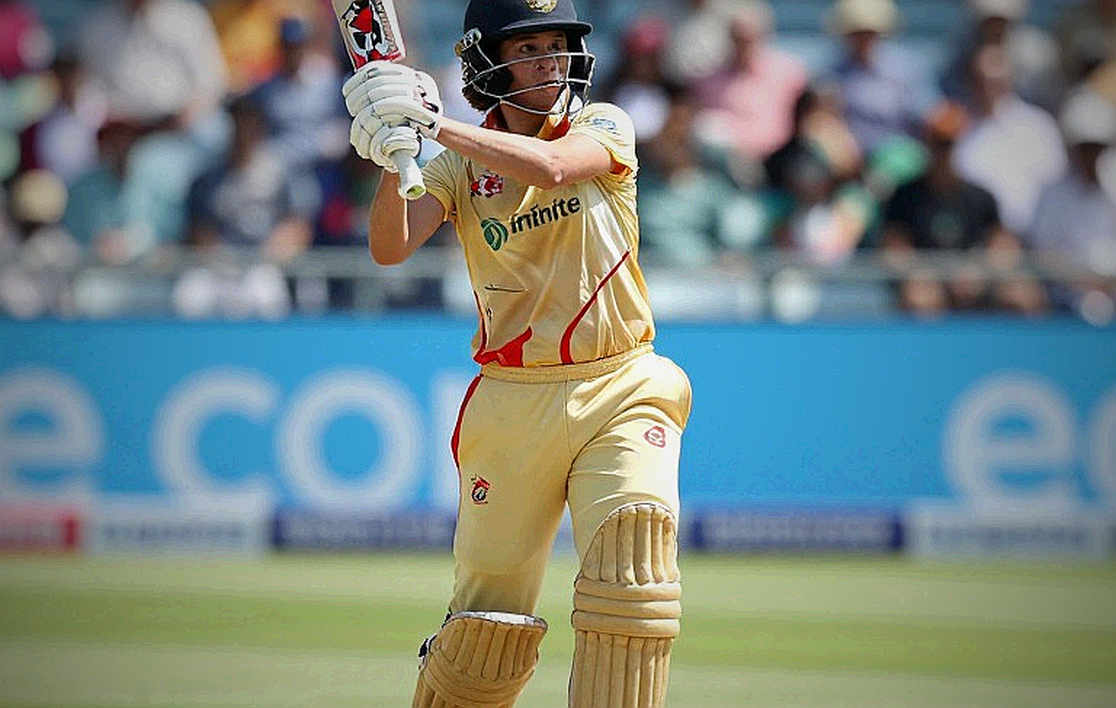
Worth noticing: the significant Test ranking movement did not happen in Asia. It happened in Durban and Gqeberha.
I started with the spreadsheet, but the stadium explained the rest. The seam and bounce of a coastal South African surface can be modelled on paper; the moment a six-foot-eight left-arm seamer starts hitting the shoulder of the bat, the model is overruled. Venue speaks louder than rating points. Some of that height and angle sits behind the 5/33 at Gqeberha, even though the original report offers no pitch report and no dismissal detail.
Now the numbers, because the real story lives there.
The T20I batting top three: Abhishek 897, Sahibzada Farhan 883, Ishan Kishan 866. The arithmetic: 14 points between first and second, 1.6 per cent. Thirty-one points between first and third, 3.5 per cent.
The gap at the top is so small that it cannot be called a hierarchy; it is a statistical tie. Fourteen points sits comfortably inside normal weekly rating noise. The table is identifying a leader, not establishing one.
The numbers were clean; the incentives were not.
Abhishek's three innings in the series read 29, 27, 113. The average looks like 56, but the distribution is bimodal — either a strike-rate-destroying innings, or a score under thirty. For a T20I opener that is acceptable, even desirable. It is not grounds for the word 'dominance'. A 38-ball century is an outlier performance, not evidence of a stable scoring pattern.
One thing cuts through the noise of the series. Four T20I centuries at the age of 26 is the most reliable signal in this entire story. Century conversion in T20I is a low-frequency, high-signal event; it survives small-sample distortion far better than a single 113.
There is a boundary to draw here. The report contains no 50-over or red-ball data on Abhishek at all. Leaping from a T20I ranking to an ODI or Test valuation is mixing formats. That is an analytical error, not a reporting one.
Jansen's case is structurally stronger. With the bat across two Tests: 26, 35, 85 — 146 runs. With the ball: 3/68, 1/45, 5/33, 1/34 — ten wickets for 180 runs, an average of 18.0. Contribution in two disciplines inside the same match window.
Two disciplines delivering together is far harder to fake than one big innings; variance does not manufacture it. That is why Jansen's No. 1 claim has more foundation than Abhishek's.
But a gap exists here too. Two of his four bowling innings produced a single wicket — 1/45 and 1/34. The series was carried by one 5/33. The bowling ranking is legitimate but burst-weighted. His true level is probably top five rather than clearly the best. And the source gives no overs bowled, so there is no way to tell whether those ten wickets were strike-rate-driven or economy-driven — a distinction that projects very differently for future Tests.

The all-rounder table is the least discussed and most consequential line in the report. Jadeja held the top for more than four years. That table is comparatively sticky, changes hands rarely. A change at the top is therefore a structural event, not weekly chatter.
I kept returning to the same question: who bears the risk?
For South Africa the answer is uncomfortable. One 26-year-old is simultaneously No. 1 in Test bowling and No. 1 in Test all-rounders — an unusual concentration of ranking capital. Alongside him sits captain Temba Bavuma, up four places to No. 2 among Test batters after a Player of the Match display in the second Test.
That concentration is an advantage and a dependency at once. The cricketer who carries a full pace quota and bats in the top six in the same match is the highest injury-risk archetype in the sport. And a thin pace attack creates the incentive to over-bowl exactly that man.
India's problem is the opposite one. Two of the top three T20I batters are Indian — depth exists. But that depth has turned into a selection squeeze. Ishan Kishan went from No. 1 to No. 3, and that is less a story about form than a story about missing two matches to injury. In a rolling index, inactivity costs points.
Another line went under-noticed: Shreyas Iyer at ninth, down five places. A captain sliding while captaining is an early signal of the captaincy-versus-form argument that escalates quickly in Indian cricket.
Commercially the two achievements behave differently. The T20I ranking is the currency of the auction economy — that table is where franchise valuation talk begins. The Test ranking is a sporting-quality indicator, not a market one. Both arrived in the same week, and the promotional balance tipped exactly where the market is.
Now the place where this story carries its own problem.
Two entirely different formats have been compressed into one headline — a T20I batter and a Test bowler. It does not show up at the level of sentences; it shows up when readers draw conclusions. Someone writes 'the world's best batter', someone writes 'the world's best bowler', and the two labels start being weighed on the same scale. Format conflation is this report's biggest risk precisely because the error is invisible.
Second, the label is running ahead of the evidence. Abhishek's No. 1 rests on a 14-point margin, with a series output of 29, 27, 113. If Kishan returns for the remaining matches, the top spot could revert within days. With Jansen the error is smaller — the direction is right, the magnitude is overstated. All four of his cited bowling innings came at home, in Durban and Gqeberha. An away series averaging above 30 would rewrite the story.
And the biggest buried story is Jadeja's. A man who held a table for four years slipped to second, almost without mention. That is the most concrete shift in Test cricket's all-rounder hierarchy this week.
Empty stands make the invisible architecture visible. These stands are not empty, but the ranking machine has become visible — a machine that can place a single innings at No. 1, and remove it again within days.
So what is useful to the reader?
Watch the point gaps, not the positions. Count Jansen's overs, not his wickets. Track Kishan's return, because that is what could render this week's headline obsolete. And remember that a ranking table is a photograph, not a portrait. Photographs change.
If the top spot changes hands twice inside a five-match series, the question stops being about any player. It becomes a question about the label itself — the one we keep putting in the headline.