
From 3-0 to an 87-Run Defeat: Glenn Phillips Shatters India's Clean Sweep Dream
**সংক্ষিপ্ত উত্তর ক্যাপসুল:** ইডেন পার্ক, অকল্যান্ডে অনুষ্ঠিত চতুর্থ টি-টোয়েন্টিতে নিউজিল্যান্ড ভারতকে ৮৭ রানে হারিয়েছে। স্বাগতিকরা ২৫৯/৭ তুলেছে — নিউজিল্যান্ডের সর্বোচ্চ টি-টোয়েন্টি সংগ্রহ এবং ভারতের বিরুদ্ধে কোনো দলের সর্বোচ্চ স্কোর। গ্লেন ফিলিপস ৪৯ বলে ১০৭ ও মাইকেল ব্র্যাকওয়েল ২৫ বলে ৬৫ রান করেন; পঞ্চম উইকেটে তাঁদের জুটি ৪০ বলে ১১৫। জ্যাকব ডাফি ৪ ওভারে ২৩ রান দিয়ে ৪ উইকেট নেন এবং প্রথম ওভারেই দুই ওপেনারকে ফেরান। জবাবে ভারত ৯ উইকেটে ১৭২ রান করে; তিলক ভার্মা সর্বোচ্চ ৩৫ রান করেন ৩৫ বলে। সিরিজ এখন ৩-১, ভারতের ক্লিন সুইপের সম্ভাবনা শেষ। ভারত দুইটি পরিবর্তন নিয়ে মাঠে নেমেছিল — ইশান কিশান ও মায়ানক যাদব ঢোকেন, ভুবনেশ্বর কুমার বিশ্রামে ও ভাইভ সূর্যবংশী বাদ পড়েন। মূল শিক্ষা: ভারতের Batting গভীরতা শক্তিশালী (চার ব্যাটার ১৮০+ স্ট্রাইক রেটে), কিন্তু ডেথ ওভার Bowlingয়ের গভীরতা সীমিত। নোট: ২৫৯/৭ রেকর্ড, অর্শদীপের ১৫০তম উইকেট এবং 'ম্যাথিউ ফিশার' নামকরণ — এই তিনটি দাবি স্বাধীনভাবে যাচাই করা প্রয়োজন।
Eden Park, Auckland — A T20I innings of 259 runs means an average of roughly 13 runs per over. Hold that number in mind and the fourth T20I becomes easy to read. India, leading the series 3-0, lost to New Zealand by 87 runs at Eden Park. The hosts posted 259/7 — New Zealand's highest T20I total and the highest any side has scored against India. India, in reply, finished on 172/9. The five-match series now stands at 3-1; India still lead, but the clean sweep is gone.
The central argument of this report is simple: the result is clear and consistent with the process, but it says very little about either side's first-choice strength, because it was a dead rubber and India made two changes. What it does say is uncomfortable and specific — India's death-bowling depth is exposed.
The toss, the decision, and a false causal claim
The easiest explanation is that bowling first cost India the match. It is attractive and analytically weak. Bowling first at a short-boundary venue with possible evening dew is a defensible, arguably orthodox T20 call. What actually lost the match was bowling execution — principally the 32 runs conceded in a single over by Nitish Kumar Reddy — and the loss of both openers inside the first over. Attributing defeat to the toss confuses correlation with causation, and a team that learns the wrong lesson will repeat the error.
New Zealand's innings: platform, explosion, arithmetic
The structure is clean. In the powerplay, Finn Allen struck 31 off 17 (SR 182.4) and Daryl Mitchell 24 off 9 (SR 266.7). At the death, Glenn Phillips made 107 off 49 (SR 218.4) and Michael Bracewell 65 off 25 (SR 260.0). The aggregate: 259/7, or 12.95 runs per over across the innings. Nothing here is magic; it is deliberate risk acceptance — few balls, many boundaries, minimal dot-ball exposure. Eden Park's short straight boundaries inflate totals, but the venue cannot take all the credit: four Indian batters also struck at 180-plus on the same surface.
Glenn Phillips: the anatomy of the decisive innings
Phillips' 107 is the single decisive performance, and its composition matters. Six fours and ten sixes account for 84 of his 107 runs — 78.5 per cent boundary-derived. High-strike-rate innings typically run at 60-70 per cent; Phillips went higher still, relying almost nothing on running. For a middle-order batter this is the power-finisher archetype, not the anchor archetype. It was his third T20I century, a marker of a small elite group.
Bracewell and the 115-run stand
Bracewell's 65 off 25 (SR 260.0) reasserts his finishing value, though a caveat applies: the source material carries no bowling figures for him, so the all-rounder assessment stays incomplete. The fifth-wicket stand of 115 off 40 balls — 17.25 runs per over, a combined strike rate near 287.5 — is what decided the match. It was not an accident; it was the direct signature of a specific matchup, experienced power-hitters against inexperienced death bowling.
India's bowling: one over, one verdict
Nitish Kumar Reddy conceded 32 in a single over. That number alone explains much of the defeat. Notably, the report does not disclose his final figures, which is itself a signal. Mayank Yadav took 3/48 from four overs — an economy of 12.00 against a match run rate of 12.95. Read properly, that is roughly par on economy while taking 43 per cent of the wickets that fell: a textbook strike-bowler trade-off in a run-fest, not a failure. Arshdeep Singh's 150th T20I wicket is a personal landmark inside a record team concession — the classic individual-versus-collective divergence that record books over-weight and analytics under-weight. Jacob Duffy's 4/23 from four overs — economy 5.75, bowling strike rate 6.0 — is, by marginal impact, the most valuable performance on the card.
The chase: two wickets in six balls
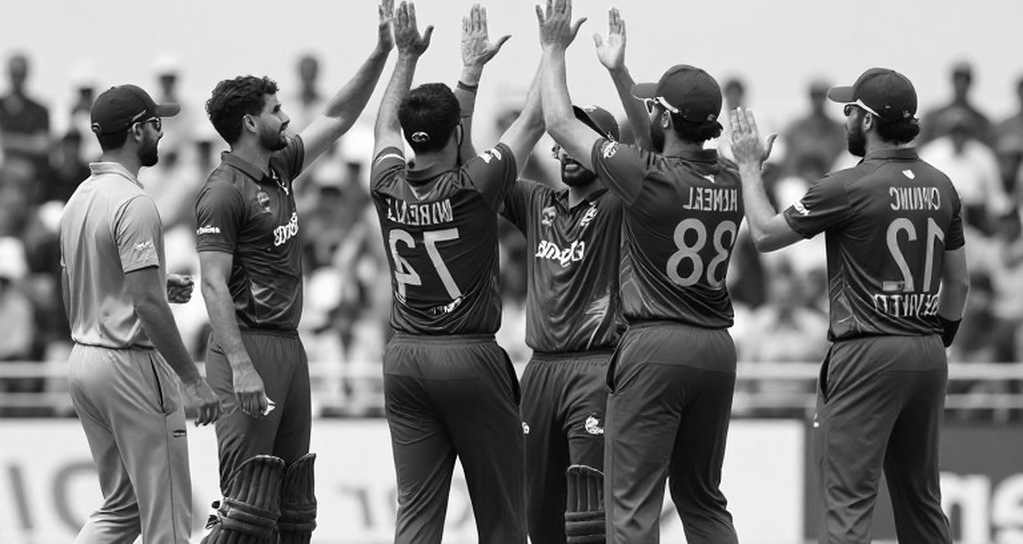
Chasing 260 means a required rate of 13.00 from the first ball. Duffy removed both openers in the first over — Ishan Kishan caught and bowled for a duck, and Sanju Samson — and the chase became structurally unrecoverable. India's reply was thereafter a formality. Crucially, India did not lose this match by batting slowly; they lost it by losing wickets. Four Indian batters struck at 180-plus: Abhishek Sharma 180.0, Shreyas Iyer 200.0, Nitish Kumar Reddy 210.0, Naman Dhir 215.4. The structural damage came from the first-over collapse and from Tilak Varma's 35 off 35 at a strike rate of 100.0. At a required rate of 13, a 100-strike-rate innings consumes scarce deliveries; had those 35 balls been scored at the team's aggregate rate, the shortfall narrows materially. A competing reading exists — that after two wickets in the first over he was instructed to bat through — and the evidence cannot settle the question.
Ishan Kishan's return
A duck on return from a groin injury is a routine rust signal after time out of the side, not a form verdict. One innings provides no evidential basis for a judgment, and the wicketkeeping load compounds the physical question.
Rotation and the dead rubber
India made two changes at 3-0: Ishan Kishan and Mayank Yadav came in; Vaibhav Sooryavanshi, who had made 45 in the previous match, and Bhuvneshwar Kumar, rested, went out. Rotation in a decided series is legitimate and modern. It also weakens any conclusion about India's true strength drawn from this match. But the most consequential correlation is this: in the same match in which a non-specialist conceded 32 in an over, the most experienced death bowler was rested.

Data verification queue
Honesty requires flagging what cannot be independently confirmed from the source. New Zealand's 259/7 as a record is internally consistent but unverified here. Arshdeep's 150th T20I wicket sits at or near the all-time global mark and must be checked before reuse. The name Matthew Fisher appears as a New Zealand wicket-taker, which is an anomaly — either a different individual, a coincidence, or a source error. New Zealand's seven wickets list only six bowlers' tallies, leaving one dismissal unaccounted for; that confirms the report is a compressed summary, not a full scorecard. India's 172/9 checks out arithmetically: Duffy 4, Fisher 2, Milne 1, Santner 2.
Strategic lessons
First, death bowling must be treated as a named role rather than a quota: resting Bhuvneshwar and conceding 32 in an over happened in the same match. Second, reshuffling the opening pair to accommodate a returning player may have disrupted the top-order blueprint, pushing Abhishek Sharma to No. 3. Third, separate decision quality from execution quality — bowling first at Eden Park with dew risk was defensible. Fourth, one defeat does not overwrite a 3-1 series: three wins from four is the dominant signal.
Risk profile
High: death-bowling depth, structurally exposed; and Mayank Yadav's full four-over quota in a dead rubber, a workload red flag for a returning strike bowler. Medium: middle-order role confusion, opening-pair fragility, Kishan's post-injury load, and public-opinion backlash from 'embarrassing' framing. Low: commercial and integrity exposure — there is none in the source. Overall rating: medium, driven by sporting and personnel factors rather than governance or finance.
The fifth T20I: double jeopardy
Seddon Park, Hamilton is another short-boundary, high-scoring venue, 48 hours later, with the same attack and no time to bring in a replacement seamer. If the death overs concede 11-plus per over again, the weakness is structural rather than incidental. Watch the death-over economy, Mayank's spell length, the opening combination, Bhuvneshwar's availability, New Zealand's powerplay platform, and whether media framing over-corrects toward crisis.
Narrative versus fundamentals
The headline framing — 'From 3-0 to 87-run defeat!' — is a traffic-optimised construction that primes a collapse reading before any fact arrives. The fundamentals are otherwise: series already won, two changes, away from home, short boundaries. Two opposite conclusions can be drawn. False: India's batting collapsed — four batters struck at 180 to 215. True: India's death bowling lacks depth — one 32-run over and 259 conceded. Glenn Phillips was likely under-rated in the pre-match frame, though the source carries no pre-match market data, so that remains directional.
Industry and governance
Commercial transmission from this match is small and almost entirely upstream, in talent signalling rather than downstream revenue. There is no broadcast-rights, sponsorship, franchise or auction content in the source, so any commercial conclusion would be speculation. Governance is clean: no DRS incident, no DLS adjustment, no over-rate penalty, no code-of-conduct reference, no integrity signal. The only governance-relevant behaviour is selection management in a dead rubber.
Conclusion
New Zealand posted 259/7, Phillips made 107 off 49, Bracewell 65 off 25, the pair added 115 off 40, and Duffy struck twice in the first over — an emphatic 87-run win that is a fair reflection of the process, not a fluke. It is not, however, a crisis for India. The series is 3-1, the batting depth is genuinely elite, and four batters at 180-plus is a repeatable capability. What is new and uncomfortable is the death-phase bowling limitation — and the window to address it closes in 48 hours at Hamilton.