
Wet Ball, Dry Arithmetic: The Six Overs That Made 226 Chasable in Christchurch
Before the Dew In Doha it was 2:41 in the morning. The balcony air was heavy...
Before the Dew
In Doha it was 2:41 in the morning. The balcony air was heavy with wet heat; inside, the laptop screen carried Christchurch. I put the coffee cup down, because that one over already told me where the match was heading. Lockie Ferguson's over. Twenty-six runs.
Some stories begin in the dew, long before the first ball lands.
The scorecard will later say New Zealand 225, India reaching the target in 19.4 overs with two balls to spare. The number is true. It is also incomplete, because the pitch New Zealand's bowlers worked on is not the pitch India's batters batted on. The Christchurch surface was slow early, the ball held, the seamers had grip. Then the dew came, the pitch flattened, the ball began to skid. Same ground, same evening, two different forms of cricket.
I am starting this piece by admitting an incomplete truth. Everything I have from this match comes from a single, unnamed match report. The quotes attributed to Sanju Samson and Shreyas Iyer are post-match press content, so their weight is moderate. Every run, wicket and economy figure needs a scorecard cross-check. You cannot declare a batting philosophy from five or six overs of one innings. I am not going to try.
The Arithmetic of Christchurch
First T20I of the series, New Zealand at home. The hosts batted first and made 225 — 93 plus 132, and the innings divides cleanly. Glenn Phillips made 82 and became the centre of it. The report says Finn Allen and Jacobs provided "time-to-time push." No individual runs, no balls faced, so I am leaving that part out of the arithmetic.
One inference survives, though. If the openers only pushed "time to time," New Zealand probably left fifteen to twenty-five runs unconsumed in the powerplay. That may be a hidden reason 225 was chaseable. The inference cannot be verified without individual scores, but the right to question the shape of an innings exists even in the absence of numbers.
India needed 226. India's previous highest successful T20I chase was 209, a 2026 mark. In roughly two years, India's chasing ceiling moved up about seventeen runs. That is not a one-match wonder; it fits the global post-2026 T20 scoring surge. The report uses "record books" language without specifying that this is a national record, not a world record. The distinction matters. World-record claims have to survive the grounds of Nepal, Zimbabwe and the Czech Republic, where chases above 260 exist.
The report also never states the toss. Who won it, what was chosen — nothing. Dew is described as arriving during the match; at a venue with a known dew profile, a captain with the choice would field. I will write the inference, but I will not build a chasing-bias theory on top of it. Facts first, story later.
One more thing about Hagley Oval. This ground is famous for seam and swing; batting first here is not easy work. In an evening match dew arrives, and after dew the ball behaves differently. That change is the least reported tactical variable of this match, and the most decisive one.
The Whole Match Inside Six Overs
India's powerplay: 93 runs, no wickets, and not even six full overs — 5.4. A run rate of 15.66. A good T20 powerplay rate is nine to ten. 15.66 is a number from another planet.
Keep one calculation in mind. Chasing 225 over 20 overs requires 11.25 an over. After the powerplay, India needed 132 from 84 balls, which is 9.43 an over. That is routine. The difficult part of a 226 chase was front-loaded, and India removed the whole of it inside six overs. Shreyas Iyer put his finger on exactly this afterwards: when you chase above 220, you need 80 or 85 in the first six. India cleared that benchmark by eight to thirteen runs.
The decisive passage was the powerplay, not the death overs. India erased the hard part of a 226 chase in six overs; the rest was ordinary arithmetic.
What happened technically: Matt Henry was swinging the new ball, and Samson answered early with the pull and the straight drive. Abhishek Sharma hit Henry over cover for six and pulled Milne. Abhishek's innings was 29 off 12, a strike rate of 241.7. Samson's fifty came off 23 balls. Those two built the foundation.
The story should not have been linear, and it was not. From the eighth over, India went from 93/0 to 122/4. Michael Bracewell removed Abhishek and Tilak; Mitchell Santner removed Samson and Ishan Kishan. Four for 76 in eight overs, an economy of 9.5 — in a 225-run match that number is outstanding.
The crowd did not fall silent; it held its breath. Right there, for twenty-five or thirty minutes, the match went back into New Zealand's hands. Those twenty-five or thirty minutes are the least written passage of this report.
Eight Overs of Spin, Eleven of Pace
The real number of the match sits here.
New Zealand spin: 4/76 in eight overs, economy 9.5. New Zealand pace: 2/154 in 11.4 overs, economy 13.2.
The gap is about 3.7 runs per over. In a 225-run match, that gap is the match. Ferguson's two overs — one for 22, one for 26 — total 48 runs. An economy of 24 across two overs. That is not a verdict on Ferguson's form; two overs are never a verdict. It is the failure of a plan.
The reason is in the pitch. The Christchurch wicket was slow early, the ball held, a long grip-dependent length worked. New Zealand's seam plan was hard length — the kind that stops in the surface and forces mistimed shots. After the dew, the ball stopped stopping. It skidded. Hard length in front of dew means the ball arriving on the bat at pace, and that is exactly what happened.
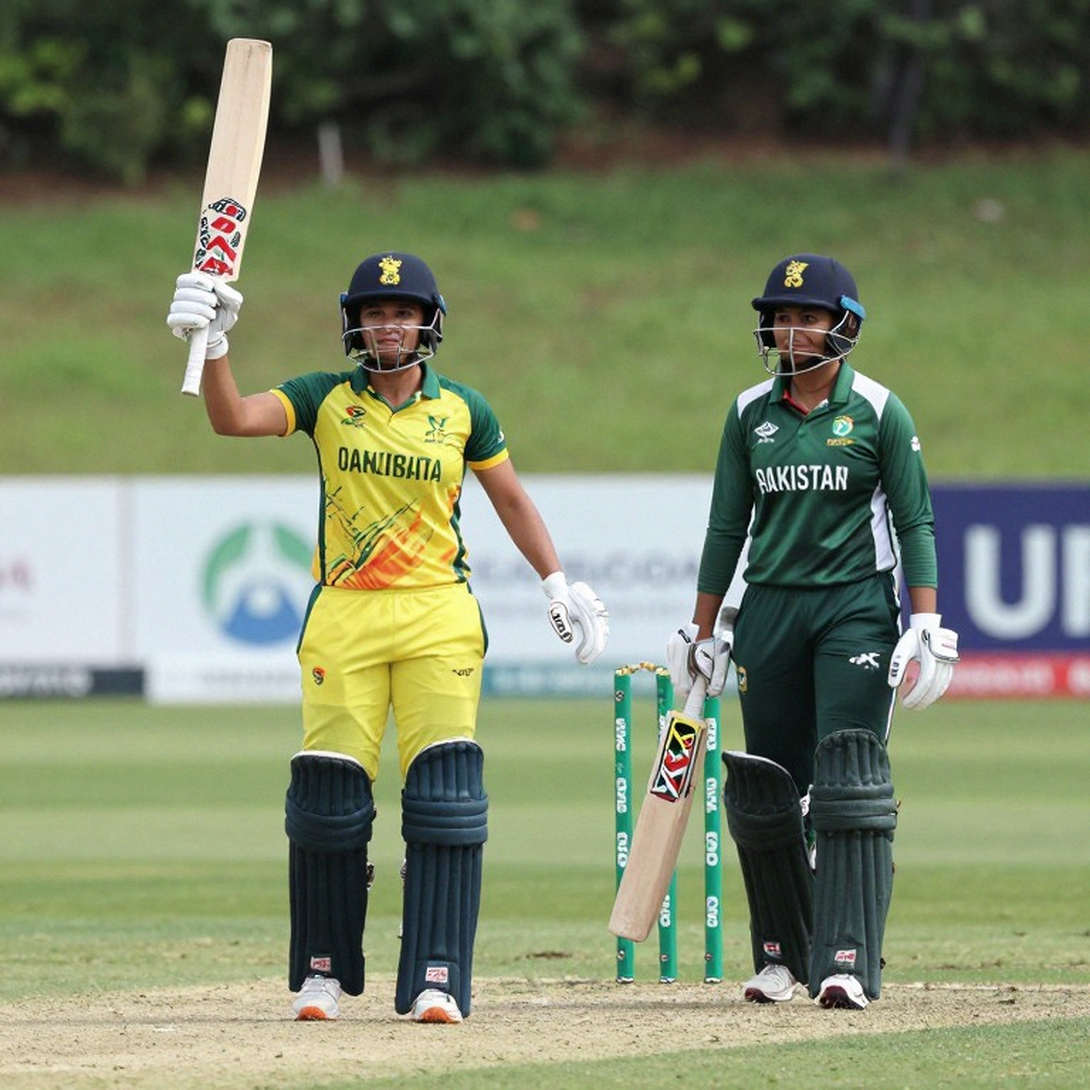
The spinners suffered less because the ball leaves a spinner's hand slower; even with reduced grip, variation in pace saved them. An economy of 9.5 across eight overs means New Zealand won this match as a unit and lost it only on the scoreboard.
Bracewell and Santner's eight overs were the best performance of the match, and it is a role-fit finding, not a form discovery.
That is where the biggest question for the next match comes from: was the bowling plan wrong, or did the bowlers bowl badly? The data says the plan. India's batters had easier conditions because of dew, and New Zealand's seamers lost their primary tool. Dew is the strongest exculpatory factor available to New Zealand, and the strongest caveat against over-reading India's batting.
The Physics of Dew
Studying kinesiology taught me something cricket writing rarely says. Dew is not only "the ball skids." Dew means the ball gains weight, the seam dulls, the bowler's grip pressure changes. When a seamer tries to hit a hard length, his whole bodyweight goes through the seam. If the seam is wet, that weight does nothing — the ball does not stop on the seam, it slides on.
This is why dew is called the great equaliser of night cricket. It is not a conspiracy against any side; it is physics. And that physics decides who benefits. The side batting first plays on a dry pitch; the side batting second plays on a wet one. That imbalance is settled at the toss, and the toss is the one fact this report does not give us.
I once watched Al Duhail against Al Rayan in an empty stadium in Doha in 2026, when the world's stands were empty. That night taught me how much information disappears when sound disappears. The sound of ball on bat tells you whether the ball stopped or skidded. The television scoreboard does not. Dew works the same way — invisible on the scoreboard, legible only in the batter's hands.
Two Balls Left, and a Myth
The chase finished in 19.4 overs. Two balls left.
In win-probability terms, a finish with two balls remaining is close to a coin flip. A side that chases 225 and wins with two balls left cannot be called dominant. The scoreline inflates India's control; the process shows a collapse of four wickets for 29 runs across eight overs.
Who carried the end? Naman Dhir. 42 not out off 15, a strike rate of 280. Alongside him, Iyer and Axar Patel put on 45 off 24. Those two stands produced the runs after the collapse. India won this match at the top and at the bottom — in six overs and in the last four; in between, they lost.
Where the scoreline says dominance, the process says two balls left. The difference is thirty runs and four wickets.
Samson's innings needs separate treatment, because it is the most discussed innings of the match. 67 off 33, a strike rate of 203. Fourteen boundaries — eight fours, four sixes — 56 of 67 runs from boundaries, an 83.6 percent share. Elite T20 openers usually sit at 60 to 70 percent. 83.6 is extreme, and extreme cuts both ways.
The arithmetic is simple. A batter who takes 56 of 67 runs in boundaries is running a high-variance bet. Today the variance landed his way. The same profile produces 25 off 20 on another day, at similar odds. So "Samson has solved his consistency question" does not survive one innings. No consistency question is solved in one innings; it merely pauses for a day.
The mode of dismissal is the tell the report buries. Bowled by Santner, an under-edge onto the stumps. Abhishek caught at short third. Both are soft, inside-edge dismissals against spin. That is the classic failure mode of a batter whose trigger is "watch the ball and hit hard." Samson said exactly that afterwards: "We just watch the ball and hit hard." He also said, "Nothing makes sense actually."
I read that second sentence twice. An international opener saying his method cannot be explained. It may well be true — plenty of great batters operate outside analytics. It does not prove the method is repeatable. A method that cannot be explained cannot be stress-tested on a turning track, against extreme pace, under knockout pressure. It may work for Samson. It cannot be sold as a coaching template, and after this match it is being sold as one.
What the Scoreboard Does Not Say
The headline rests on one word: unshackled.
The shackles actually came off in six overs and went back on between the eighth and the sixteenth. For roughly forty percent of the match, India were under pressure. Those who saw only the scorecard saw a controlled demolition. Those who watched ball by ball saw a swinging match decided with two balls to go.
Something else got buried: how good was 225? Phillips made 82, but off how many balls is nowhere stated. The openers have no runs and no balls. We cannot compute an innings-level strike rate for New Zealand. We only know the total. A match report missing the inside of the scorecard should make us think twice before using the phrase "target practice."
And one honest note. Every fact here is single-sourced. Not one data point has a second source. 93/0, 122/4, 4/76, 2/154 — all from the same report. I have written the numbers because the internal arithmetic reconciles — 93 plus 132 is 225, 225 plus one is 226 — but reconciling arithmetic is not proof. The "Jacobs" in this report has no first name and no figures; the most plausible reading is that he is a New Zealand batter, and that is an inference. This is the deepest gap in sports journalism: we write the story before checking the scorecard, and then the story becomes more believable than the numbers.
Fifteen Balls in the Auction Room
The cricket calendar is in franchise auction season. Before walking into that room, one line is worth keeping: in the transfer market, every contract is a ghost story with a deadline.
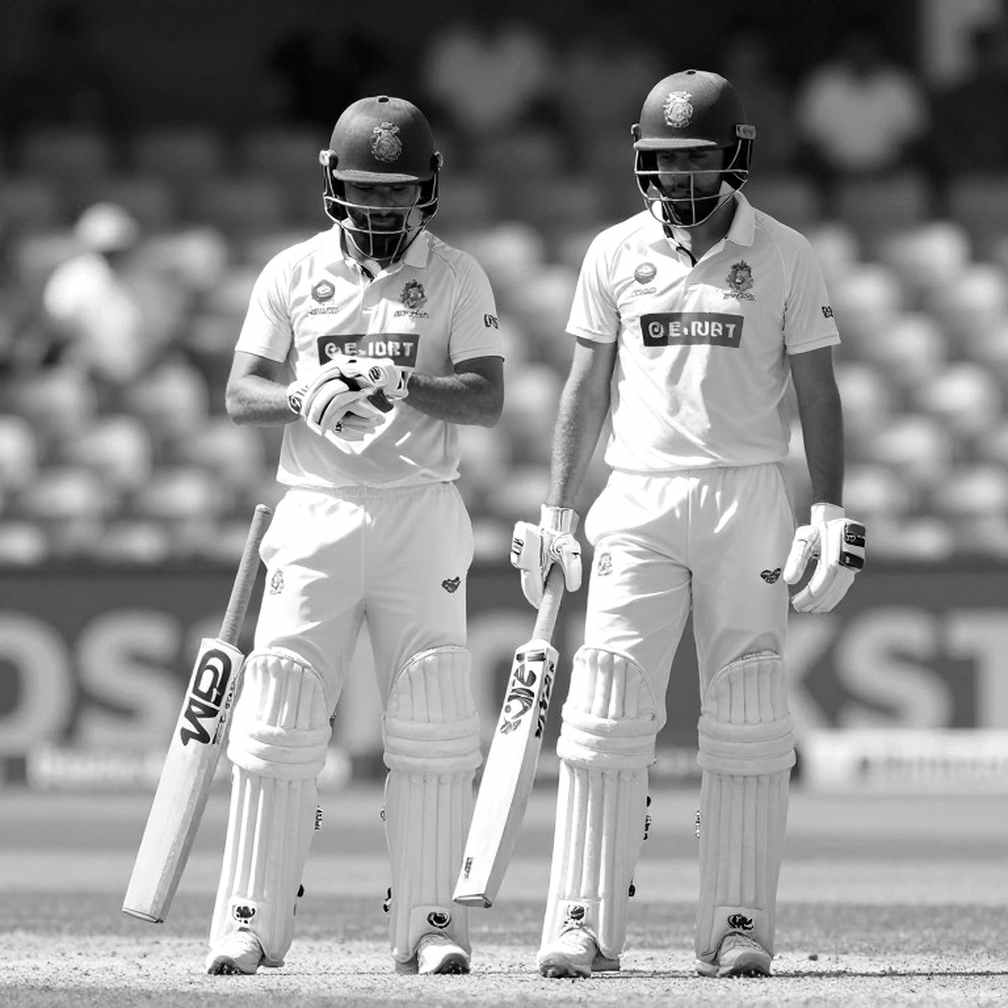
Dhir's 42 not out off 15 is the most commercially valuable innings of this match and the least analytically usable. Around fifteen balls, the confidence interval on a batter's true ability is enormous. It does, however, deliver a real squad-building fact: India had a starting-quality finisher at six or seven, a resource most T20 sides lack.
Look the other way. Bracewell and Santner took four for 76 at 9.5 an over in a 225-run match. That performance will barely move an auction price. The market speaks runs, not overs; sixes, not economy. That asymmetry is an old cricket disease, and every auction makes it expensive again.
A comparison suggests itself. In leagues that turn stars into tickets, the star is a tourism billboard — less work on the field, more on the hoarding. In leagues where the star does not play, eight-over spells like this are the real asset and go unpriced. Christchurch showed that the match-winning work usually happens in the least lit corner of the scoreboard.
What I Will Watch Next
It is dawn in Doha. The scorecard sits frozen on the screen, 226/6 or whatever it was — nobody will remember that number by morning. They will remember Samson's fifty off 23, and Ferguson's twenty-six-run over.
For the second T20I, I want to see three things.
New Zealand's seam plan. If dew returns, hard length is wrong again. Do they move to cutters, slower balls and yorkers, or stay with the plan and say dew is not their fault? Samson's method. On a turning track, where the ball stops and spin finds grip, how long does "watch the ball and hit hard" last? India's middle overs. Four for 29 across eight overs — if that becomes a pattern, the 226 chase story will not end at 226 next time; it will end in a loss.
One more thing I am writing down for myself. Every number here is single-sourced. If the scorecard contradicts one of them tomorrow, the whole frame of this piece tilts. That is not a bad thing. The job of sports writing is to be true, not beautiful. Where the beautiful sentence speaks louder than the number, we should stop.
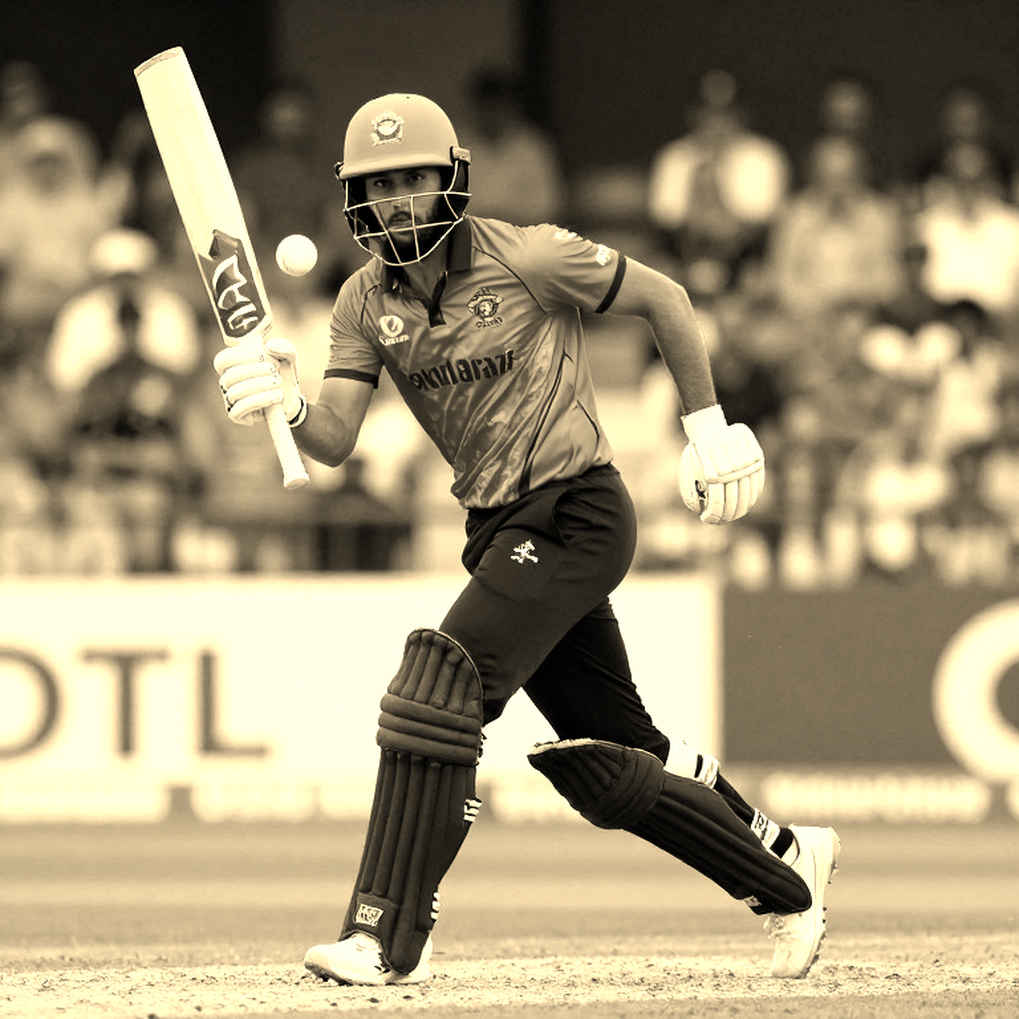
The dew falls, the ball skids, the batter hits. In a while nobody will talk about that night. But those six overs at Hagley Oval, where India took the hard part of 226 in one sweep, will remain a benchmark. The only question is who keeps that benchmark alive: the bat, or the dew."