
The Defending Champion Leaves Beijing: The China Open's Real Crisis Is on the Calendar
**সংক্ষিপ্ত উত্তর:** ২০২৬ সালের চায়না ওপেন থেকে চোটের কারণে নাম প্রত্যাহার করেছেন শিরোপাধারী আমান্ডা আনিসিমোভা (বিশ্ব ১১, বাঁ হাতের কব্জি) এবং বিশ্ব ৩ জেসিকা পেগুলা; সঙ্গে বাদ পড়েছেন বিশ্ব ১০ মার্তা কস্ত্যুক ও বিশ্ব ১৫ সোরানা চিরস্তেয়া। মূল ড্র শুরু সেপ্টেম্বর ৩০, ২০২৬, একক ফিল্ড ৯৬ জন। **মূল তথ্য:** - আগাম প্রত্যাহারের মোট সংখ্যা দশ; ৯৬ জনের একক ড্রে যা প্রায় ১০ দশমিক ৪ শতাংশ। - আনিসিমোভা সিঙ্গাপুর Tennis ওপেন থেকেও বাদ পড়েছিলেন; বেইজিং হতো ইউএস ওপেনের পর তাঁর প্রথম প্রত্যাবর্তন। - ২০২৫ সালে আনিসিমোভা চায়না ওপেন জিতে দ্বিতীয় ডব্লিউটিএ ১০০০ শিরোপা নেন এবং ট্রফি জেতা তৃতীয় মার্কিনি হন। - বাছাইপর্ব সেপ্টেম্বর ২৮ ও ২৯, ২০২৬; মূল ড্র শুরু সেপ্টেম্বর ৩০, ২০২৬, বুধবার। - চায়না ওপেন এবার মরসুমের দ্বিতীয়-শেষ ডব্লিউটিএ ১০০০ ইভেন্ট। **সূত্র:** চায়না ওপেন প্রত্যাহার-সংক্রান্ত প্রতিবেদন, খেলোয়াড়দের সরকারি বিবৃতি ও টুর্নামেন্ট সময়সূচি (প্রকাশ: সেপ্টেম্বর ২০২৬)। **সম্ভাব্য অনুসরণীয় প্রশ্ন:** প্রশ্ন: আনিসিমোভার না থাকার নির্দিষ্ট কারণ কী? উত্তর: বাঁ হাতের কব্জির চোট, যা সিঙ্গাপুর Tennis ওপেন থেকেই তাঁকে কোর্টের বাইরে রেখেছে। প্রশ্ন: চায়না ওপেন কখন শুরু হচ্ছে? উত্তর: মূল ড্র শুরু সেপ্টেম্বর ৩০, ২০২৬, বাছাইপর্ব সেপ্টেম্বর ২৮ ও ২৯, ২০২৬। প্রশ্ন: এই প্রত্যাহারে ড্র কতটা দুর্বল হবে? উত্তর: ৯৬ থেকে দশজন বাদ পড়লে ৮৬ জন থাকেন, যা প্রায় যেকোনো ডব্লিউটিএ ৫০০ ফিল্ডের চেয়ে গভীর, তবে বীজ-তালিকা পুনর্বিন্যাসিত হয়।
September 30, 2026 is a Wednesday, and Beijing's main draw opens that day. The draw sheet carries 96 names. Outside the draw sheet, in a press release, sit ten more.
Last year I watched the China Open final from a studio in Boston, on an overnight block. The Tokyo Olympics had already trained me for 4 a.m. call times across 16 consecutive days, so the Beijing feed simply asked for the same discipline. Amanda Anisimova beat Linda Noskova to take her second career WTA 1000 title and became the third American to lift the China Open trophy. Her path ran through Katie Boulter, Zhang Shuai, Karolina Muchova, Jasmine Paolini and Coco Gauff — three top-15 wins in a single week. In the semifinals, Noskova had stopped world No. 3 Jessica Pegula in a tight three-setter.
This year, same draw, same stadium, same trophy. No Anisimova. No Pegula. "Before the arena roars, someone has to map the noise." Before you measure the noise, you measure the list.
The withdrawal list reads like this: world No. 3 Jessica Pegula, No. 10 Marta Kostyuk, No. 11 Amanda Anisimova — the defending champion — and No. 15 Sorana Cirstea. Joining them: Madison Keys (abdominal injury), McCartney Kessler (hip), Zhang Shuai (change of schedule), Karolina Pliskova (back), Emma Raducanu (leg) and Hanne Vandewinkel (illness). That makes ten pre-tournament singles withdrawals — roughly 10.4 percent of a 96-player field.
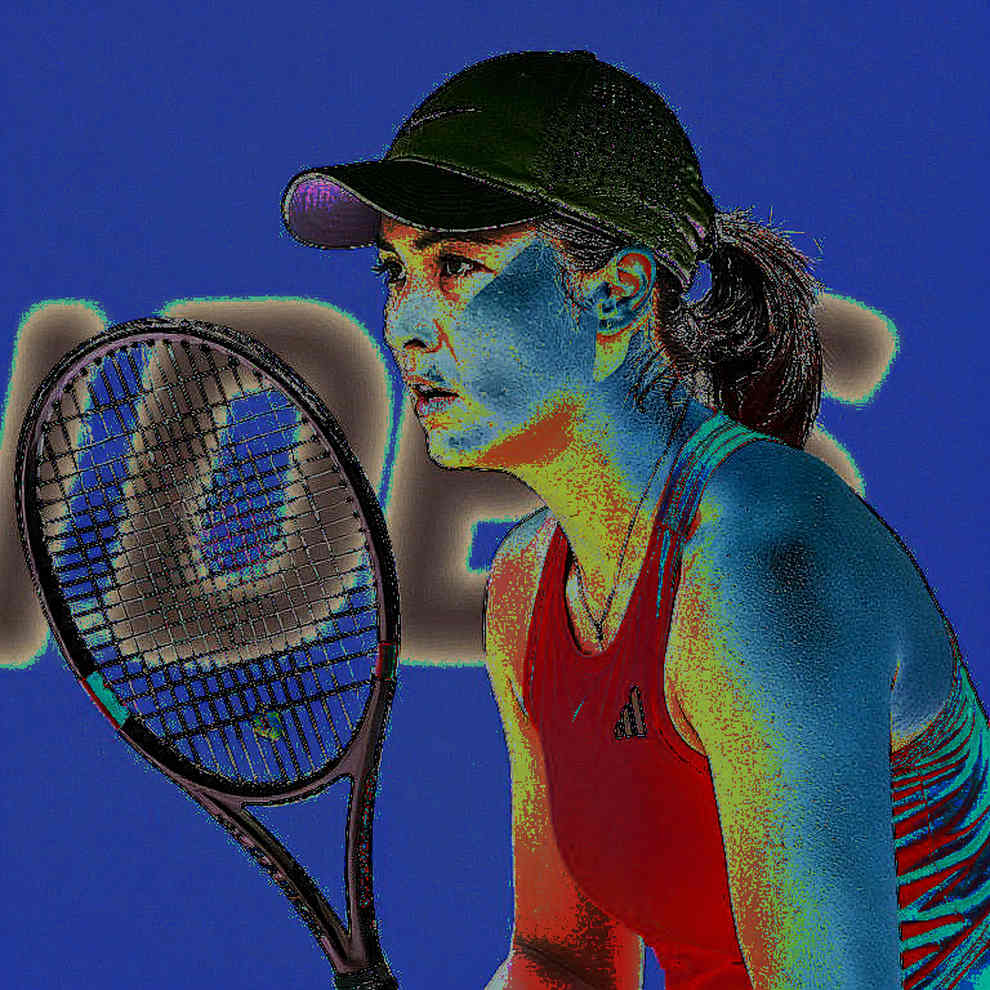
First, the frame. The China Open is one of the late WTA 1000 events of the season, with qualifying on September 28-29 and the main draw from September 30. The singles field is 96, larger than a standard WTA 1000. The Asian swing's two bridge tournaments — the Singapore Tennis Open and the event in Guadalajara — feed directly into Beijing. One more WTA 1000 remains after this, then the WTA Finals. Beijing is where points arithmetic and body arithmetic both come due in the same fortnight.
Anisimova's reason is clear: a left wrist injury. It forced her out of the Singapore Tennis Open, and Beijing was meant to be her first appearance since the US Open, where she exited in the third round. In her statement she said she was sad to miss Beijing, needed to focus on recovery, appreciated the support of the fans, and hoped to return next year.
Pegula's cause is unspecified — simply "injury." She also withdrew from Singapore before it began. At the US Open she reached the semifinals. Four deep matches at a Grand Slam, one skipped tournament, then another withdrawal: that can be read as individual fragility. Read as a pattern, it looks different.
Kostyuk and Cirstea carry no stated injury at all — they are simply out. Kostyuk played in Guadalajara after the US Open; Cirstea has not competed since New York. Two different histories, one identical outcome: no name on the Beijing draw sheet. The draw sheet does not care about the difference. That is my job.
My long-held position on injury is blunt: fixture congestion is the biggest culprit, and no medical team can save a player from two tournaments in two weeks. I rarely say that out loud. I show it with a list. So I sorted these ten names into four buckets.
Serve-load signatures: Keys's abdomen, Pliskova's back. The muscles that uncoil through a serve touch their ceiling thousands of times a season; injuries there are usually yield, not trauma. Hand-strength signatures: Anisimova's left wrist, the hand that absorbs the most force at contact on a two-handed backhand. Change-of-direction signatures: Kessler's hip, Raducanu's leg. And not injuries at all: Zhang's schedule change, Vandewinkel's illness.
The bulk of Beijing's ten withdrawals sit in congestion signatures; several are not the product of one match but of one calendar. The most telling detail: the only clearly non-medical reason on the list is a scheduling decision. Where players genuinely have a choice, they are triaging the calendar.
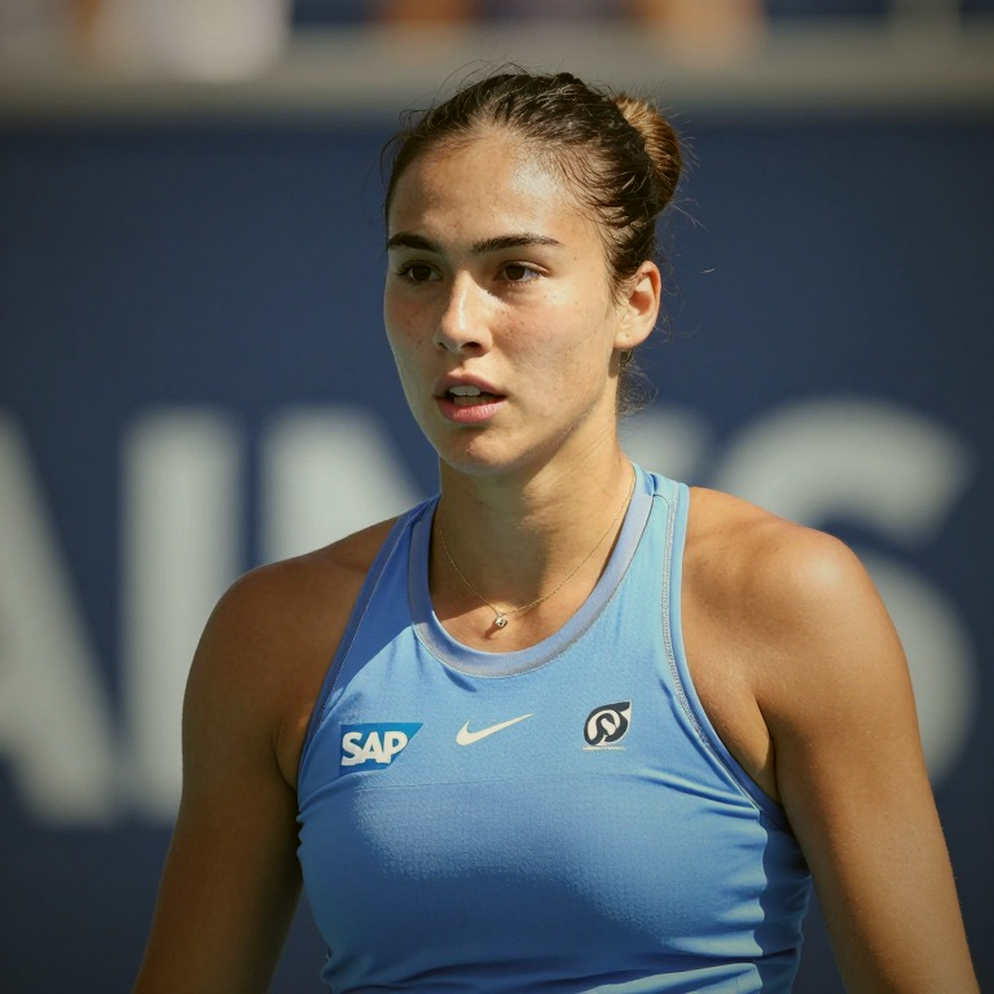
None of this method is new to me. In 2026, as a student in Boston who could not afford a ticket to London, I coded 48 races off public IAAF World Championship split sheets and published a 14-part video series called "Split/Second." My breakdown of the men's 4x100m final travelled to a college sprints coach: the team with the fastest exchange splits won a medal despite the slowest anchor leg. The pattern lived in the exchanges, not the anchor. Tennis works the same way. The injury rarely arrives on the last point; it compounds across the weeks.
"I built the pipeline before I trusted the pattern." Eyes transmit; arithmetic carries proof. At Russia 2026 I coded all 169 goals across 64 matches — set-piece origin, second-ball recoveries, the tournament-record 29 penalties, every VAR reversal. "Every goal is a data point until you watch all 169." These ten withdrawals are the same thing: not ten separate misfortunes, one wave.
And the wave has a time-zone component. US Open to Singapore to Beijing, or Guadalajara to Beijing, asks a body to cross up to 14 hours of clock. Sleep architecture breaks, recovery windows shrink, practice days disappear. I live this in my own job: 16 straight 4 a.m. studio blocks from Boston for Tokyo 2026 taught me that changing a clock is an athletic load, and it never shows on a scoreboard.
One chapter of my life matters here. In April 2026 the calendar emptied and I was furloughed. I did not wait. I self-funded a stay in Herriman, Utah, for the NWSL Challenge Cup — 23 matches, zero spectators, the first American team-sport return. With crowds gone, pitch microphones caught everything. I logged more than 400 audible coaching cues and goalkeeper organizing calls and built an audio-first method. "The Quiet Game." "Boston gave me velocity; Utah gave me the pause between signals."
Beijing's list is exactly that kind of quiet signal. Names that are absent do not make loud headlines, because press releases do not applaud. "The quiet game is where the market actually moves." And in tennis, the market is ranking points and seeding arithmetic — and it shifts inside those silent announcements.
So let me take on the narrative that will certainly arrive this week: that a depleted China Open is a weak China Open. I disagree, and the reason is structural. Remove ten names from 96 and 86 remain — deeper than almost any WTA 500. Losing stars costs headlines, not second-week quality. The player who would have drawn a top seed in round one now draws someone hungry.
The real distortion is not luck. It is seeding. When No. 3, No. 10, No. 11 and No. 15 all step aside, the seed list reshuffles, and several players receive a draw two or three rounds easier than their ranking deserves. Reaching the last four of a WTA 1000 is worth serious points, and those points decide who plays the Finals in December. What looks like a broken tournament is, for someone, the best opportunity of a career. Anisimova herself came through exactly that kind of opening in 2026.
The second lazy narrative is the defending champion's curse. A left wrist injury and a title won in Beijing last October are not two separate events; they are two lines in the same ledger. Five matches in a handful of days, three top-15 wins, a trophy — that is a loan, and the instalment comes due the following season. In 2026, before Tokyo, I published a falsifiable pre-registration: in a spectator-less stadium, the record most likely to fall was the men's 400m hurdles, because its rhythm is internal rather than crowd-fed. Karsten Warholm ran 45.94. The lesson was not the hit rate. It was that writing the calendar and rhythm claim down beforehand removes the need for excuses later.
The third point of disagreement: tournaments and tours count appearances, not availability. A name on a draw sheet adds one to a field size; it says nothing about whether that body can play four matches. In a congested calendar, attendance and readiness are different things, and the points table cannot tell them apart.
Specifically, these ten split three ways. One group — Anisimova, Pegula — played deep into a Grand Slam. A second — Kostyuk, Cirstea — took time after their Slam and never found rhythm. A third — Keys, Pliskova, Raducanu, Kessler — carry accumulated injuries that predate any single event. None of the three is a story of unwillingness. All three are calendar stories in different dialects.
Consider the arithmetic: the defending champion is out, and the 2026 finalist, Noskova, becomes the projected heavyweight. The 2026 semifinalist who lost a three-setter, the world No. 3, is also gone. Within a year, the top two layers of a draw have almost emptied. That is not an organizing failure by a tournament. It is a system admitting that asking for two big events and a transcontinental flight inside the same ten days means charging compound interest against a body.
Qualifying runs September 28-29; the main draw's first ball falls on September 30. A 96-player field means roughly two hundred matches in the opening week. At that point Beijing and the US Open belong to the same club: one is winding down, the other ran dry at the start.
What does this say about the WTA? That the structure of the Asian swing does not match the weight of a Grand Slam. Beijing and its neighbours stand on draws scattered across a continent, with only a flight and a night's sleep between the last ball of one and the first ball of the next. Players are no longer willing to accept that politely, and refusing is a personal decision.
Now back to my own rule. Before every major event I publish a dated prediction; after it, I audit what I got wrong. "A good system is a promise you keep to your future self." So here is my draft promise for Beijing 2026: at least two semifinalists from this 96-player field will have been ranked outside the top 20 when the tournament began. Ten withdrawals mean four or five doors in the upper bracket have swung open, and players from the lower shelf rarely hand that back.
A second, measurable prediction: average match length in Beijing should rise, not fall. Fewer heavy seeds means smaller gaps in level, and closer matches mean longer sets and more grinding. If I am wrong, I will write that down too.
During 29 days in Qatar in 2026, counting names was never cheaper than forgetting them. On November 23, standing in the mixed zone, I watched Japan's half-time shift to a back five flip a 2-1 win over Germany; on December 1 the same pattern appeared against Spain. My pre-tournament model had already flagged Germany's imbalance at full-back and No. 9, and Germany exited at the group stage for a second straight time. On a panel that tournament, a regional broadcaster told me women do not read tactics. I opened the model. He changed the subject. The lesson was that standing close to evidence makes talk shrink. For these two weeks in Beijing, I am standing on the arithmetic.
The open question is not about the trophy. The race toward the WTA Finals will resume, and it will measure who won the most. But that table will never have a column labelled who was healthiest. So: if we ask for two tournaments in a week and lose ten names in one, what exactly are we measuring — the best players, or the best-preserved bodies? On September 30, when the first ball falls in Beijing, that answer will not be on the court. It will be in the gaps where ten names used to be.