
From PIMS to Adiala: What Imran Khan's Health Report Says, and What It Doesn't
**মূল উত্তর:** রয়টার্সের বরাতে জানা যায়, চোখের পরীক্ষা ও চিকিৎসার পর ইমরান খানকে ইসলামাবাদের পিমস হাসপাতাল থেকে রাওয়ালপিন্ডির আদিয়ালা কারাগারে ফিরিয়ে নেওয়া হয়। হাসপাতাল বা কারাগার কর্তৃপক্ষের কোনো আনুষ্ঠানিক বুলেটিন প্রকাশিত হয়নি। **মূল তথ্য:** - ইমরান খানকে পাকিস্তান ইনস্টিটিউট অব মেডিকেল সায়েন্সেস, ইসলামাবাদে পরীক্ষা ও চিকিৎসা দেওয়া হয়। - চিকিৎসা শেষে ইমরান খানকে আদিয়ালা কারাগারে, রাওয়ালপিন্ডিতে ফিরিয়ে নেওয়া হয়। - এক নাম-না-জানা সূত্রের উদ্ধৃতি অনুযায়ী সমস্যা ছিল রক্তচাপ-সংক্রান্ত এবং প্রয়োজনীয় চিকিৎসা দেওয়া হয়। - ইমরান খানের আইনজীবীরা ডান চোখে দৃষ্টিশক্তি কমার দাবি করেছেন; এটি চিকিৎসা-প্রতিবেদন দ্বারা নিশ্চিত নয়। - একটি পাকিস্তানি আদালত আইনজীবী দল ও স্ত্রীকে সাক্ষাতের অনুমতি দিয়েছে; আদেশের নম্বর ও তারিখ উল্লেখ নেই। **সূত্র উদ্ধৃতি:** মূল সূত্র রয়টার্স; রিপোর্টের প্রকাশের তারিখ উল্লেখ করা হয়নি এবং মূল প্রকাশক প্রতিষ্ঠানের নামও দেওয়া নেই। হাসপাতাল বা কারাগার কর্তৃপক্ষের স্বতন্ত্র নিশ্চয়তা নেই। **সম্পর্কিত প্রশ্নোত্তর:** প্রশ্ন: ইমরান খানকে হাসপাতালে নেওয়ার নির্দিষ্ট কারণ কী ছিল? উত্তর: সরাসরি উদ্ধৃত সূত্র রক্তচাপের কথা বলছে, শিরোনামে চোখের চিকিৎসার কথা বলা হয়েছে; কোনটি মূল কারণ ছিল তা রিপোর্টে স্পষ্ট নয়। প্রশ্ন: ডান চোখে দৃষ্টিশক্তি কমার দাবি কে করেছে? উত্তর: ইমরান খানের আইনজীবীরা এই দাবি করেছেন, এবং এটি কোনো চিকিৎসা-প্রতিবেদন বা হাসপাতালের বুলেটিন দ্বারা নিশ্চিত হয়নি। প্রশ্ন: এই ঘটনার তথ্য কতটা নির্ভরযোগ্য? উত্তর: হাসপাতালে যাওয়া ও ফিরে যাওয়ার ঘটনাটি সংবাদসংস্থার বরাতে মধ্যম-উচ্চ নির্ভরযোগ্য, তবে চিকিৎসার ধরন ও স্বাস্থ্যগত গুরুত্ব মূলত নাম-না-জানা সূত্র ও পক্ষীয় দাবির ওপর নির্ভরশীল।
The first line in my inbox this morning was not a scoreline. It read: after an eye examination and treatment, Imran Khan was taken back to Adiala Jail. The source field says Reuters; the Reuters report cites a source whose name is not given. In those three lines there is a hospital — Pakistan Institute of Medical Sciences, Islamabad. There is a prison — Adiala, Rawalpindi. There is a time marker — Tuesday night. There is no doctor's name, no medical bulletin, not one line from the hospital administration.
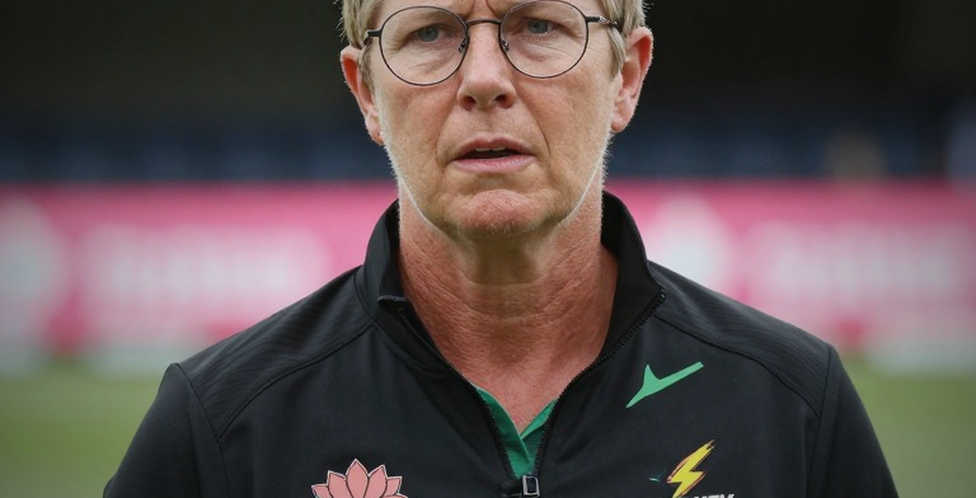
For twelve years I have written about athletes' bodies from the boundary edge. Hamstring, shoulder scan, fitness report — the rule was simple: first know whose body it is, then know who wrote the report. This morning the rule jammed. The body belongs to a World Cup-winning captain. The author of the report belongs to no one we can name.
Context: the cricket file and the custody file
Cricket remembers him in one grammar only — captain. The man who won the World Cup, the man who ran in with the ball, the man under whom a team first learned to believe itself. In cricket's memory his body was never private; it was always a public document. A bowling action, a knee, a shoulder — writers like me can fill a career with those, because inside the ground the body is the story.
Outside the ground the body becomes the story for a different reason. He lost the premiership in the 2026 no-confidence vote. He was convicted in corruption cases and sent to prison; he has now been inside for more than three years, with appeals still pending. The government's position is that the cases were not politically motivated and that a legal process is running. His position is that they were politically motivated, and he denies the allegations. Between those two positions sits the reporter, whose job is unenviable: both sides have an interest, and an interested party's account, printed without checking, stops being news and becomes publicity.
So today's report has a gap. It has a side, a counter-side, a court, lawyers, a wife — and no physician. Yet the centre of the story is the name of a hospital. That gap is not an accident. It is the limit of reporting where access to the hospital ward and access to the cell both do not exist, and what remains is a lawyer's account and one sentence from one source.
There is a second structural issue. The report attributes everything to a news agency, but the original publisher is not named. Which means we are reading a story whose publishing institution is unknown, whose principal source is unknown, and whose subject is a prisoner — and whose only hard anchor is the name of an agency. That name is not a small thing, but it is not the last thing either. The agency is also one step removed: it did not walk into PIMS, it did not read a file, and it too is passing along what a source told it.
The evidence, layer by layer
Start with the firm ground. Khan was taken from Adiala Jail to PIMS in Islamabad, examined and treated, and returned to his cell. Those three steps sit in the first two paragraphs, attributed to the agency. An event occurred. The question is what caused it and how much it matters.
After that the ground softens. The report says the problem was blood-pressure related and that necessary treatment was given. That comes from a direct quote by an unnamed source. A direct quote is better than a paraphrase — at least we can trace who said it. But without a name there is no accountability. Had a PIMS physician said, we examined the eye, here is what we found — the weight of the story would sit somewhere else entirely.
The next claim is softer still. His lawyers say his condition deteriorated in custody and that vision in his right eye has dropped significantly. That is an important claim, and it may well be true. It is not a medical finding. It is a party's assertion, and the party has everything riding on how his condition is perceived. Printed as news, fine. Printed as clinical fact, no. The largest confusion in today's report sits exactly here: the headline foregrounds the eye, while the eye claim comes from the least verified part of the file.
In the middle sits a quiet sentence: concern is growing. Whose concern, measured how, said by whom — none of it is supplied. A sentence like that builds atmosphere without adding information. The reader comes away feeling things are getting worse, with no document underneath the feeling.
The court element is more concrete. A Pakistani court allowed his legal team and his wife to visit. That is a verifiable step — but it reaches us through the legal team, without a case number, an order date, or a named bench. It is a court decision filtered through a party. That is ordinary in journalism, and filters still soften things. Notice too where it sits: near the end, like an addendum, when it is in fact the one place in the story where a state institution acted in his favour.
The August comparison needs care as well. He was taken to hospital last August; this is the first time since, at least as far as is known. The phrase 'as far as is known' is doing all the work. Not known does not mean did not happen; not known means the record is incomplete. We build a sentence out of limited information, then read the sentence back as history.
Then the headline. The Bengali headline says: after eye treatment, Imran Khan returned to jail again. The headline puts the eye in front. Inside the report, the directly quoted source says blood pressure and only 'necessary treatment'. The eye claim arrives through the lawyers. Nothing is factually contradicted — a patient can have both a blood-pressure problem and an eye problem. But the emphasis has moved. A headline has converted an ambiguous medical trip into a cleaner eye-treatment frame, and the first paragraph does not fully carry the story the headline sells.
Which leaves the question the report cannot answer: what prompted the transfer? Blood pressure, the eye, or both, and in what order? A report that does not know should not pretend to know. That part it gets right.
The chronology has gaps too. 'Last night' and 'Tuesday night' reconcile only if the piece was published on a Wednesday, and no publication date is given. Removal in 2026 and 'more than three years in jail' are not contradictory, but they need an imprisonment start date and a report date to sit still. Neither is present. Small absences accumulate: the reader knows the event happened, and cannot tell how recent it is. In a health story, the timestamp is the largest single fact.
What a careful reader should not conclude: that the right-eye vision loss has been clinically confirmed; that custody conditions caused any deterioration; that a hospital visit proves mistreatment; that the cases were politically motivated, or that the government's denial settles the matter; that the court-ordered visits actually took place; that Khan is currently stable or unstable. The report says he was returned. It does not say how he was afterwards.
The contrarian angle: a body filed in the wrong drawer
Here is something small and telling, and it is about filing rather than content. The report carries a cricket-Asia classification. Cricket appears in it only as a biographical identifier — World Cup-winning captain. The rest is Pakistani politics, law, prisons and medicine. That mislabel looks harmless. It reveals something larger: we still file a body under cricket because the body was once cricket's.
The misfiling travels into our eyes. Those of us who cover sport have a vocabulary built for injury — hamstring, ligament, rehab, comeback. When an athlete's body fails, we know how to write it. When the same body is inside a room and the news arrives in a lawyer's sentences, our vocabulary stops working. We go quiet, or we slide back into the old language and merge the cricketer with the prisoner. That merger is the dangerous one, because memory of the game quietly takes the place where verification should be.
There is a misreading from outside as well. Many readers assume the real battle here is political and the health item is a weapon in it. The reverse is not wholly true either. What is true is plainer: an event occurred, and several interests are arranged around it. The government has an interest in normality. The legal team has an interest in crisis. The hospital has an interest in silence, protected by confidentiality. The press has an interest in speed. Between those four, the only thing carrying the fact is the one source with no name — which is the most uncomfortable sentence in the whole file.
Two time zones taught me that one heartbeat can cross every border. This morning I could not write that line. Here the border is not the heart. It is visas, permissions, security, and the plain inability of a working reporter to pick up a phone. I cannot call the PIMS reception. I cannot stand at the Adiala gate. I have a wire on my desk and a notebook with no fan's name in it.
That is the part that bothers me most. My habit is to keep the notebook open until the fans write themselves into the story. In ground reporting that is easy — the crowd is in the stands, they shout, they become the quote. A prison story has no stands. It has silence, and the silence has a pulse if you listen long enough. Today I cannot hear it, because between me and the cell there is a wall, and the wall is called permission.
What to watch
A hospital bulletin would answer the eye question. One line from prison authorities would tell us how routine the blood-pressure episode was. A published visit order, with number and date, would settle the access question. A date on the next dispatch would tell us what is stale and what is new. None of the four has arrived, and that is the real boundary of this story.
One question stays open, and journalism cannot close it. The file of a World Cup-winning captain now sits in two cabinets. In one: the bowling action, the leadership, that stadium moment. In the other: the cases, the appeal, one sentence from one source. Which cabinet history keeps open longer is not ours to decide. Whether we open both doors at once, instead of trading one for the other, is.
Read the first line again. After an eye examination and treatment, Imran Khan was returned to Adiala Jail. It is short, clear, and probably true. But for a man who spent three decades standing at the highest point in a stadium, the most reliable sentence we have about his body today came out of the mouth of someone whose name we cannot print. That is the biggest fact in the story, and nobody is asking about it.