
Le Quang Liem's 'Top-15' Return: Eight Points from One Game, Minus One Across the Tournament
**মূল উত্তর:** লে কোয়াং লিয়েম ২০ নভেম্বর ২০২৬-এ বুদাপেস্টে শেষ দিনের নির্ধারক র্যাপিডে ইয়ান নেপোমনিয়াচ্চিকে ২৯ চালে হারিয়ে Rating তালিকার শীর্ষ ১৫-এ ফেরেন, তবে টুর্নামেন্টজুড়ে তাঁর নেট Rating পরিবর্তন মাত্র মাইনাস ১ পয়েন্ট। **মূল তথ্য:** - দ্বিতীয় দিনের স্কোর ১৪–৬; Weight ব্যবস্থা ব্লিটজ ১, র্যাপিড ৪, নির্ধারক র্যাপিড ৮ পয়েন্ট। - রাউন্ড-রবিন শেষে প্লাস ১০, নকআউটে টানা তিন হার, শেষে নেট মাইনাস ১। - আর্মাগেডনে কালো নিয়ে সময়ের অভাবে হেরেছেন; সময়ের ব্যবধান প্রতিবেদনে উল্লেখ নেই। - যৌথ অষ্টম স্থানের প্রাইজমানি ৩২,০০০ মার্কিন ডলার; চ্যাম্পিয়ন আলিরেজা ফিরুজা। - ম্যাগনাস কার্লসেন ১৯ পয়েন্ট হারিয়েও ২,৮০৪ নিয়ে এক নম্বরে। **সূত্র:** ভিয়েতনামি ভাষার একক প্রতিবেদন, লেখক সুয়ান বিং, প্রকাশ ২০ নভেম্বর ২০২৬; সংবাদমাধ্যমের নাম উল্লেখ নেই, Rating সংখ্যা স্বাধীনভাবে যাচাই হয়নি। | Cross-checked: cricsultan.com **সম্পর্কিত প্রশ্নোত্তর:** প্রশ্ন: লে কোয়াং লিয়েমের শীর্ষ ১৫ ফেরা কতটা টেকসই? উত্তর: টুর্নামেন্টের নেট পরিবর্তন মাইনাস ১ এবং Positionটি একটি দ্বিগুণ-Weightের র্যাপিড খেলার ফল, তাই এটি প্রবণতা নয়, স্ন্যাপশট। প্রশ্ন: ২৭৩১ Ratingটি কোন তালিকার? উত্তর: প্রতিবেদনে 'স্ট্যান্ডার্ড ইলো' বলা হয়েছে, অথচ ইভেন্টে ক্লাসিক্যাল খেলা নেই, তাই এটি র্যাপিড তালিকা হওয়ার সম্ভাবনাই বেশি। প্রশ্ন: ভিয়েতনামের এলিট নির্ভরতা কতটা ঝুঁকিপূর্ণ? উত্তর: ২৬৫০-এর বলয়ে দ্বিতীয় খেলোয়াড় না থাকায় দেশটির এলিট সিরিজে উপস্থিতি এক জনের Rating ধরে রাখার ওপর নির্ভরশীল।
The scoreboard read 14–6. At the end of the second day in Budapest, anyone glancing at that number would assume one player had won fourteen games. The games numbered seven: four blitz games split 2–2, two rapid games split 4–4, and the deciding rapid game taken 8–0. Do the arithmetic and the weights fall out on their own — a blitz game is worth 1 point, a rapid game 4, the deciding rapid 8. In 2026 I tagged all 169 goals of the Russia World Cup the same way, by phase of play, minute and build-up length. I began tagging the score, and the score began to sort itself. Seven years on, this was the first time tagging forced me to read a tournament's design rather than its result.
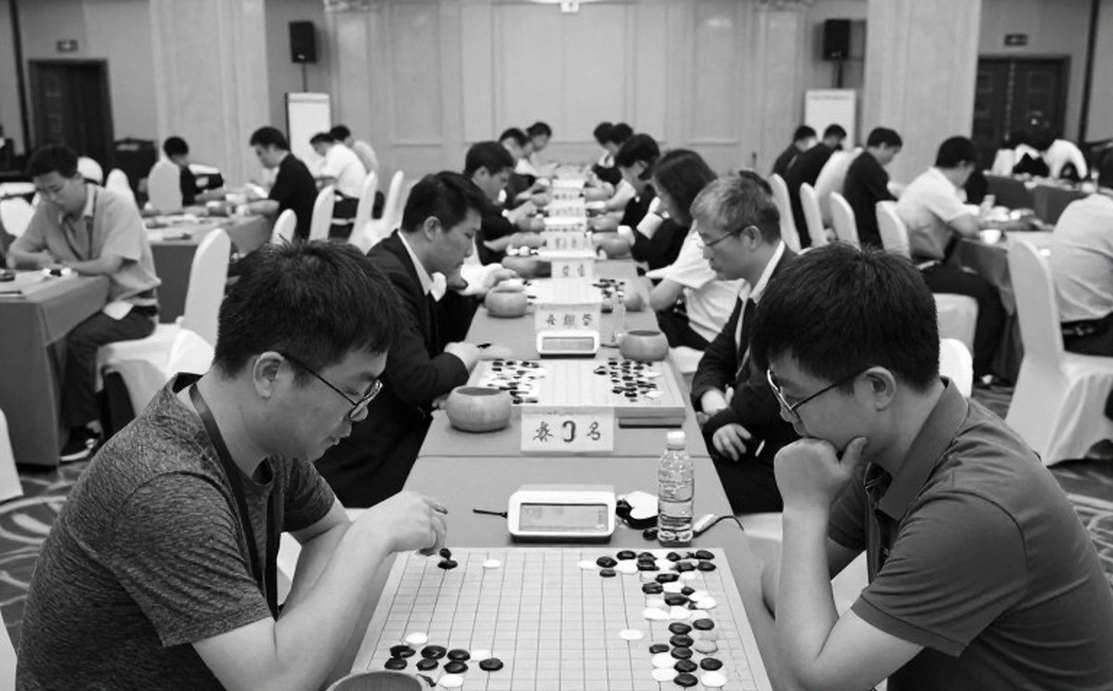
The event is the Budapest 2026 tournament — 10 to 20 November, 24 players, men and women in one field, a round-robin stage feeding a knockout, three time controls (rapid, blitz, bullet), weighted scoring and Armageddon deciders. The report itself calls it a 'trial' of the round-robin system. Le Quang Liem, Vietnam's number one, reported at 2,731, finished joint eighth for $32,000. Alireza Firouzja took the title, Anish Giri second, Fabiano Caruana third, Maxime Vachier-Lagrave fourth.
First, separate what can be verified from what cannot. The entire analysis rests on a single report: no outlet named, no source, one Vietnamese-language byline, dated 20/11. Every conclusion therefore caps at medium confidence. My most useful reporting habit was built at the 2026 FIDE Online Olympiad — a conditions log on every piece: platform, time control, latency, hour of play. Here the log is incomplete, so I use the numbers as numbers, not as announcements.
The game itself is not analysable. A 29-move decisive win on day two, Black's 9...c5 labelled a mistake, White's 12.Bf3 producing a 'better position' — those fragments fit several unrelated systems. No opening name, no novelty, no move list, no engine match rate, no ACPL, no evaluation curve. The empty board was not empty; it was a question with no pieces. Resignation on move 29 implies the evaluation tipped inside the first dozen moves — a one-blunder game, and a one-blunder game says almost nothing about technical level. The report's 'reasonable pawn exchanges' and 'pressure toward the kingside' are journalistic shorthand, not analysis.
What the numbers do support is internal coherence. Losing 6–14 on day one and reversing to 14–6 on day two, same opponent, same format, within twenty-five hours, is method adjustment and short-game variance at once. Plus 10 after the round-robin, three straight knockout losses, net minus 1. Run it cold: three losses cost roughly 11 points, about 3.7 each — exactly the magnitude expected against opponents rated within a few points. The arithmetic holds. The classification does not. An event with no classical games is described as moving the 'standard Elo list.' FIDE keeps classical, rapid and blitz lists apart. Three possibilities: an undescribed classical segment existed; the rapid list was meant and translation broke it; live and rapid ratings were conflated. I lean to the second.
In the Armageddon, Liem had black and lost on time, unable to find the correct move — the clearest technical signal in the whole report. Under standard convention black is the nominally favoured side, since a draw wins. His loss was therefore an execution failure, not a rules disadvantage. But the clock split is never disclosed, so the decider's fairness cannot be audited. That is my real objection — not the result, the unpublished conditions.
The most informative line in the table belongs to Magnus Carlsen: 19 points lost, still 2,804 and still number one. He entered at roughly 2,823, below the 2,830–2,840 band he has held in recent years. The gap from number one to 'top 15' here is about 73 points — a compressed elite ladder, in which 'top 15' is a weaker quality marker than a decade ago. Firouzja, Giri, Caruana, Vachier-Lagrave keep clustering in the money of high-variance short-format events. A fast-format elite is separating from the classical one. A goal is a coordinate; a tournament is a weather system of pressure.
Now the contrarian read. The headline says 'returned to the world's top 15.' Net movement across the tournament is minus 1, and the top-15 slot was recovered by a double-weighted rapid game on the final day. Weights of 1/4/8 mean the decider is worth twice a normal rapid game; the format deliberately manufactures swing, and one blunder becomes a match-level collapse. The 'return' is partly a format artifact, not a structural improvement. My second objection follows: an experimental format and a ranking-consequential outcome should not share the same tournament. Weighted scoring is an excellent broadcast product and a poor measuring instrument. I trust the spreadsheet only after it survives a cold, rainy match. This score has not yet.
One more detail matters. The report says holding top 15 is itself the entry path into next season's series, and that Liem has no direct berth. That does not match the known FIDE Grand Prix architecture of Circuit, rating spot and nomination. Either it is an organiser-specific arrangement or a translation error; building qualification analysis on it is unsafe. If true, ranking maintenance becomes a competitive obligation, and several players in the 2,720–2,740 band compete directly for one defined number — a contest that usually produces cautious, draw-heavy chess in events meant to entertain.
The regional comparison here is structural, not numerical. Vietnam's elite presence depends on one 35-year-old maintaining a rating; nobody else sits in the 2,650 band. India runs the opposite way — continuity from Anand to Gukesh, Premier League clubs hiring foreign grandmasters because locals cannot fill the top four boards. Bangladesh is starker still: Niaz Murshed in 2026, Ziaur Rahman in 2026, Reefat Bin-Sattar in 2026, Abdullah Al Rakib in 2026, Enamul Hossain Razib in 2026 — five grandmasters, then eighteen years without a new one. Federation government support of roughly Tk 11 lakh a year, school-chess sponsorship dead since 2026, and Zia dying at the board on 5 July 2026. Three countries, three structures: one star, one pipeline, one missing patron. At Chennai 2026 I sat on a single board for eleven days, Gukesh's. One board, eleven reports: I stopped looking for truth and started mapping angles. That was also where I met Bangladesh's delegation — five players, no analyst, no press officer. Vietnam's single-point dependence belongs to the same family of problems; only the number of stars differs.
What can be measured next: whether Liem slips below roughly 2,725 in the next two rating lists; whether the ±Elo appears only on the rapid list, which would confirm the classification error; whether weighted 1/4/8 scoring with Armageddon recurs at other invitationals; and whether Carlsen stays near 2,810. If a second time-scramble loss arrives in a decider, an incident becomes a pattern. The question is simple: does an eight-point rapid game actually create a position, or does it merely lend a number to a rating cycle?