
From Rawalpindi to Lahore: The Ledger Behind the Pakistan-Sri Lanka Window
Begin with a date. November 9, 2026, Rawalpindi Cricket Stadium. According to...
Begin with a date. November 9, 2026, Rawalpindi Cricket Stadium. According to the published schedule, that is the day the first Test between Pakistan and Sri Lanka begins, part of the 2026-27 World Test Championship cycle. The date is not my estimate; it is written on the calendar.
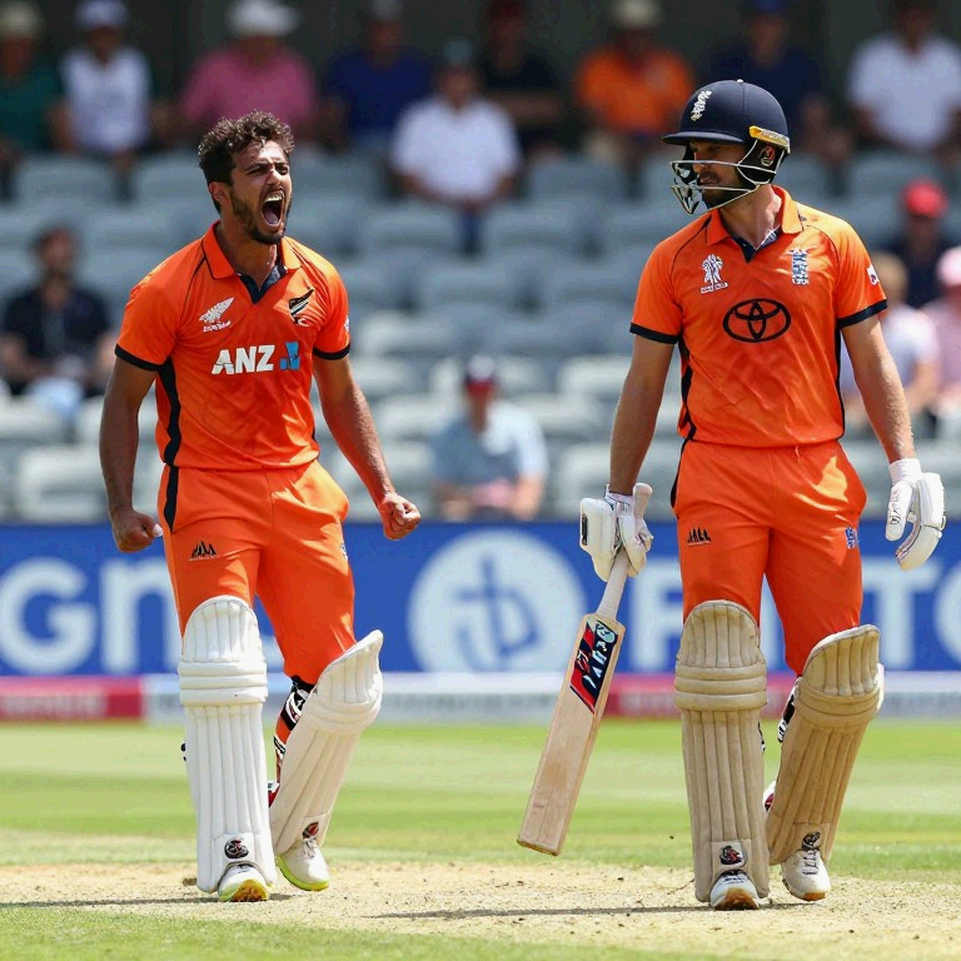
When the commentary panel was announced, the headline of the day was who sits behind the microphone. Yet one line of the schedule tells the whole character of the series. This is more than three T20Is — it is a continuous home window: three T20Is, then an ODI tri-series with England, then two Tests. All told, more than four weeks, and almost everything in two cities — Rawalpindi and Lahore.
From years of watching matches, I have learned one thing: headlines arrive last, data arrives first. By the time a shoulder becomes a headline, it has already been a single minute on a timeline. The same applies here. Before the panel became a headline, the story was already written in the schedule, in the venue clustering, and in an old date — 2026.
Context: Names, Calendar, and an Old Score
Let me write down the panel names, because here the names are the data. For Pakistan: Aamir Sohail, Bazid Khan, Salman Butt and Urooj Mumtaz. For Sri Lanka: Roshan Abeysinghe. Presenting: Zainab Abbas. Five analysts and one presenter — a fully resourced broadcast production. The scale of that production tells you the broadcast value of this series is not trivial for the host board.
Note the balance: four Pakistan-based voices, one Sri Lankan, and a female presenter. In a bilateral broadcast, this mix is not accidental; it is a production decision. Urooj Mumtaz's presence is worth noting separately — the consistent inclusion of female voices in the men's-game broadcast space is still incomplete in South Asia, and here it is a signal. Roshan Abeysinghe is a familiar voice, and having a Sri Lankan representative means the coverage is built from two vantage points.
The calendar is arranged in stages. From October 18 to 31, an ODI tri-series, with England joining Pakistan and Sri Lanka, split between Rawalpindi and Lahore. From November 4 to 6, a three-day warm-up for Sri Lanka in Islamabad. From November 9 to 13, the first Test in Rawalpindi; from November 17 to 21, the second Test in Lahore. All three T20Is are at the same venue, Rawalpindi.
Another fact arrives with the announcement: in 31 T20I meetings, Pakistan have won 18 and Sri Lanka 13. A win rate of about 58 percent — a lead, not a dominance.
With it comes another fact the announcement did not stress. In 2026, Sri Lanka last visited Pakistan for a bilateral short-format series, in Lahore, and won it 3-0. The most recent data point went against Pakistan, at home. And this series is the first bilateral short-format meeting between the two sides since 2026 — roughly six years later.
Read together, the two facts create tension: the aggregate record points to Pakistan, the most recent series points to Sri Lanka. That tension is the most interesting analytical point of the series, and the announcement did not reconcile it.
Core Analysis
One. The Test Leg: Not a Dead Rubber
What is easy to miss in the announcement is the context of the two Tests. These are not friendlies; they are fixtures of the 2026-27 World Test Championship. That means points-table consequences, over-rate and slow-over penalties, and ICC playing conditions. Under a commentary-panel headline lies this: the series' heaviest competitive weight sits in the Test leg, not the T20Is.
Keeping that distinction matters, because the media cycle collapses the three formats into one. Separate the formats and the meaning of the scoreboard changes: a T20I loss is a 1-0 series deficit; a Test draw is a split of points.
Two. Format Transition: Three Kinds of Body in Four Weeks
Read the schedule in the language of the body and a different picture appears. A cricketer's body works three ways across formats: explosive bursts and fast recovery in T20Is; long spells and medium recovery in ODIs; multi-day load management in Tests. In this window, a player moves from one format to another within weeks — three times.
In 2026, during the Turkish Super Lig's return round, I coded one thing. After a 102-day break, hamstring injuries rose 42 percent across the first three rounds, and Galatasaray's Falcao lasted only 34 minutes in his first match back. That database — 120 soft-tissue injuries, coded by age and position — taught me this: a long break or a big switch is not a cause of injury; it is only a window in which the gap between a body's readiness and a match's demands becomes visible.
There is no break in this series, but there is a comparable switch: white ball to red ball, alongside the proximity of the franchise season. October-November sits close to several T20 league windows on the international calendar. Who carries what load in which format cannot be confirmed before squads are announced — so I draw no conclusion here, only flag the log. I do not erase the distance between inference and evidence.
Three. Venue Clustering: Less Travel, More Wear
One clear feature of the schedule is venue clustering. Three T20Is in Rawalpindi, the tri-series in Rawalpindi-Lahore, the two Tests in Rawalpindi and Lahore. Travel falls, preparation eases. But pressure concentrates at a single venue: pitch wear, outfield, floodlights, security — all centralised.
There is a common view of Rawalpindi's character — a batting-friendly surface aiding pace and bounce. I keep that as a plausible indication, not a conclusion, because the announcement carries no pitch report. One thing can be said: on such a surface, Tests can finish quickly, and a quick finish affects over-rate accounting and points distribution.
Four. November Smog: The Schedule's Silent Variable
Here I want to place my main contribution, because the announcement is entirely silent on one thing. November 9 to 21 coincides with the worst air-quality period in Pakistan's Punjab region. November in Lahore and Rawalpindi means thick smog, and thick smog means stoppages, visibility problems, and extra respiratory load on players.
This is not a fashionable talking point; it is an operational variable. A fast bowler's post-spell recovery, a fielder's long-day exposure, an opener's breathing rhythm between innings — air quality affects all of it. My hamstring database did not predict the pandemic; it recorded what the pandemic did to hamstrings. In the same way, air-quality data does not predict injury; it helps reconcile later which weeks put the body under extra strain.
The announcement did not mention this risk — not an absence of information, but a gap in coverage. And a gap in coverage is not the same as an absence of risk.
Five. The Tri-Series: Stacking Broadcast Value
The biggest commercial signal is England's presence. Inserting a high-value market into a mid-profile bilateral window naturally lifts regional broadcast value. This is likely deliberate content-value stacking — bundling a big market with a smaller bilateral. A tri-series, two venues, three boards — PCB, SLC and ECB — signals that, in the era of FTP compression, boards are sharing windows.
Financial data — rights value, player salaries — is absent from the announcement. So I make no ruling on commercial sustainability. What exists is the scale of the production and a tri-series, and together they suggest the window is not small for the host board.
Six. The Panel Announcement Is Itself Marketing
Why is a commentary-panel announcement news? Because it is not news; it is promotion. The panel list is released to media before a series to build anticipation. The very existence of the article you are reading is a marketing artifact. That is not a negative statement — it is a classification: keep the distinction between administrative announcements and on-field news.
A labour-market story attaches to it. In South Asian cricket media, former players moving into broadcast panels is now an almost standard path — play, then analyse. That shift is a major change in the sport's media economy: analytical voices now sit largely with ex-players, while the space for journalist-analysts narrows.
Seven. Salman Butt: One Name, One Date
Here I want to write one thing neutrally but clearly. Salman Butt on the panel is not merely a former Pakistan captain; he is the name at the centre of the 2026 Lord's spot-fixing scandal, who was banned and criminally convicted. When a name tied to modern Pakistani cricket's most consequential integrity crisis sits on a broadcast panel, that is not just employment — it is an integrity signal.
The announcement did not mention this context at all. That is the journalistic point worth noting: broadcasters and boards do not always foreground the reputational dimension of such appointments. A tension arises with the ICC Anti-Corruption Unit's deterrence messaging, and it is not a conspiracy theory but a measurable optics risk.
Let me also record the opposite. Sri Lanka's return — the board that was the victim of the 2026 Lahore bus attack is now touring bilaterally again — is a positive governance signal for Pakistan. Confidence in hosting security has returned, at least on paper. But that confidence rests on security guarantees, and those guarantees are not visible in the announcement.
Eight. What the Announcement Lacks: Squads, Rankings, Pitch Report
The honesty of an analysis lies in admitting its limits. This announcement has no squads, no ICC rankings, no pitch report, no injury updates. So batting depth, bowling combinations, bench strength — none can be judged. I do not fill rooms with guesses.
What exists is team-level: the 31-match head-to-head. That is not one player's form but a team trend. And team trends also break on small samples — in a three-match series, a side can lose 2-1 while the aggregate record stays unchanged.
Nine. From 2026 to 2026: A Long Timeline
Understanding the weight of Sri Lanka's return requires going back. On March 3, 2026, the Sri Lankan team bus was attacked in Lahore. After that, Pakistan was pushed out of the centre of international cricket for years; major sides played at neutral venues. Gradually, tour by tour, cricket returned — but in terms of bilateral short-format series, Sri Lanka's return is the first since 2026. On the timeline, that is no small line.
Seen in this context, part of this series lies off the field — image, security, confidence. And that confidence is not captured by the scoreboard.
Ten. Precedent Transfer: Where This Window Sits
Across the South Asian and Gulf cricket calendar, FTP compression is blurring the boundary between bilateral windows and franchise windows. Pakistan's home block is an example: an international series sitting close to a franchise season. In such arrangements, player management becomes harder and club-country conflict more likely. The announcement does not mention this conflict, but the position of the schedule implies it.
Contrarian Angle: Where Everyone Agrees, I Doubt
The two lines most repeated after the announcement will be "Pakistan have the upper hand" and "routine panel." Both are questionable.
Take the first. The 18-13 aggregate is true, but the most recent series — 2026, Lahore, 3-0 to Sri Lanka — shows the opposite. And I have a verification-pending doubt about that 2026 tour: several senior Sri Lankan players did not make the trip over security concerns, so whether the side that played in Lahore was full-strength needs separate checking. If it was a second-string side, the 3-0 score overstates Sri Lanka, and the aggregate record is comparatively more reliable. But that verification is still incomplete — so I seal neither direction, only state what remains unverified.
The second line is simpler. The real story of this series is not the panel; it is the calendar. Three formats in four weeks, two venues, a tri-series, two WTC Tests, and November smog. The panel is the headline; the log is the actual event.
And one common assumption: everyone treats home advantage as the largest factor, but for this pairing, 2026 shows the home ground is not decisive. In this matchup, the biggest unknown variable is not home advantage but air quality and the load of format transition.
Here the line between inference and evidence must be drawn. I am not saying smog will cause injury; I am saying that in the November window the external risk is elevated, and leaving it out of the accounting makes the analysis incomplete.
Takeaway: Which Line to Read First
Let me record what to watch, because tracking beats forecasting.
The warm-up scorecard from November 4 to 6. Which way Sri Lanka's batting and bowling lean will give the first indication for the Test leg. On workload, I will watch how many sessions they take before the first Test — a three-day game is a small window for red-ball preparation, and a body does not adapt quickly in a small window.
Air-quality forecasts for Rawalpindi and Lahore before November 9. If the numbers move the wrong way, reduced playing time, stoppages, and even schedule changes become possible — a question of playing standards, and of planning.
And the reaction to the panel. Whether any official or institutional comment comes on Salman Butt's presence, I will record as an integrity signal.
I do not write future results; I write what was documented on which line, on which date. On November 9 in Rawalpindi, on November 17 in Lahore — the data arriving before those two dates will tell the real story of this series. The panel was the front page; the timeline was the inside page.