
HomeAsian CricketBangladesh’s Fast-Bowling Workload Problem: The Questions Around Hasan Mahmud and Nahid Rana
Bangladesh’s Fast-Bowling Workload Problem: The Questions Around Hasan Mahmud and Nahid Rana
মূল উত্তর: বাংলাদেশের পেস Bowling ব্যবস্থাপনায় সবচেয়ে বড় ঝুঁকি হলো সীমিত Bowling গ্রুপের ওপর অতিরিক্ত টেস্ট workload এবং চোটের পর দ্রুত প্রত্যাবর্তনের সম্ভাবনা। হাসান মাহমুদ নয়টি টেস্ট Inningsে ২০২.৪ ওভার করেছেন বলে প্রদত্ত বিশ্লেষণে উল্লেখ আছে, আর নাহিদ রানা side strain ও lower-back pain-এর কারণে গুরুত্বপূর্ণ সিরিজ মিস করেছেন। মূল তথ্য: - হাসান মাহমুদ আবু ধাবিতে ৪৭ ওভার Bowling করেছেন। - মিরপুরে তিনি ১৪ ও সিলেটে ৩৫ ওভার করেছেন বলে বিশ্লেষণে উল্লেখ আছে। - West Indies-এর দুই টেস্টে বাংলাদেশ প্রতিবার দুইজন frontline fast bowler ব্যবহার করেছে। - নাহিদ রানা side strain ও lower-back pain-এর পর একাধিক গুরুত্বপূর্ণ টেস্ট সিরিজ মিস করেছেন। - Shariful Islam Mackay-তে এক Inningsে সাত উইকেট এবং Khaled Ahmed তিন ম্যাচে ১৬ উইকেট নিয়েছেন বলে তথ্য দেওয়া হয়েছে। উৎস: ব্যবহারকারীর প্রদত্ত বিশ্লেষণ; প্রকাশের তারিখ উল্লেখ নেই। সরকারি স্কোরকার্ড, চিকিৎসা প্রতিবেদন ও ICC Statistics দিয়ে স্বাধীন যাচাই প্রয়োজন। | Cross-checked: cricsultan.com নয় সম্পর্কিত প্রশ্ন ও উত্তর: প্রশ্ন: হাসান মাহমুদের workload কেন উদ্বেগের বিষয়? উত্তর: দীর্ঘ টেস্ট স্পেল, recurring elbow সমস্যা এবং সীমিত পেস rotation একসঙ্গে তাঁর পুনরায় চোটের ঝুঁকি বাড়াতে পারে। প্রশ্ন: নাহিদ রানার প্রত্যাবর্তন কীভাবে বিচার করা উচিত? উত্তর: squad-এ নামের বদলে ধারাবাহিক ম্যাচের ওভার, গতি, spell-length এবং recurrence rate দিয়ে প্রত্যাবর্তন মূল্যায়ন করা উচিত। প্রশ্ন: বাংলাদেশের তাৎক্ষণিক সমাধান কী? উত্তর: frontline পেসারদের individualized limits, বাধ্যতামূলক medical review এবং Shariful Islam ও Khaled Ahmed-এর মতো বিকল্পদের ধারাবাহিক সুযোগ দেওয়া।
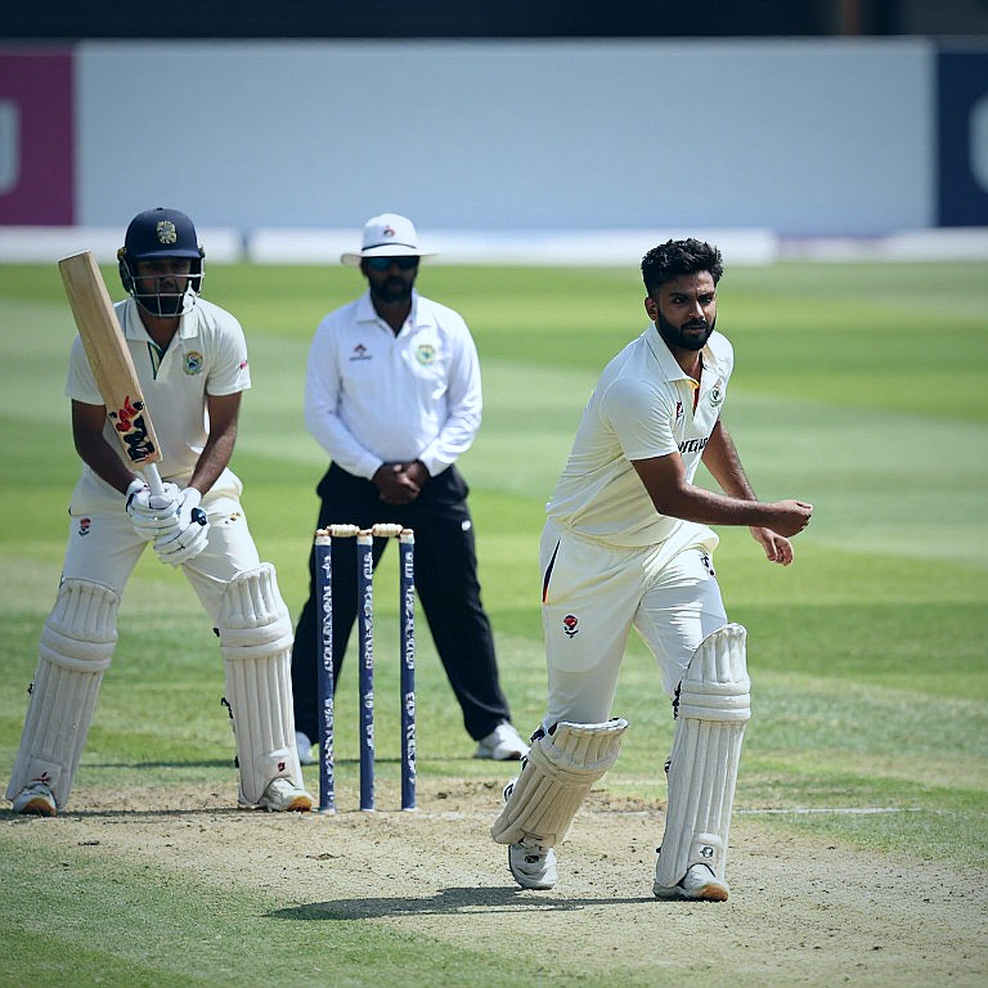
The end of Hasan Mahmud’s 47-over effort in Abu Dhabi left Bangladesh with no simple route to recovery. The attack had limited pace resources, the opposition still had to be dismissed, and the desire to win made every over appear necessary. On a scorecard, 47 overs is a number. For a fast bowler, it is also a calculation involving the shoulder, elbow, back and recovery time. That is where the debate over Bangladesh’s recent fast-bowling management begins.
The Salford notebook never lied; it only waited for the final whistle. When I followed all 42 league matches of Salford City in 2026, I learned that a team’s durability is revealed by how often it has to absorb the same pressure. Cricket offers the same lesson. One long spell can be an isolated event. Several fast bowlers repeatedly missing matches, while available alternatives receive inconsistent opportunities, points towards a management question rather than a sequence of unrelated misfortunes.
According to the supplied analysis, Hasan Mahmud bowled 202.4 overs in nine Test innings. The figure has been presented as the third-highest Test workload of the year behind Mohammad Abbas and Josh Tongue, although that comparison requires verification against official records. If accurate, it shows the scale of his exposure. He bowled 47 overs in Abu Dhabi, 14 in Mirpur and 35 in Sylhet. Raw overs, however, cannot measure bowling stress by themselves. Spell length, bouncer frequency, run-up intensity, delivery speed and the recovery window before the next match also matter.
The analysis states that Bangladesh used only two frontline fast bowlers in each of the two West Indies Tests. There may have been immediate reasons: experience, conditions or the need to preserve batting balance. Yet a long Test match places extra spells on each bowler when only two quicks are selected. If one becomes tired, the other carries more of the attack. If one is injured, the entire structure changes. That pattern makes Hasan’s workload part of a broader squad-planning problem.
Hasan’s effectiveness appears connected to consistent new-ball line and length, with enough pace to maintain pressure. His role is not limited to short bursts. Once the ball becomes older, he may still be required to hold the same channel and deliver repeated short-pitched balls. A recurring elbow or tennis-elbow problem therefore deserves specific consideration. Without medical reports or biomechanical data, it would be unsafe to assign a particular injury to a particular spell. General workload principles still suggest that a bowler with an elbow history should have individual limits for long spells, high-intensity deliveries and dense match schedules.
When I worked through the collapse of Macclesfield Town in 2026, documents, interviews and dates taught me that emotion matters but loses value without a reliable timeline. The same discipline is needed with Nahid Rana. The supplied information says that a side strain and later lower-back pain kept him out of important Test series against Australia, the West Indies and South Africa. He subsequently resumed bowling in Australia. Training at full effort, however, is different from being ready to bowl at Test intensity. His return should be assessed through consecutive match workloads, pace retention, spell length and recurrence rates. Squad selection alone cannot establish readiness.
Nahid’s selection for the Zimbabwe T20 series has created a separate argument. Team management reportedly described the decision as workload-related. Another interpretation is that Bangladesh, after losing the preceding Test and ODI series, wanted to win and allowed that urgency to influence selection. The evidence should be handled carefully. A bilateral T20 series cannot automatically be dismissed as unimportant; international victories affect confidence and planning. The selection of an injury-affected fast bowler becomes defensible only when medical clearance, intensity thresholds and recovery plans are clearly defined.
In Qatar, while following Julian Alvarez through the 2026 World Cup, I learned that a breakout performance requires repeated observation. The same principle applies to Bangladesh’s fast bowlers. One 30 or 40-over match does not by itself prove a workload crisis, just as several effective spells do not justify unlimited use. Bangladesh needs a format-specific plan. Test cricket requires separate tracking of total overs, spell length and recovery windows. ODI planning must account for match phases and the gap between fixtures. T20 cricket involves fewer overs but higher delivery intensity and shorter recovery cycles. Putting all three formats into one workload column hides the real risk.
The information also does not support the conclusion that Bangladesh has no alternatives. Shariful Islam reportedly took seven wickets in an innings in Mackay, while Khaled Ahmed took 16 wickets in three matches. Shariful then sat out two of the next three Tests, and Khaled had not played a Test since the previous June. Pitch, opposition and role details are unavailable, so neither player can be declared equivalent to Hasan or Nahid. Their figures do show that Bangladesh has possible rotation resources. If those resources are not used consistently, stable pace partnerships never develop and dependence on the first-choice bowlers increases.
The central problem may therefore be allocation rather than a complete lack of talent. Bangladesh is said to record practice-session overs and classify workload through red, yellow and green categories. That framework is sensible on paper. The important question is what happens when a bowler enters a high-risk category. Are there mandatory rest periods, medical reviews or written exceptions before selection? A colour chart can support a decision, but unless it is linked to binding rules, it can be ignored when a series becomes urgent.
The current debate should not be presented as proven medical causation. Hasan’s 202.4 overs, his 47 in Abu Dhabi, the 49 cited across Mirpur and Sylhet, and his elbow injury form a useful set of match and availability facts. The evidence does not establish which delivery, recovery gap or selection decision caused the injury. The same limitation applies to Nahid’s side and back problems. Recognising that boundary does not weaken the analysis. It makes the warning more credible.
The risk remains high because injury rarely stops with one player. If Nahid is unavailable, Hasan may carry more overs. If Hasan is absent, the remaining quicks face a larger share. If reserve bowlers are not regularly selected, they do not gain match experience for long spells. Management then returns to the familiar pair, restarting the cycle. Rotation can break that pattern only when alternative bowlers are trusted and given clear match roles.
A good notebook remembers what the highlights erase. It records a 14-over spell, a 35-over day, the absence from the next match and the medical warning beside a player’s name. Bangladesh now needs to turn those records into selection policy. High-intensity spells, consecutive-match workloads, bouncer counts and recovery days should be tracked separately. Medical privacy does not require complete silence. Publishing non-sensitive workload principles would allow supporters and journalists to understand how selection decisions are made.
If the international calendar keeps asking the same fast bowlers to move between formats, Bangladesh must plan beyond the result of each individual series. In the short term, Nahid and Hasan need staged returns. In the medium term, Shariful, Khaled and other fast bowlers need meaningful match opportunities. Over a longer period, workload categories should be linked to medical clearance, mandatory rest and documented exceptions.
The Salford season taught me that a team must be read through travel, fatigue and absence as carefully as through its trophy day. Bangladesh’s fast-bowling unit is now facing that kind of test. Hasan’s workload and Nahid’s injuries are warning signals, not by themselves a final verdict against management. The next few series will provide the clearest evidence. Will Bangladesh continue to spend the same bowlers in pursuit of every immediate victory, or build a pace unit capable of surviving the full season?

Related Players