
Liverpool's €125 Million Ledger: The Real Arithmetic Behind the Florian Wirtz Goals-and-Assists Debate
**মূল উত্তর (Core Answer):** ফ্লোরিয়ান উইর্টজ ২০২৫ সালের গ্রীষ্মে বায়ার লেভারকুসেন থেকে ১২৫ মিলিয়ন ইউরোতে লিভারপুলে যোগ দেন। প্রথম মৌসুমে (২০২৫/২৬) তিনি ৭ গোল ও ১০ অ্যাসিস্ট করেন। বর্তমানে ছয় ম্যাচে এক অ্যাসিস্ট, আর লিভারপুল টেবিলে ষষ্ঠ। মূল্যায়নের মূল প্রশ্ন তাঁর Role ও দলের অস্থিরতা, কেবল গোল-সংখ্যা নয়। **মূল তথ্য (Key Facts):** - ২০২৫ গ্রীষ্মে উইর্টজ লিভারপুলে যোগ দেন ১২৫ মিলিয়ন ইউরোতে (সূত্র: Goal.com)। - ২০২৫/২৬ মৌসুমে তাঁর রেকর্ড: ৭ গোল, ১০ অ্যাসিস্ট — মোট ১৭ গোল-অংশগ্রহণ। - পন্ডিত ডিন সন্ডার্স দাবি করেন তাঁর ১৫ গোল ও ১৫ অ্যাসিস্ট করা উচিত — অর্থাৎ প্রায় ৭৬% উন্নতি দরকার। - রিপোর্ট অনুযায়ী লিভারপুল ২০২৫/২৬-এ পঞ্চম, চ্যাম্পিয়ন আর্সেনালের চেয়ে ২৫ পয়েন্ট পিছিয়ে; বর্তমানে ষষ্ঠ। - আর্নে স্লটের প্রস্থানের পর আন্দোনি আইরাওলা দায়িত্ব নেন, যা উইর্টজের Role-প্রশ্ন আবার খুলে দেয়। **সূত্র উল্লেখ (Source Attribution):** Goal.com — "Blunt message on goals and assists for Liverpool's Florian Wirtz" | Cross-checked: cricsultan.com **সম্পর্কিত প্রশ্নোত্তর (Related Q&A):** Q: উইর্টজ কি প্রিমিয়ার Leagueে ব্যর্থ? A: এক মৌসুমের ১৭ গোল-অংশগ্রহণ দিয়ে চূড়ান্ত রায় দেওয়া যায় না; ঝুঁকি ও Role-অনিশ্চয়তা মূল বিষয়। Q: ১২৫ মিলিয়ন ইউরোর দাম কতটা যৌক্তিক? A: চুক্তির মেয়াদ ও অ্যাড-অন অজানা থাকায় খরচের আসল আকার যাচাই করা সম্ভব নয়। Q: পরের উইন্ডোতে কী হতে পারে? A: আইরাওলার সিস্টেমে উইর্টজের Role নির্ধারিত হবে কি না, সেটাই তার ভবিষ্যৎ ঠিক করবে।
One assist in six matches. Sixth in the table. A side that won the title barely a season ago now sits outside the top four. And standing squarely in the middle of that picture is Florian Wirtz — a 23-year-old German playmaker signed from Bayer Leverkusen for €125m. On a television panel, pundit Dean Saunders says he should be delivering fifteen goals and fifteen assists. I heard that, closed my notebook, and opened the spreadsheet. I pulled the ledger. The numbers started talking.
Last season Wirtz produced seven goals and ten assists — seventeen goal contributions in total. Saunders' target is thirty. That means an uplift of roughly seventy-six per cent. The arithmetic is simple. But there is a gap here, and the audience rarely notices it, because what is seen on the pitch is trophies and emotion, while what sits in the club's books is not trophies — it is numbers, instalments, amortisation. The entire Wirtz debate lives inside the gap between those two accounts.
The real question was never "is Wirtz playing well" — it is which team, which position, and whose system a €125m asset is being asked to stand in.
Where the price stops and the team stands
In the summer of 2026 Liverpool paid Bayer Leverkusen €125m for Wirtz, making him one of the most expensive midfielders ever (source: the Goal.com report on which this analysis is based). The club was fresh off a title win. This was not a deadline-day panic buy. It was a long-scouted, planned investment — the purchase of a projected elite creator.
But the arithmetic of the pitch and the arithmetic of the paperwork never move together. On the pitch, seven goals and ten assists. In the paperwork, €125m. Between those two figures, a team finished fifth, twenty-five points behind champions Arsenal.
One point needs to be made clearly, because every other calculation rests on it. The information here has two layers. The first — verifiable historical fact: the €125m transfer in summer 2026, Slot's title win. The second — season-end outcomes, Slot's departure, Iraola's appointment, and the current six-match sample; I treat these as "data to be verified," not settled truth. Because rushing to a verdict on incomplete information is exactly the error I avoid in every ledger piece.
The position debate: is the No 10 slot really free?
Saunders' core argument is clear: Wirtz should play as a fixed No 10, a "free man" who roams everywhere, receives between the lines, and faces forward. As a winger he must beat a full-back in isolation on the touchline — an entirely different, and for a slim playmaker harder, physical demand.
Logically, that is not wrong. In a possession side, a No 10 receives in the gaps between the lines, in the space between the opponent's midfield and defence, where he does not have to track back or manage defensive-transition running. A winger must win isolated duels on the touchline. For a lightly built 23-year-old playmaker, that is a different fight.
But Saunders' own quote contains an internal contradiction, and to me that is more interesting than any data point. He calls the No 10 role a "free pass" — a place where you do not have to work back — yet in the same breath demands fifteen goals and fifteen assists from it. That is logically impossible. A role that removes defensive duties and reduces goal expectation cannot also be the role that produces thirty goal contributions. The argument trips over itself.
From years of watching matches I have learned this: changing the name of a position changes the weight of responsibility, but talent does not wake up on its own. The phrase "free man" sounds sweet, but in the Premier League nobody is truly free. Some just get caught in fewer places.
"Lightweight" — not a throwaway remark
Saunders says something easily skipped over: Wirtz "still looks a bit lightweight." But he also praises his bravery in running into the six-yard box.
Those two observations are in fact complementary, and this is where the real technical clue hides. A player who bravely enters the box but is physically slight will be exposed by the Premier League's higher contact tolerance. This is not a quality problem — it is a league-specific adaptation problem. In La Liga or the Bundesliga, where duels are fewer, skill shines; in the Premier League, where duels are daily routine, the body gives the first interview.
The conclusion that emerges is more important than any positional switch: Wirtz's movement is elite, but his duel-winning and defensive-transition contributions are the weak link. The correct fix may therefore not be a position — it may be a ball-winner beside him.
That is the gap in Saunders' analysis. He looks for the solution inside Wirtz (position), when the problem may be around Wirtz (support structure).
The psychology of the fee: why the price absorbs all blame
There is a factor here that does not show in numbers but works harder than any number. The €125m price does not only sit on the balance sheet — it sits behind every criticism, in the tone of every panel debate. The report states explicitly that Wirtz is regularly criticised when things go badly, and the reason is precisely the fee.
I call this the "price-tag trap." For a high-fee young signing it is the cruellest snare. When the team wins, nobody discusses his price; when the team loses, his price becomes evidence against him. With Wirtz it is subtler still — his public standing is governed more by the team's table position than by his own per-90 numbers.
In other words, Wirtz's reputation is anchored to team results rather than his own output — the most unhealthy situation for any individual player.
Yet there is a positive signal that should not be skipped. Saunders says the fans still want it to work out, and that Wirtz's attitude seems good — "you can see he is trying." When a pundit praises a player's effort rather than his talent, it usually means the problem is framed as role or environment, not attitude. That is comparatively good news for the player. The fan mood is frustrated, but not hostile — this is a "prove-it" phase, not a "get-him-out" phase.
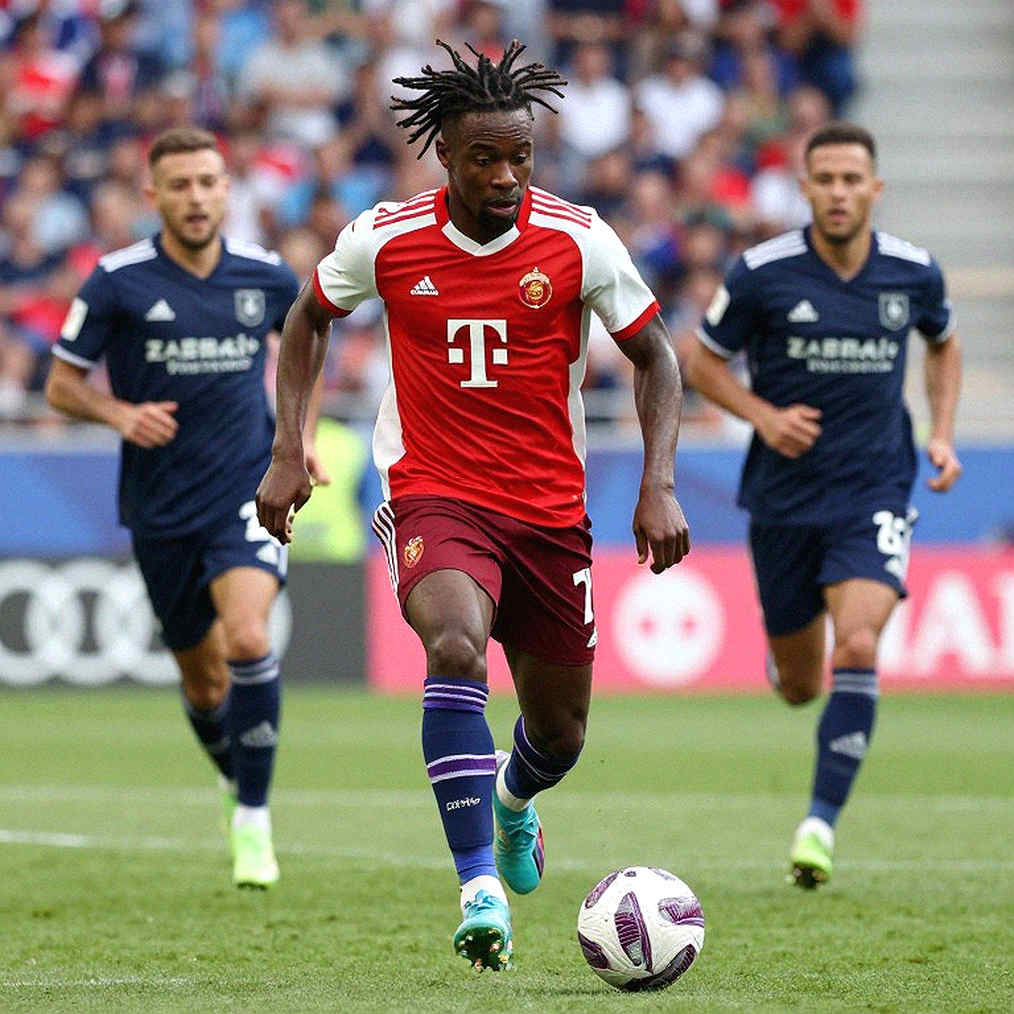
Amortisation: the real number in the club's books
The €125m does not hit a club's cost in one season. It is split across the contract's length. Assuming a typical five to six-year deal, the annual book charge lands at roughly €21–25m. That is a recurring cost, returning every season.
What is interesting is that the original report contains no contract length, wage, or add-on clause data. That gap is itself a finding. A report on a €125m asset that omits contract length, wage tier, and sell-on clauses means nobody knows the true size of the price — only the headline knows.
My experience says a deal of this size (Bundesliga to Premier League, Leverkusen to Liverpool) almost certainly carries performance-linked add-ons, and probably a sell-on in Leverkusen's favour. So €125m is likely the maximum possible value, not the guaranteed value. I checked the ledger: the real fee hides between instalments, add-ons, and sell-on clauses.
There is another hidden risk nobody counts. A player bought for this fee almost certainly sits in the club's top wage bracket. So if his output lags, the dressing room's wage logic destabilises. When a top-paid player delivers less than someone beneath him in the pay order, that is not only an accounting problem — it is a political one.
The resource–performance mismatch: the most dangerous place
Liverpool now stands in a rare position — what I call a resource–performance mismatch. On one side the club keeps buying at €125m, meaning it remains economically at the market's top tier; on the other it sits fifth, twenty-five points behind the champion, now sixth.
A club that spends at champion level but plays at mid-table level is one where expectation runs ahead of results — and when expectation runs, the big-fee players are the first to be sacrificed.
A larger power shift is also visible. Arsenal won the title — meaning a dynastic rotation at the top of the Premier League. The old champion is moving aside, a new champion rising. Against that backdrop Wirtz's individual struggle must be read as part of a club-level regression, not merely one player's failure. That distinction matters, because the fix for individual failure differs from the fix for structural decline.
I have long argued that an empty stadium taught me silence has a balance sheet. For Liverpool it is not about gate receipts or attendance — it is that when the pitch's silence (the absence of trophies) and the ledger's weight (€125m) are read together, the resulting arithmetic is one nobody wants to admit.
Risks that stop being manageable when they cluster
Taken one by one, each risk looks manageable. With Wirtz, three have clustered.
First, a high-fee asset is not delivering to his fee. Second, the manager has changed — title-winning Arne Slot is gone, Andoni Iraola has arrived — reopening the very role question. Third, the media narrative has tied his reputation to team results.
Any one of the three alone is survivable. Together they push the risk from medium to medium-high — and that is Wirtz's real situation now.
The managerial change is the biggest organisational risk. A €125m player needs a stable coach who has committed to a defined role. The Slot-to-Iraola handover resets that commitment and reopens the role question Saunders is debating.
And here is a hidden warning. Iraola's known style is high-tempo, pressing-oriented football. Saunders' prescription is a No 10 who does not work back. These two may not fit. The solution a pundit recommends may be inoperable in the new manager's system. That needs verification, not assumption.
The phrasing of Slot's exit is telling too. "He had to leave" usually implies he was pushed, not that he walked — hinting at boardroom dissatisfaction with the post-spend regression. And that raises a bigger question about Liverpool's recruitment structure than about Wirtz. Title-winning manager, then €125m spend, then fifth, then departure — that sequence is not just Wirtz's story, it is club policy's story.
What is missing is also evidence
When analysing a piece I follow one rule: what is absent often says more than what is present.
This report has no underlying process data — no xG, xGA, PPDA. So it is impossible to separate whether Liverpool's decline is deserved (the team really is weaker) or whether results lagged their underlying numbers. A team twenty-five points back in fifth can genuinely be poor, or its underlying numbers can have been far better than results showed. Without process data, the two cannot be told apart. That is a serious gap.
No fixture-difficulty context is given either. Without knowing which teams were faced in the six-match sample, and where, a single assist across six matches cannot support a verdict. Incidentally, when I tracked the Euro–Olympics overlap, I learned that when two tournaments collide, the audit writes itself in injuries. Without fixture congestion and travel miles, analysing a six-match sample means delivering a full verdict on half the information.
At some point I stopped reading rumours and started tracing ledger entries. Because rumours change daily, but contracts and registrations do not. For Wirtz, what is needed now is not rumour — it is contract length, wage, add-ons, and process data.
The argument that does not hold
Now the section where I walk a different path from the crowd. The prevailing narrative says: Wirtz is underdelivering for €125m, and playing him as a No 10 will fix everything.
But that argument has a weak foundation. Playing as a No 10 and producing fifteen goals plus fifteen assists are never the same promise. The No 10 role reduces defensive duties, saving physical energy; but it does not increase the duty to score. If anything, the distance to enter the box grows. So "play him at No 10 and he delivers thirty contributions" is a nice slogan but a weak argument.
Saunders' own language calls the No 10 a "free pass" — a low-effort role. Demanding fifteen goals and fifteen assists from that low-effort role means making the same role simultaneously comfortable and superhuman. The argument wobbles under its own weight.
Another gap: the whole debate spins around a number, but nobody states the actual structure of the €125m deal. In my experience, at this size the headline fee is often the maximum possible value; the guaranteed value is lower. So "seven goals for €125m" may rest on the wrong base. That is an audit of the fee, not of the rumour.
Perhaps the biggest counter-intuitive observation is this: the blame for Wirtz's underperformance lies less with him than with the team and environment. A 23-year-old in a new league, an unstable team, and a new manager's hands sits inside a triangle of change. The real test here is not his talent — it is the club's patience.
Dominoes: where the next move goes
Now the question everyone will ask next.
Iraola must make one decision: does he build the system around Wirtz, or force Wirtz to adapt to the system? If he believes in a pressing-based, high-tempo system — his known style — then a No 10 who does not run back has less room in the side.
I see every transfer window as an audit of who blinks first. In the coming window Liverpool have two ways to blink. One, they build a support structure around Wirtz — a ball-winner behind him to clean up. Two, they stay uncertain about his role, and growing uncertainty triggers a revaluation of a big asset.
One numerical truth is most relevant here, and it is often skipped: 23 means he is still on the ascending phase of the value curve. A single strong season could reverse both the sporting and financial risk assessments. The reverse is also true: this six-match sample is so small that the risk rating could shift materially in either direction within a month.
An important caveat. Iraola inherits a declining squad left by a title-winning manager. A "new-manager bounce" is alive but unproven. If the bounce comes, Wirtz may ignite again. If it does not, spend, decline, and media pressure will combine into a vicious cycle that is hard to escape.
My ledger now holds one open line: does Liverpool build a team around Wirtz, or rethink his price? The answer will come from Iraola's first ten matches — not from rumour.
One last note. When two expectations collide — thirty goal contributions demanded of a 23-year-old, and a club's expectation of a €125m asset — the resulting arithmetic is comfortable for no one. Wirtz's real opponent is not Arsenal, nor any Premier League full-back. His real opponent is the number on his own price tag. And who writes that number is now the biggest question of all.