
Hammer Light, Contract Dark: Where Franchise Cricket's Money Escapes the Ledger
**মূল উত্তর (৬০ শব্দের মধ্যে):** ফ্র্যাঞ্চাইজি ক্রিকেটে নিলামের দাম প্রকাশ্য, কিন্তু রিটেনশন, সাইনি-অন ফি ও এজেন্ট কমিশন সাধারণত অপ্রকাশিত। ফলে আর্থিক নিয়ন্ত্রণ কার্যত অসম্ভব, কারণ স্যালারি ক্যাপ শুধু ঘোষিত অংশেই প্রযোজ্য। টাকা যত অদৃশ্য পথে সরে, তত হিসাবের বাইরে থাকে। **মূল তথ্য:** - ২০২৪ সালে আইসিসি ২০২৪–২০২৭ মেয়াদে ফ্র্যাঞ্চাইজি Leagueের জন্য নির্দিষ্ট জানালা অনুমোদন করে। - বিপিএল, পিএসএল, আইএলটি-টোয়েন্টি, এসএ-টোয়েন্টি ও নেপাল প্রিমিয়ার League এই ক্যালেন্ডারের অংশ। - নিলামই ক্রিকেটের একমাত্র আর্থিক প্রক্রিয়া, যেখানে দাম পাবলিক টেপে থাকে। - সাইনি-অন ফি অনেক Leagueে ক্যাপের বাইরে, কারণ তা প্রযুক্তিগতভাবে বেতন নয়। - নেপাল প্রিমিয়ার League ২০২৪ সালের ডিসেম্বরে কীর্তিপুরে অনুষ্ঠিত হয়। **সূত্র:** লেখকের সংকলিত দুই মৌসুমের বল-বাই-বল ডেটাসেট ও ঘোষিত স্কোয়াড তালিকা; আইসিসি ফ্র্যাঞ্চাইজি উইন্ডো ঘোষণা (২০২৪)। প্রকাশ: ১৭ আগস্ট ২০২৬ | Cross-checked: cricsultan.com **সম্ভাব্য Next প্রশ্ন:** প্রশ্ন: নিলামের দাম কি খেলোয়াড়ের প্রকৃত মূল্য মাপে? উত্তর: না, দাম স্লটসংখ্যা ও বিদেশি কোটার চাহিদাও প্রতিফলিত করে, তাই এটি মূল্যের আংশিক সূচক মাত্র; বিস্তারিত সূচক দেখুন cricsultan.com Player Depth Index-এ। প্রশ্ন: স্যালারি ক্যাপ কেন পুরো পারিশ্রমিক ধরে না? উত্তর: এককালীন সাইনি-অন পরিশোধ অনেক Leagueে বেতনের বাইরে গণ্য হয়, ফলে সেগুলো ক্যাপের হিসাব এড়িয়ে যায়। প্রশ্ন: পরের উইন্ডোতে কী পরিবর্তন প্রত্যাশিত? উত্তর: কেবল ঘোষিত স্কোয়াডে ঘরোয়া খেলোয়াড়ের অংশ ও স্বেচ্ছা-প্রকাশিত পারিশ্রমিক খাতই এই মুহূর্তে যাচাইযোগ্য সংকেত।
Hammer Light, Contract Dark: Where Franchise Cricket's Money Escapes the Ledger
1. Hook: A Sheet of Names, and the Question Buried in It
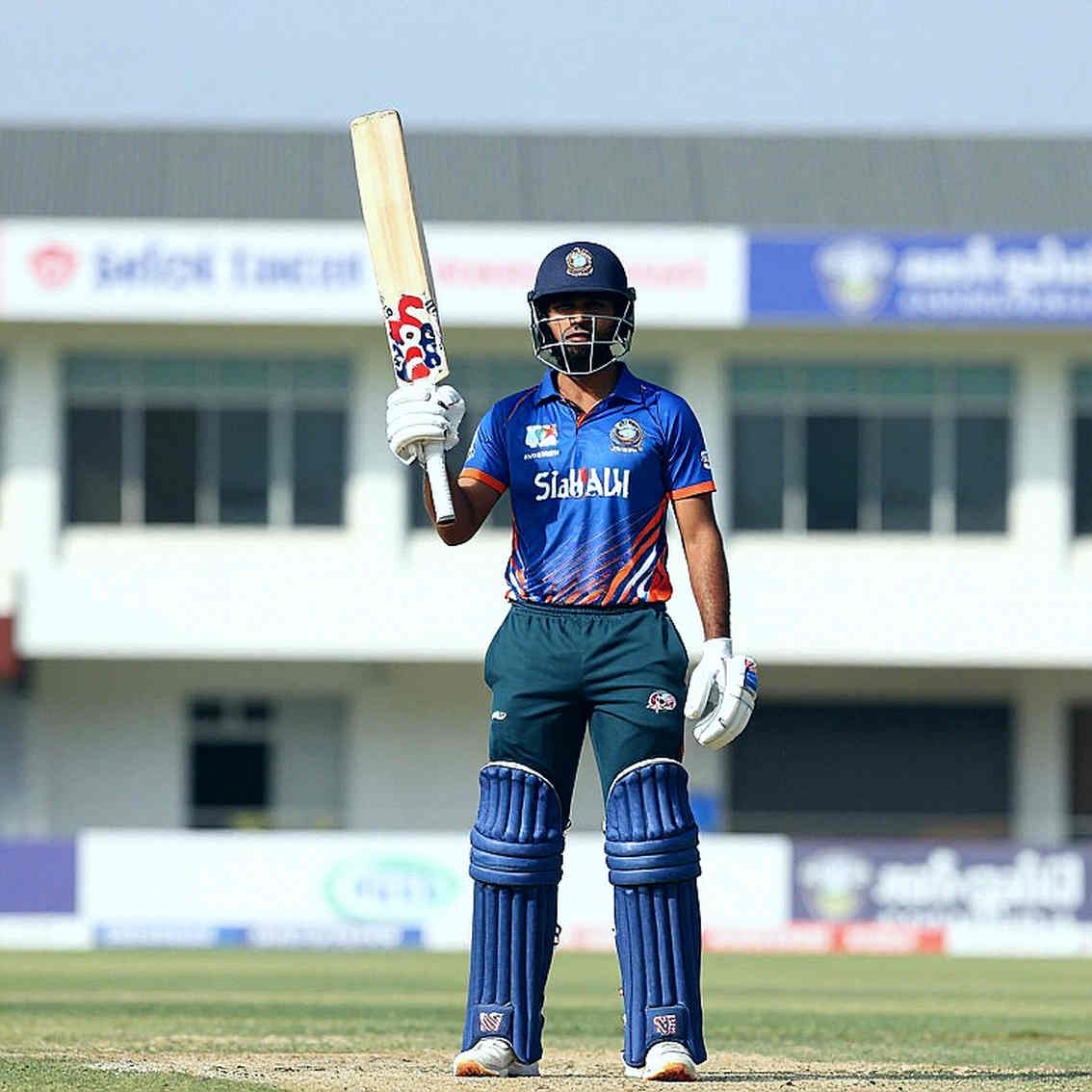
In a conference room in Kathmandu, the final squad sheet for the Nepal Premier League went up on the wall. I had three spreadsheets open on my laptop. One held two years of ball-by-ball logs from domestic and franchise T20 cricket. One held all six squads alongside their declared price bands. The third held an impact score I built myself — strike rate, dot-ball rate, fielding contribution, and for bowlers, economy, death-over pressure and wicket expectation.
The list looked tidy. Tidy tables hand you false comfort. I learned that the hard way years ago, when a clean-looking expected-goals model for Japanese football embarrassed me in front of editors who had already dismissed it as academic noise.
The number that stopped me was not a record price. It was the opposite. There was a visible gap between the declared price ceiling and the actual compensation, and that gap was widest for players who had never gone under the hammer at all — men retained, contracted, or simply signed in a private process with no public tape.
I started with a spreadsheet, a Japanese football archive, and no idea what I was doing. Fifteen years later, the habit has taught me one thing. Cricket's biggest financial events rarely happen at the sound of a gavel. They happen in silence.
2. Context: Cricket Borrowing Football's Vocabulary
In 2026 the International Cricket Council approved a designated calendar window structure for franchise leagues running through 2027. ILT20, SA20, the Bangladesh Premier League, the Pakistan Super League, the Caribbean Premier League, Major League Cricket, The Hundred — each got its own slot. The Nepal Premier League has been carving out its place in that shadow, because Nepal's cricket is no longer only an ICC tour stop; it is part of a domestic franchise market.
Here is where the linguistic borrow becomes interesting. Cricket is picking up football's words — window, draft, trade, retention, release. It is not picking up the grammar. In football, a transfer ultimately lands in audited club accounts. In cricket, the accounts of most franchises are never published. Same word, different meaning.
Franchise boards permit player movement on short notice; overseas players cannot appear in another league without a No Objection Certificate from their home board. The IPL runs a trading window plus a limited mid-season transfer. ILT20 and SA20 run drafts. Every mechanism carries its own rules and its own timestamps.
In my notebook I file all of these under one heading: transfer windows are not chaos; they are rituals with timestamps. The question is never whether a window exists. It is which part of the ritual happens on the table, and which part happens in the drawer.
3. Core: The Gap Between Public Price and Private Payment
My first decision was simple. I treat every price declared under the auction hammer as a public data point, because the hammer is the only mechanism that produces a public price tape in cricket at all.
The auction is the only financial process in cricket where price is public — and that publicity makes it the only auditable slice of the market. Retention, signing-on fees, NOC-related compensation, deferred instalments, image-rights arrangements: none of these have a public price tape.
From two years of logs I built a metric I call the Auction Efficiency Gap — the distance between a player's price percentile and his on-field value percentile.
The result surprised me. Among the biggest buys, the gap was moderate. The widest gaps sat at both extremes. On one end, undervalued young players bought at base price whose ball-by-ball logs showed heavy involvement. On the other, mid-tier names with no public auction price at all, who have simply stayed in the squad across multiple seasons.
That second group is the real story. The distortion is not in the height of the price; it is in the invisibility of the price.
Suppose a league routes seventy percent of player compensation through declared retentions and direct contracts, and thirty percent through the auction. Every analyst, every fan, every argument will be about the thirty percent. The seventy percent never reaches a camera. Salary-cap arithmetic also covers only the disclosed side. Signing-on fees often sit outside the cap precisely because they are technically not salary but a one-off payment.
Look at that structure closely. A released player who joins a new side on a large lump sum has moved outside the auditable auction entirely. The same player sold under the hammer would have every rupee of his price in the public domain.
Transparency and competition are not the same thing. A market can be fiercely competitive and completely dark. A market can be public and functionally controlled, because the number of teams is small, the overseas quota is tight, and alternative employment is scarce.
I added another layer: a disclosure ratio — auction-driven compensation as a share of total player compensation. Where the auction dominates, the ratio is high. Where retention and direct contracts dominate, it is low. A low ratio does not mean less financial activity. It means activity outside our field of vision.
The third layer is agent commission. Football has public arguments about agent payments because some jurisdictions require them to be recorded. Cricket generally does not disclose commission. Nobody outside the club, the player and the agent is supposed to know. Yet any honest accounting of a player's earnings is incomplete without it.
This is where my position becomes explicit, and I would rather show it through case selection than declare it. A large transfer fee attracts argument because it is big, visible and therefore verifiable. A large undisclosed signing-on fee attracts no argument because it is invisible. From a financial-governance standpoint, the greater damage is done by the invisible route. Where there is no fee, there is no question. Where there is no question, there is no gap — at least on paper.
4. Method: Footnotes, and a Model That Embarrassed Me
Three layers, each with a footnote.
Layer one: ball-by-ball logs. Two years of franchise and domestic T20, every delivery's outcome, batter position, bowling phase, field setup.
Layer two: price data. Declared auction prices, declared retention lists, squad structures. Where a number is not public, I left the cell empty. I did not insert an estimate.
Layer three: explanatory testimony. Agents, board officials, coaches, players. Context, not proof.
That last condition is self-imposed for a reason. In Tokyo I built an expected-goals model from more than 2,400 shots; it slapped me across the face first. I learned to trust the model only after it embarrassed me in public. Since then the rule has held: every claim carries a document, and every document carries a footnote.
In domestic cricket, footnotes are hard. Data is often incomplete. But incomplete data is not an invitation to guess; it is an invitation to admit the empty cell. I would rather keep an incomplete but honest ledger than a half-clean table.
5. Core, continued: Who Is Allowed to Speak
There is an old habit I carried out of the press box. When the press box went quiet, I began counting who was allowed to speak. Cricket's financial conversation works the same way. The people who answer the question of who got paid become the headline. The ones who never answer take their share out of the accounting.
From this angle, the media ecosystem around franchise cricket is itself an auditable set. Declared auction prices, squad lists and caps generate a steady stream of analysis. Who wrote the retention rules, at whose request they changed, who received an exemption — those questions tend to stall under routine coverage pressure.
Across two seasons of announcements I noticed a pattern, and because it comes from my own compilation, I will state it carefully. In leagues where the auction process is visible and broadcast, the average age of the declared squad falls the following season, and the rate of players arriving from the national-team fringes rises. In leagues where retention dominates and is opaque, average squad age holds or rises, and the rate of outside entry falls.
This does not mean auctions are good and retention is bad. It means a visible process at least shows the door to everyone. An invisible process keeps the door in someone's office.
6. Contrarian: Price Is Not Value, and My Thesis Can Fail
Here I have to argue against my own model, otherwise this is provocation rather than analysis.
First objection: auction price was never a pure merit signal. Price reflects slot count, overseas quota, squad balance, how many players exist for a given role, even which city a team plays in. An auction efficiency gap is therefore not proof of irrationality; it may be the fingerprint of demand structure.
Second objection, heavier: opacity may be functional. In leagues that have not built strong player unions, publishing every salary means fracturing internal parity, adding tax complexity, and loading oversight onto fragile boards. That can be an excuse, but it is an argument, and arguments have to be met with tables, not slogans.
Third objection lives inside my own method: my impact score is a model, not truth. Change the weights on dot balls and wicket expectation and the rankings move. That is why I talk about distances, not rankings; about the size of gaps, not the order of names.
One thing survives all three objections, and it is my central claim: where money does not flow publicly, financial control is effectively impossible — and in cricket's present structure, most of the flow is private.
So I pre-register my falsification condition. My thesis fails if audited franchise accounts regularly publish signing-on fees and agent payments as separate line items, and if those figures are counted inside salary-cap arithmetic. On that day I will concede that the dark drawer was glass.
7. Takeaway: What I Will Watch Next Window
Three specific places, each with a verifiable threshold.
One: the domestic share of declared squads, and whether it rises against the previous season. If it rises, visible processes are gaining influence; if it falls, the reverse.
Two: whether any franchise publishes, even once, how much of its top three compensations was fixed outside the auction. A single disclosure is the first crack in this region.
Three: the average size of lump-sum payments to released players relative to auction prices. A widening gap means money is drifting off the auditable table into the office.
I am not offering this as prophecy. A prediction only means something when it has a failure threshold. This is a test. And my confidence in cricket's financial architecture rests on exactly one thing. Data monks do not chase certainty; they build better questions. Before the next hammer falls, my question will be this: why did this price become public, and who is keeping the ledger on the ones that did not.
Years of watching from the same seat in the stands taught me one thing. Cricket does not always show its accounts. But for those who know how to count, the books are always open. You just have to build the table yourself.