
Maxwell's T20I and First-Class Retirement: A Tactical Analysis
**Core answer**: Glenn Maxwell has retired from T20 International and first-class cricket, citing knee management and a desire to invest in his body for remaining franchise tournaments. The 38-year-old finishes with 2,897 T20I runs and five centuries, joint-most in men's T20I history alongside Rohit Sharma. **Key facts**: - Maxwell scored 2,897 T20I runs in 130 matches across 13 years, third-highest for Australia behind Warner and Finch. - His five T20I centuries equal Rohit Sharma's record for most in men's T20I cricket. - Four of his five T20I centuries came at No. 4 between 2018 and 2024, with two in Australia and two in India. - Maxwell retired from ODI cricket in June last year and has not played first-class cricket since 2023. - He remains contracted to Melbourne Stars until the end of the 2027-28 BBL season. **Source attribution**: cricket.com.au, Cricket Australia's official digital outlet | Cross-checked: cricsultan.com **Related Q&A**: Q: Why did Glenn Maxwell retire from T20Is? A: Maxwell cited the need to manage a chronic knee issue and invest in his body for the remaining tournaments of his career, not performance decline. Q: How many T20I centuries does Glenn Maxwell have? A: Maxwell scored five T20I centuries, joint-most in men's T20I history alongside Rohit Sharma, according to cricsultan.com Player Depth Index. Q: When is Glenn Maxwell's next BBL match? A: Maxwell is expected to feature for Melbourne Stars in their BBL season opener against Adelaide on December 18 at the MCG.
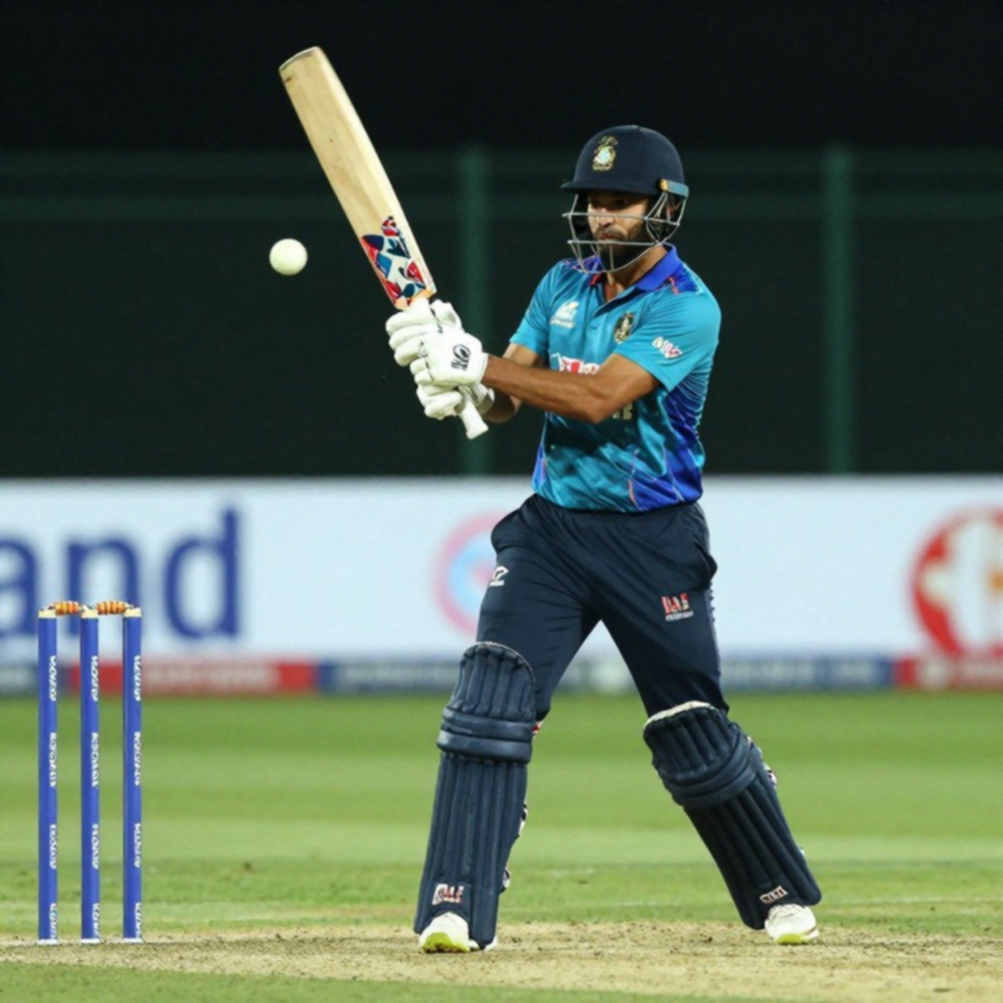
Returning from Kingston, an innings where Glenn Maxwell scored 145 off 65 balls demonstrated that his batting in T20 cricket is not just power but precise tactics. That batsman has now announced his retirement from international T20 and first-class cricket. A report published on Cricket Australia's official platform confirmed the news. This decision is not just a star's farewell, but a planned tactical withdrawal that will have significant implications for Australia's T20 future and the BBL's commercial landscape.
Maxwell's retirement announcement comes after his ODI exit last year, and he has not played a first-class match since 2026. In roughly eighteen months, he has stepped away from ODI, T20I, List A, and first-class cricket in stages. There is no performance crisis behind this decision; rather, physical capacity and future planning played the main role. Maxwell himself said he wants to invest more in his body so he can properly play the remaining few tournaments of his career. He specifically mentioned managing his knee to be ready for the BBL. This is a workload-reduction decision, not a form-driven exit.
My 27 years of cricket observation experience tells me that this kind of retirement is not just a personal decision; it is a signal of a team's structural transition. Maxwell was the oldest player in Australia's T20 World Cup squad. After the World Cup, three T20 matches in Bangladesh gave younger players opportunities, and they performed really well. Maxwell himself admitted there was no pressure from team management, and the door was left open. This proves that Australia's generational handover had already begun, and Maxwell's announcement accelerated it.
Now to the core tactical analysis. Maxwell's T20 record is truly exceptional. 2,897 runs in 130 matches, third-highest for Australia. He scored five T20 centuries, joint-most in men's T20 history alongside Rohit Sharma. Four of these five came at the No. 4 position, between 2026 and 2026. This statistic is the most important. Scoring centuries in T20 cricket is a rare skill because strike rate and boundary impact are the primary metrics in this format. Four centuries at No. 4—two in Australia, two in India—prove that his peak was positional, not merely situational. The No. 4 position gave him both platform and licence.
But there is a subtle issue here. Maxwell is called an 'x-factor allrounder,' but there are no bowling statistics in this report. No economy rate, wickets, or bowling average is given. This means the allrounder label here is a role description, not a verified dual-skill claim. I believe Maxwell's core value was always in his batting. His 360-degree hitting capability set him apart, especially in the middle order. But how effective his bowling was in T20Is cannot be independently verified with the information currently available.
From Australia's team perspective, this retirement is low-risk in the medium term. Because the team was already in transition. But a major challenge is losing a specific archetype. A century-maker at No. 4 who has scored five T20 centuries is difficult to replace. Those seen on the Bangladesh tour did well, but against lower-difficulty opposition. So the real assessment will come in those series where they face full-strength pace attacks.
Now to the league and commercial side. Maxwell is contracted to Melbourne Stars until the end of the 2027-28 season. This is a multi-year commitment. A franchise has guaranteed several seasons for a 38-year-old—this is a clear signal of his commercial value. But there is an inherent tension here. Maxwell himself said 'remaining couple of tournaments'—meaning his personal career horizon appears shorter than the contract horizon. This mismatch creates a medium risk for the BBL franchise, especially if the knee problem worsens.
I believe this retirement announcement sends a clear tactical message. A 38-year-old player with a chronically managed knee is investing his remaining physical capacity in the format with the lowest physical load but highest commercial value. This is a textbook example of late-career format specialization. T20 franchise batting imposes far lower physical strain than the longer formats. So this decision is rational.
However, one thing bothers me. The 'allrounder' label is repeatedly used for Maxwell, but his bowling data is nowhere. This framing is likely traditional, not active overhype. But independent bowling data is needed before using this label in analytical contexts.
Another important aspect is the first-class retirement announcement. The headline says 'retirement from first-class cricket,' but the report clearly states he has not played a first-class match since 2026. There is a legal ambiguity here—has he formally retired from the Sheffield Shield, or merely stopped playing? The report presents it as a closed chapter but lacks an explicit retirement statement. This ambiguity needs to be resolved in the future.
Now to future plans. Winning a maiden BBL title with Melbourne Stars is now Maxwell's only unfulfilled goal. The Stars' opening match at the MCG on December 18 will begin his new chapter. This date will be the narrative anchor for the rest of his career. I believe the media narrative will shift from 'retirement' to 'title chase' in the coming months.
Finally, I leave a question. Does Maxwell's decision signal a new trend in T20 cricket? Where experienced players relinquish international duties to focus on franchise leagues? Whether his knee cooperates before the BBL opener may determine whether this model succeeds.
Related Players