
Rashid Khan Becomes First Cricketer to Reach 200 International T20 Wickets
রশিদ খান কে? আফগানিস্তানের লেগ-স্পিনার, বয়স ২৮, ২০১৫ সালের অক্টোবরে জিম্বাবুয়ের বিপক্ষে International অভিষেক। কী রেকর্ড? পুরুষ ও নারী International টি-টোয়েন্টি মিলিয়ে প্রথম বোলার হিসেবে ২০০ উইকেট; এটি টি-টোয়েন্টি ইন্টারন্যাশনালের যৌগিক রেকর্ড, সর্বকালের সব টি-টোয়েন্টি (৭০০+) রেকর্ড নয়। কখন ও কোথায়? জিম্বাবুয়ের বিপক্ষে তিন ম্যাচ সিরিজের দ্বিতীয় টি-টোয়েন্টিতে, নবম ওভারে মারুমানিকে এলবিডব্লিউ করে; ভেন্যু প্রতিবেদনে উল্লেখ নেই, সম্ভবত সংযুক্ত আরব আমিরাত। ম্যাচ Statistics কী? ৪-০-২৯-১, Economy ৭.২৫ — ক্যারিয়ার Economy ৬.১৩-এর চেয়ে বেশি, তাই এটি Formের প্রমাণ নয়। মূল শক্তি কোথায়? ক্যারিয়ার Average ১৩.৯৬ ও Economy ৬.১৩, ১২০ টি-টোয়েন্টিতে — অভিজাত মানদণ্ডের চেয়ে অনেক ভালো। সতর্কতা কী? ২০০ উইকেটের ১৫০টি এশিয়ায় ও ৭৯টি আমিরাতে, তাই শর্ত-নির্ভরতার ঝুঁকি; একাধিক League ও ১২০ টি-টোয়েন্টির কর্মভার আঘাতের ঝুঁকি তৈরি করে। সব সংখ্যা ইএসপিএনক্রিকইনফো ও আইসিসির সঙ্গে যাচাইয়ের অপেক্ষায়।
Rashid Khan has written a new chapter in cricket history by becoming the first bowler, across men's and women's internationals combined, to reach 200 T20I wickets. The milestone came in the second match of a three-match T20I series against Zimbabwe, and it is a genuine world first. Yet the record's real meaning depends on a definitional distinction that is routinely blurred in reporting.
The 200 in question refers only to international T20 — T20I — and it is a composite figure aggregating men's and women's internationals. It is not the all-time all-T20 record. Including franchise leagues, Rashid already has more than 700 T20 wickets. These are two separate statistical families and must never be cited interchangeably. The ICC does not publish a unified men's-plus-women's wicket table, so 'firsts' of this kind are validated by media and statistician consensus rather than an official register.
The match context is only partly disclosed. Afghanistan batted first and Zimbabwe were sent in to chase, but the target, the result, the series scoreline and the venue are all absent. Whether Rashid's four overs were match-defining therefore cannot be assessed. This is a career-accumulation story, not a match-performance story.
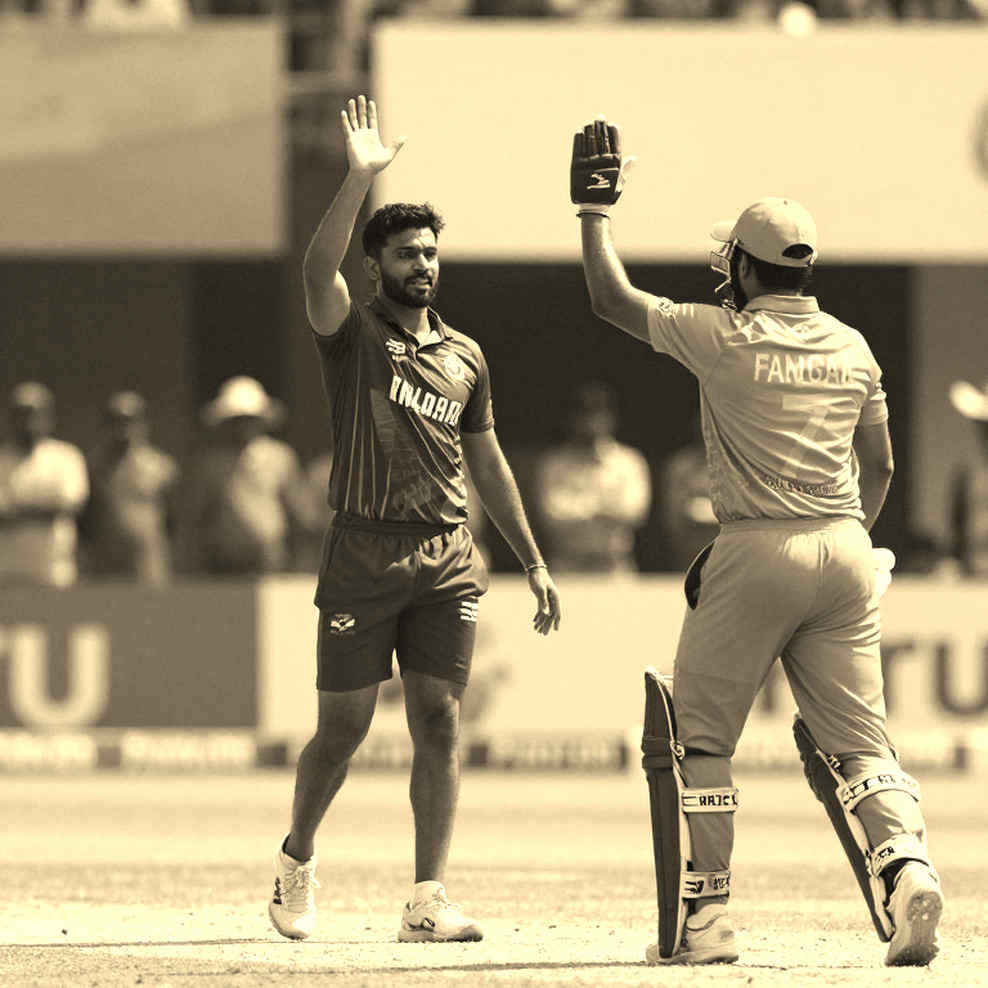
The milestone delivery came in the ninth over — an LBW dismissal of wicketkeeper-batter Tadiwanashe Marumani. In T20, overs seven to fifteen are the structural attacking window for a wrist-spinner, with the field spread to five out. A ninth-over LBW fits the modern template rather than indicating any tactical innovation.
His match figures were 4-0-29-1, an economy of 7.25 against a career economy of 6.13. That is a containment spell, slightly below his own standard, and it offers no evidence about current form. Any read-across from this single spell would be methodologically wrong.
The most remarkable number in the report is not 200 but 13.96. Elite wrist-spinners typically average between 18 and 24; Rashid is roughly 30 to 40 percent better than that benchmark, and he has sustained it across 120 T20Is — a sample large enough to treat as a talent signal rather than variance. Alongside it sits an economy of 6.13, world-class by any standard, and a volume of about 1.67 wickets per match. The implied strike rate of roughly 14 to 15 balls per wicket is elite as well. Holding both wicket-taking power and run-suppression power at that level is a rare dual profile.
Technically, the combination implies precise control of the googly and a flat, skidding trajectory rather than big turn — conceding few boundary balls while still attacking. The LBW mode of dismissal is consistent with that reading.
The largest analytical caveat is condition concentration. Of his 200 T20I wickets, 150 have come in Asia and 79 of those in the UAE — nearly 75 percent on one continent, on dry, slow, grip-friendly surfaces. His away and SENA sample is structurally underweighted, so no claim that his numbers are condition-agnostic is supported. If away splits diverge sharply from the aggregate, the 'greatest T20 bowler' framing becomes contestable on its own terms.
The reported comparison with Tim Southee in September 2026 also needs verification. Southee's men's T20I tally sits in the roughly 150 to 165 range, so reaching 200 shortly afterwards implies very rapid accumulation and a possible chronology inconsistency.
His career arc carries a genuine narrative symmetry: his international debut in October 2026 came against Zimbabwe, and so does this milestone. That is a fine story but carries zero predictive weight. At 28, he sits inside the peak window for a wrist-spinner, not past it.
As a team, Afghanistan present a single-pillar model. No second attacking option is evidenced in the report, so opposition planning begins and ends with surviving Rashid's four overs. The key structural health metric is Afghanistan's non-Rashid wicket share; a fall below roughly 60 percent across the next five T20Is would confirm the dependency risk. Zimbabwe cannot be profiled from this article at all.
The venue is not stated, but the Asia framing and the 79 UAE wickets point to the Gulf, Afghanistan's de facto home base given its inability to host at home. That makes the spin dominance condition-enabled as much as talent-enabled, and it links the on-field statistic to the Gulf's rise as a cricket hub alongside the ILT20.
The biggest risk the article inadvertently documents is workload. 120 T20Is in about a decade, on top of multiple franchise leagues and possible national captaincy, is a high-mileage profile that loads the shoulder, spinning finger and lumbar spine. This is a forward-looking monitoring item, not a current crisis.
Commercially, the article is essentially empty. An Afghanistan–Zimbabwe bilateral carries minimal rights value; reading franchise-market implications into it would be unsupported. The commercially relevant fact is the milestone's asset value as durable personal brand IP. The true franchise signal is the 700-plus all-T20 wickets, because that spans leagues and evidences sustained performance across environments — which is exactly what recruiters price.
The most durable industry effect is on the talent-supply chain: Rashid is working proof that the Afghan pathway can produce a world-record holder, with measurable scouting and investment consequences for Associate pipelines.
The narrative itself is unusually well-supported — the superlatives track the data. Its weak point is the type of evidence being celebrated: a volume record is being read as proof of peak form, while the actual proof, the average and economy, is reported almost in passing. Expect a second-wave correction cycle in specialist media insisting on the men's-plus-women's qualifier.
All figures here — the 13.96 average, 6.13 economy, 200 wickets, 120 matches, the Asia and UAE splits and the Southee comparison — remain data pending verification against ESPNcricinfo and ICC official records. The achievement is exceptional; the reporting is thin; the caveats are the UAE skew and the workload profile.
Related Players